

Adventure Is No Longer Just About Adrenaline
Adventure sports in India are undergoing a remarkable transformation. What was once considered an activity for a small group of thrill-seekers is becoming a mainstream experience for students, families, corporate teams, travellers and wellness-conscious individuals. From trekking and mountaineering to rafting, skiing, cycling and high-altitude expeditions, India’s adventure landscape is expanding rapidly. More importantly, the motivation behind participation is changing. People are no longer looking only for adrenaline. They are looking for confidence, connection, learning, personal growth and meaningful experiences. This represents a genuine paradigm shift in adventure tourism in India.
From Extreme Adventure to Experiential Adventure
Traditionally, adventure sports were associated with physical endurance and risk-taking. A successful expedition often meant reaching a summit, completing a difficult trek or conquering a challenging route. Today, the definition of adventure is much broader. A school trekking programme can teach leadership. A family camping experience can strengthen relationships. A corporate outdoor programme can improve teamwork. A cycling expedition can become a journey of self-discovery. The focus is shifting from simply “How difficult is the activity?” to “What does the experience help us discover?”
This transformation is making adventure activities relevant to a much wider audience.
Technology Is Changing Adventure Sports in India
Technology has become an important part of modern adventure travel. GPS navigation, satellite communication, weather forecasting, digital mapping, emergency communication systems and wearable devices have improved planning and monitoring. Social media has also changed how people discover adventure destinations. A trek that was once known primarily within a small adventure community can now reach thousands of potential travellers through photographs, videos and personal stories. However, technology should support—not replace—professional judgement. Mountain environments remain unpredictable, and experienced leadership, preparation and safety protocols remain essential.
Safety Is Becoming a Core Expectation
One of the biggest changes in the Indian adventure industry is the growing importance of safety in adventure sports. Participants are becoming more informed. Parents want qualified instructors for children. Schools want structured risk-management systems. Corporates expect professional programme management. Individual travellers increasingly evaluate an operator’s experience before booking.
Consequently, professional adventure operators are moving towards:
- Trained and experienced instructors
- Pre-adventure risk assessment
- Medical and emergency preparedness
- Appropriate equipment
- Weather monitoring
- Participant-to-leader ratios
- Route planning and contingency plans
- Responsible environmental practices
The industry is therefore moving from an informal adventure culture towards a more professional and safety-conscious ecosystem.
The Rise of Family and Student Adventure Programs
Adventure is no longer exclusively an adult pursuit. Family adventure programs are gaining popularity because parents increasingly value experiences that combine recreation with learning. Camping, trekking, nature exploration and outdoor challenges can help children develop confidence, communication, resilience and independence. Similarly, schools are incorporating experiential learning through adventure activities to complement classroom education. Instead of simply reading about leadership, students can experience it. Instead of discussing teamwork theoretically, they can practise it while navigating a trail or completing a group challenge. This is one of the most significant transformations taking place in India’s adventure sector.
Adventure Tourism Is Moving Beyond the Himalayas
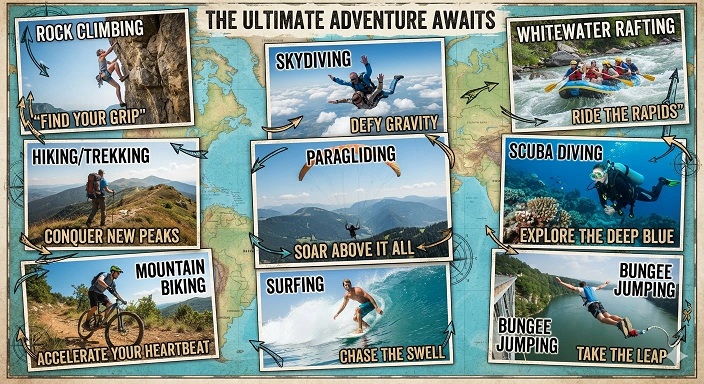
The Himalayas remain the heart of Indian adventure tourism, but the country’s geography offers much more. The Western Ghats, Northeast India, deserts, coastlines, forests and rivers provide opportunities for diverse outdoor experiences.
Activities such as:
- Trekking
- Mountain biking
- River rafting
- Skiing
- Camping
- Rock climbing
- Kayaking
- Scuba diving
- Paragliding
- Long-distance cycling
are helping create a more diverse Indian adventure tourism market.
This geographical expansion also creates opportunities for local communities and emerging destinations.
The New Adventure Traveller Wants Meaning
Today’s adventure traveller is increasingly experience-driven. They may want to disconnect from screens, reconnect with nature, challenge themselves physically or simply spend meaningful time with family and friends. This has created a shift towards transformational adventure travel. The value of an adventure is no longer measured only by kilometres travelled or altitude gained. It may also be measured by the confidence gained, friendships created, fears overcome and perspectives changed. That is why adventure tourism increasingly overlaps with wellness, education, leadership development and personal transformation.
Sustainability Is Becoming Part of the Adventure
As participation grows, environmental responsibility becomes increasingly important.
Fragile mountain ecosystems, forests, rivers and wildlife habitats cannot absorb unlimited tourism. Responsible adventure operators therefore need to minimise waste, respect local communities, reduce environmental impact and educate participants about responsible travel.
The future of adventure tourism will increasingly depend on the principle of:
Explore more. Impact less.
Sustainable trekking, responsible camping, waste management and respect for local cultures are becoming essential components of modern outdoor experiences.
What Is Driving the Paradigm Shift?
Several factors are reshaping adventure sports in India:
- Changing lifestyles: People are actively seeking outdoor experiences to escape sedentary routines.
- Experiential education: Schools and parents recognise the value of learning beyond classrooms.
- Corporate wellness: Organisations are using outdoor experiences for teamwork and employee engagement.
- Digital influence: Social media has made adventure destinations more visible.
- Improved accessibility: Better roads, travel infrastructure and information are opening new destinations.
- Growing safety awareness: Customers increasingly seek qualified and professional operators.
- Sustainable tourism: Environmental responsibility is becoming central to adventure planning.
Together, these forces are transforming adventure from a niche activity into a broader lifestyle and learning experience.
The Future of Adventure Sports in India
The next phase of Indian adventure tourism is likely to be more professional, inclusive, technology-enabled, sustainable and experience-driven. We can expect greater integration of adventure with education, wellness, corporate development and family recreation. The winners in this evolving industry will not necessarily be those offering the most extreme experiences. They will be those that combine adventure, safety, authenticity, professional expertise and meaningful transformation. India has the geography, young population, diverse culture and enormous outdoor potential to become a major global adventure destination.
Conclusion: Adventure Is Changing—And So Are We
The changing face of adventure sports in India reflects a larger change in how people understand travel and recreation. Adventure is moving beyond the pursuit of thrills. It is becoming a tool for learning, connection, resilience, wellness and self-discovery. That is the real paradigm shift. The mountains, rivers, forests and trails have always been there. What has changed is the way we experience them—and what we expect to bring back from the journey.