
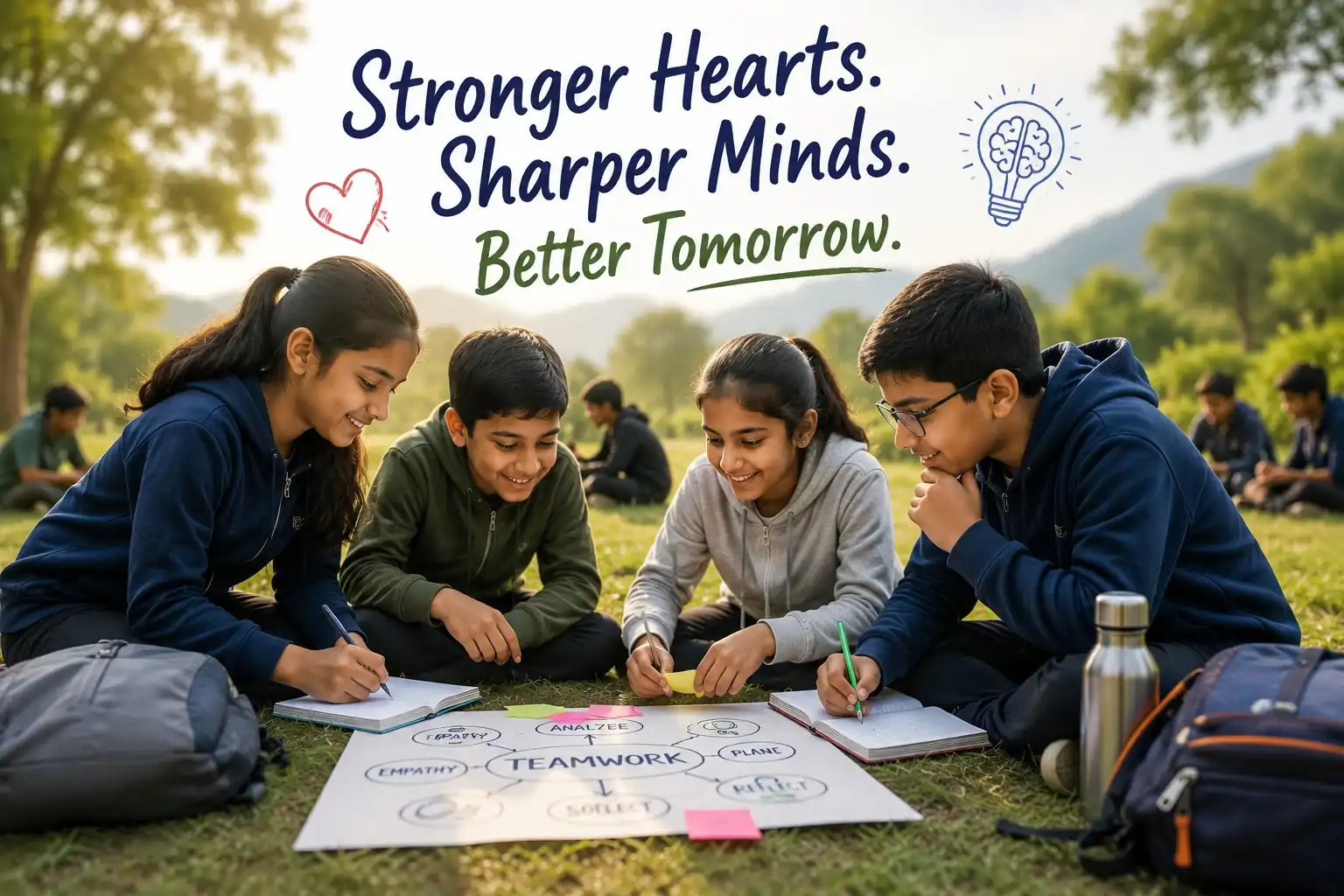
In today’s rapidly changing world, academic excellence alone is no longer enough to prepare children for future success. School programs building students emotional and analytical intelligence have become an essential part of modern education because they help children develop self-awareness, critical thinking, communication, resilience, and decision-making skills. These programs go beyond textbooks by providing meaningful experiences that shape confident, emotionally balanced, and intellectually capable learners.
Whether through experiential learning, outdoor education, leadership camps, STEM activities, community service, or creative workshops, well-designed school programs encourage students to understand themselves while learning how to solve real-life problems effectively.
Why Emotional and Analytical Intelligence Matter in Education
Schools today are expected to prepare students not only for examinations but also for life. Emotional intelligence helps children understand and manage emotions, while analytical intelligence enables them to evaluate situations logically and make informed decisions.
Together, these abilities help students:
- Build healthy relationships
- Solve complex problems
- Think independently
- Manage stress effectively
- Develop leadership qualities
- Improve classroom performance
- Make responsible decisions
- Adapt to changing environments
Students who possess both emotional and analytical intelligence are often more confident, resilient, and prepared for future academic and professional challenges.
What Are School Programs?
School programs are structured educational activities conducted beyond regular classroom teaching. They combine academic learning with practical experiences to encourage holistic student development.
Popular school programs include:
- Experiential learning programs
- School camping trips
- Adventure education
- STEM and robotics workshops
- Environmental education
- Leadership development camps
- Community service projects
- Sports and team-building activities
- Art, music, and creative learning sessions
These programs provide opportunities for students to learn through participation rather than passive observation.
How School Programs Build Emotional Intelligence
Emotional intelligence develops when children experience different situations, interact with peers, and learn to manage their feelings constructively.
Improve Self-Awareness
Students begin recognizing their strengths, weaknesses, emotions, and reactions. Reflection sessions after activities encourage them to understand their personal growth.
Build Empathy
Working with classmates from diverse backgrounds teaches students to appreciate different perspectives and understand others’ emotions.
Strengthen Communication Skills
Group discussions, presentations, and collaborative activities improve active listening, verbal communication, and respectful expression of ideas.
Increase Emotional Resilience
Outdoor challenges, competitions, and unfamiliar situations teach children how to overcome setbacks, manage disappointment, and stay motivated.
Encourage Responsible Decision-Making
Students learn that every decision has consequences. They become more thoughtful before acting and develop accountability for their choices.
How School Programs Develop Analytical Intelligence
Analytical intelligence involves reasoning, observation, evaluation, and logical thinking. Experiential school programs create situations where students must think critically rather than memorize information.
Promote Problem-Solving
Adventure challenges and project-based learning require students to analyze situations, identify solutions, and implement effective strategies.
Develop Critical Thinking
Students compare ideas, evaluate evidence, ask questions, and make informed decisions instead of accepting information without analysis.
Improve Observation Skills
Nature walks, science experiments, and field visits encourage careful observation and attention to detail.
Strengthen Decision-Making
Students often face situations where they must assess risks, evaluate alternatives, and choose the best course of action.
Enhance Creativity Through Analysis
Creative thinking grows when students combine imagination with logical reasoning to develop innovative solutions.
Experiential Learning Connects Emotional and Analytical Growth
Experiential learning creates the perfect balance between emotional development and intellectual growth.
When students participate in real-world experiences, they:
- Learn by doing
- Reflect on experiences
- Analyze outcomes
- Apply lessons in new situations
This learning cycle strengthens both emotional intelligence and analytical reasoning simultaneously.
Instead of memorizing concepts, students understand how knowledge applies in everyday life.
Activities That Improve Emotional and Analytical Intelligence
Schools can integrate various engaging activities throughout the academic year.
Adventure-Based Learning
Activities such as trekking, obstacle courses, and camping develop courage, teamwork, leadership, planning, and emotional control.
STEM Challenges
Science, coding, robotics, and engineering competitions improve logical thinking and structured problem-solving.
Community Service Projects
Helping communities teaches empathy, responsibility, collaboration, and social awareness.
Team Sports
Sports improve emotional regulation, discipline, strategic thinking, communication, and resilience.
Debate and Public Speaking
Students learn confidence, logical reasoning, research, persuasion, and respectful disagreement.
Nature and Environmental Programs
Outdoor education encourages observation, curiosity, environmental responsibility, and analytical thinking.
Benefits for Academic Success
Students who regularly participate in quality school programs often demonstrate improved academic performance because they become active learners.
Key academic benefits include:
- Better concentration
- Improved memory retention
- Higher classroom participation
- Increased motivation
- Greater curiosity
- Enhanced collaboration
- Stronger leadership
- Better time management
Research consistently shows that emotionally secure students perform better academically because they experience less anxiety and greater engagement.
Long-Term Benefits Beyond School
The impact of school programs extends far beyond graduation.
Students develop life skills such as:
- Leadership
- Adaptability
- Conflict resolution
- Collaboration
- Independent thinking
- Emotional maturity
- Strategic planning
- Ethical decision-making
These competencies are highly valued in higher education and modern workplaces where teamwork, innovation, and emotional intelligence are essential.
How Teachers and Parents Can Support Student Development
Building emotional and analytical intelligence requires collaboration between schools and families.
Parents can:
- Encourage independent decision-making
- Listen without immediate judgment
- Appreciate effort over perfection
- Promote healthy discussions at home
- Support participation in extracurricular activities
Teachers can:
- Use experiential learning methods
- Encourage classroom discussions
- Provide constructive feedback
- Celebrate teamwork
- Create emotionally safe learning environments
When schools and parents work together, students receive consistent support that strengthens both emotional and intellectual growth.
Choosing Effective School Programs
Not every program delivers meaningful learning outcomes. Schools should evaluate programs based on educational value rather than entertainment alone.
Look for programs that include:
- Clearly defined learning objectives
- Qualified instructors
- Student safety protocols
- Reflection and feedback sessions
- Team-building activities
- Leadership opportunities
- Age-appropriate challenges
- Real-world problem-solving experiences
Programs designed around holistic development create lasting educational impact.
Conclusion
School programs building students emotional and analytical intelligence are transforming education by preparing learners for real-life success rather than examination scores alone. Through experiential learning, teamwork, leadership opportunities, creative problem-solving, and reflective experiences, students become emotionally resilient, intellectually curious, and socially responsible individuals.
As education continues to evolve, schools that prioritize holistic development will help students thrive academically, personally, and professionally. Investing in meaningful school programs today equips children with the confidence, empathy, critical thinking, and adaptability they need to succeed in tomorrow’s world.
