
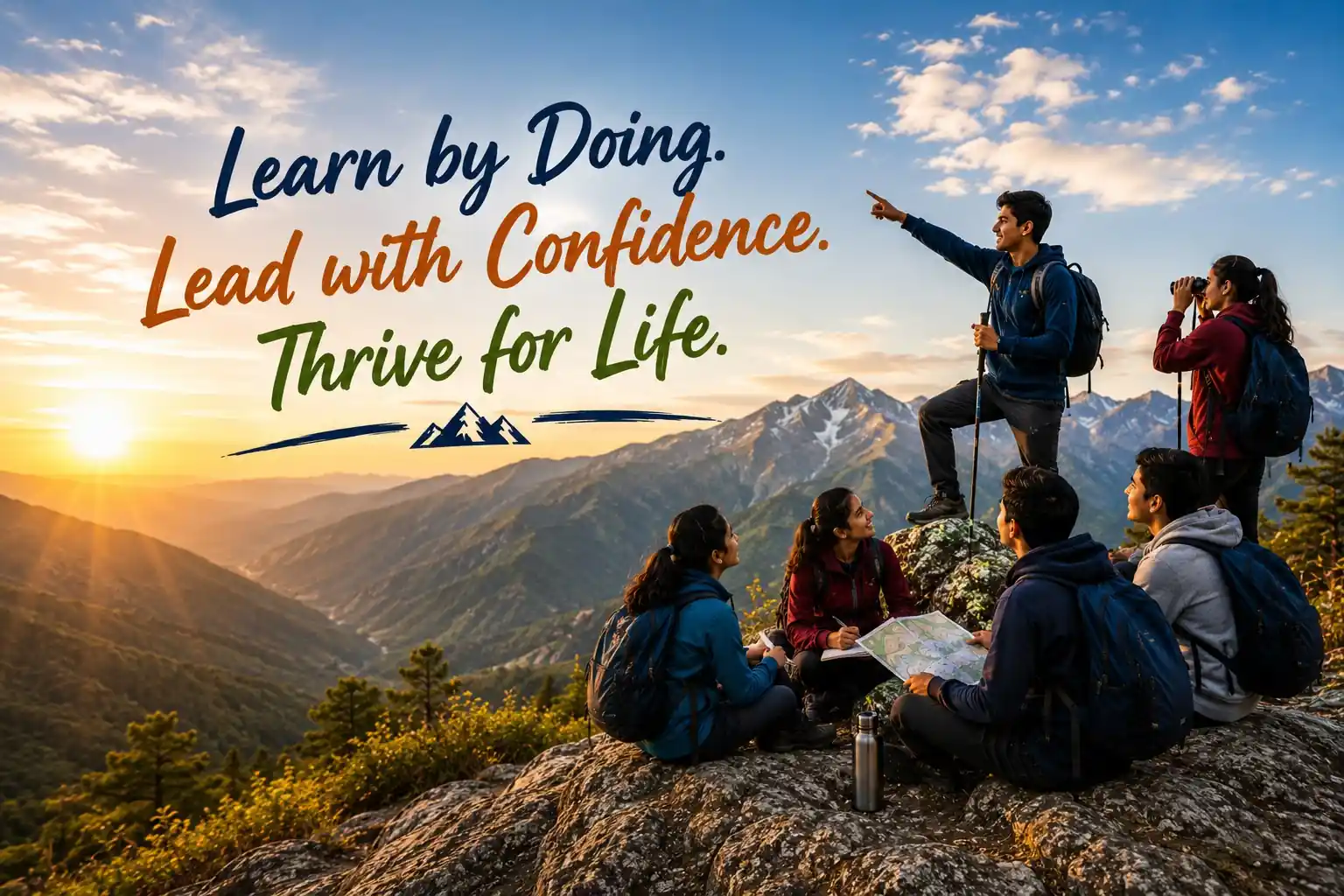

In today’s fast-changing world, academic excellence alone is no longer enough. Schools are increasingly looking for innovative ways to prepare students for real-life challenges beyond textbooks. Experiential Simulation Helping Students Build Confidence Leadership Life Skills has become one of the most effective educational approaches that combines learning with action. Through realistic scenarios, problem-solving activities, leadership tasks, and collaborative challenges, students gain practical experience while developing essential life skills.
Unlike traditional classroom teaching, experiential simulation places students in situations where they must think critically, communicate effectively, make decisions, and work as a team. These experiences not only improve learning outcomes but also prepare students for future academic, professional, and personal success.
What Is Experiential Simulation Helping Students Build Confidence Leadership Life Skills?
Experiential simulation is an interactive learning methodology where students participate in carefully designed real-life scenarios that replicate actual situations. Instead of memorizing concepts, learners actively experience them through role-playing, leadership missions, adventure challenges, disaster response simulations, business games, outdoor learning activities, and team-based projects.
The principle is simple:
- Learn by doing
- Reflect on the experience
- Apply lessons in real life
This practical approach helps students retain knowledge longer while improving their emotional intelligence, adaptability, and confidence.
Why Experiential Simulation Is Transforming Student Learning
Modern education must prepare students for uncertainty, collaboration, and innovation. Employers and universities increasingly value soft skills alongside academic performance.
Experiential simulation helps bridge the gap between classroom knowledge and practical application by encouraging students to:
- Solve complex problems
- Communicate confidently
- Take initiative
- Manage challenges independently
- Develop leadership qualities
- Build resilience
Students learn not because someone tells them the answer, but because they experience the consequences of their decisions.
How Experiential Simulation Builds Student Confidence
Confidence grows through successful experiences—not lectures.
When students participate in simulations, they face unfamiliar situations in a safe and supportive environment. Every completed challenge becomes evidence that they can handle future obstacles.
Experiential simulation improves confidence by encouraging students to:
- Speak in front of peers
- Make independent decisions
- Accept responsibility
- Handle uncertainty calmly
- Learn from mistakes
- Celebrate achievements
Even naturally shy students gradually become more expressive and self-assured after repeated participation in experiential learning programs.
Essential Life Skills Developed Through Experiential Simulation
Leadership cannot be developed through theory alone. Students become leaders when they are given opportunities to lead.
Experiential simulations assign different leadership responsibilities where students learn to:
- Lead teams toward common goals
- Delegate responsibilities
- Resolve conflicts
- Motivate peers
- Make timely decisions
- Adapt under pressure
Instead of simply learning about leadership, students experience what leadership truly means.
These opportunities build accountability, emotional maturity, and decision-making skills that remain valuable throughout life.
How Simulation-Based Learning Improves Decision-Making and Critical Thinking
Experiential simulation develops a wide range of life skills essential for future success.
Communication Skills
Students learn active listening, public speaking, negotiation, and effective interpersonal communication.
Teamwork
Collaborative tasks teach cooperation, trust-building, respect, and shared responsibility.
Problem-Solving
Simulated situations require students to analyze challenges, evaluate options, and implement practical solutions.
Critical Thinking
Rather than memorizing information, students evaluate evidence, think creatively, and make informed decisions.
Emotional Intelligence
Students recognize emotions, manage stress, empathize with teammates, and develop stronger interpersonal relationships.
Adaptability
Unexpected situations during simulations encourage flexibility and resilience.
These life skills contribute significantly to academic achievement and future career readiness.
Best Experiential Simulation Activities for Building Leadership and Life Skills
Every decision has consequences.
Simulation-based learning allows students to experience these consequences without real-world risks.
Whether navigating an outdoor challenge, leading a rescue activity, or solving a business simulation, students continuously practice:
- Risk assessment
- Logical thinking
- Strategic planning
- Time management
- Resource allocation
These repeated experiences strengthen sound judgment and responsible decision-making.
Why Schools Are Choosing Experiential Learning Programs for Student Development
Many progressive schools now integrate experiential simulation into their educational curriculum because it supports holistic student development.
Schools observe improvements in:
- Student engagement
- Classroom participation
- Attendance
- Leadership opportunities
- Social interaction
- Academic motivation
- Confidence
- Behavioural development
Experiential education complements classroom learning rather than replacing it.
Students return more motivated, disciplined, and eager to participate in academics.
Real-World Examples of Experiential Simulation Activities
Schools implement various experiential simulations depending on students’ age groups and learning objectives.
Popular activities include:
- Adventure-based learning
- Leadership camps
- Team-building simulations
- Emergency response drills
- Entrepreneurship challenges
- Environmental conservation projects
- Treasure hunts
- Problem-solving missions
- Survival simulations
- School camping experiences
- Community service projects
- Communication games
Each activity is designed with clear educational outcomes rather than entertainment alone.
The Importance of Reflection in Experiential Learning
Learning does not end when the activity finishes.
Reflection is one of the most important stages of experiential learning.
Facilitators encourage students to discuss:
- What happened?
- Why did it happen?
- What worked well?
- What could improve?
- How can these lessons apply to daily life?
Reflection transforms activities into meaningful life lessons, making learning deeper and more memorable.
How Parents Benefit from Experiential Simulation Programs
Parents often notice positive behavioural changes after students participate in experiential simulation programs.
Common improvements include:
- Greater independence
- Better communication at home
- Increased responsibility
- Improved discipline
- Enhanced confidence
- Stronger emotional control
- Better teamwork with siblings and friends
These changes often continue long after the program concludes.
Choosing the Right Experiential Learning Program for Schools
An effective experiential simulation program should focus on learning outcomes, safety, and student development.
Look for programs that provide:
- Qualified instructors
- Age-appropriate activities
- Strong safety protocols
- Small instructor-to-student ratios
- Structured reflection sessions
- Leadership-focused curriculum
- Practical learning objectives
- Inclusive participation
The best programs create meaningful experiences that challenge students while ensuring a safe and supportive environment.
Why Wanderin’ Man Adventures Offers the Best Experiential Simulation Programs
At Wanderin’ Man Adventures, experiential simulation is designed to help students learn through carefully planned challenges, outdoor activities, leadership tasks, and collaborative problem-solving experiences.
Every school program is built around educational objectives rather than recreation alone. Students participate in structured simulations that encourage leadership, communication, confidence-building, teamwork, resilience, and responsible decision-making.
With experienced instructors, professionally managed activities, comprehensive safety standards, and a strong emphasis on reflection-based learning, students return with valuable skills that extend far beyond the classroom.
The goal is simple: create memorable experiences that shape confident, capable, and responsible future leaders.
Experiential Simulation Helping Students Build Confidence Leadership Life Skills for Future Success
Experiential Simulation Helping Students Build Confidence Leadership Life Skills is transforming modern education by making learning active, practical, and meaningful. Through real-world experiences, students develop confidence, leadership, communication, teamwork, emotional intelligence, and problem-solving abilities that traditional teaching methods alone cannot fully provide.
As schools increasingly focus on holistic education, experiential simulation has become an essential component of preparing students for future success. By combining structured challenges with guided reflection, these programs empower young learners to become confident individuals, compassionate leaders, and responsible citizens ready to face life’s opportunities and challenges.
When education moves beyond textbooks and into real experiences, students don’t simply learn—they grow.
