
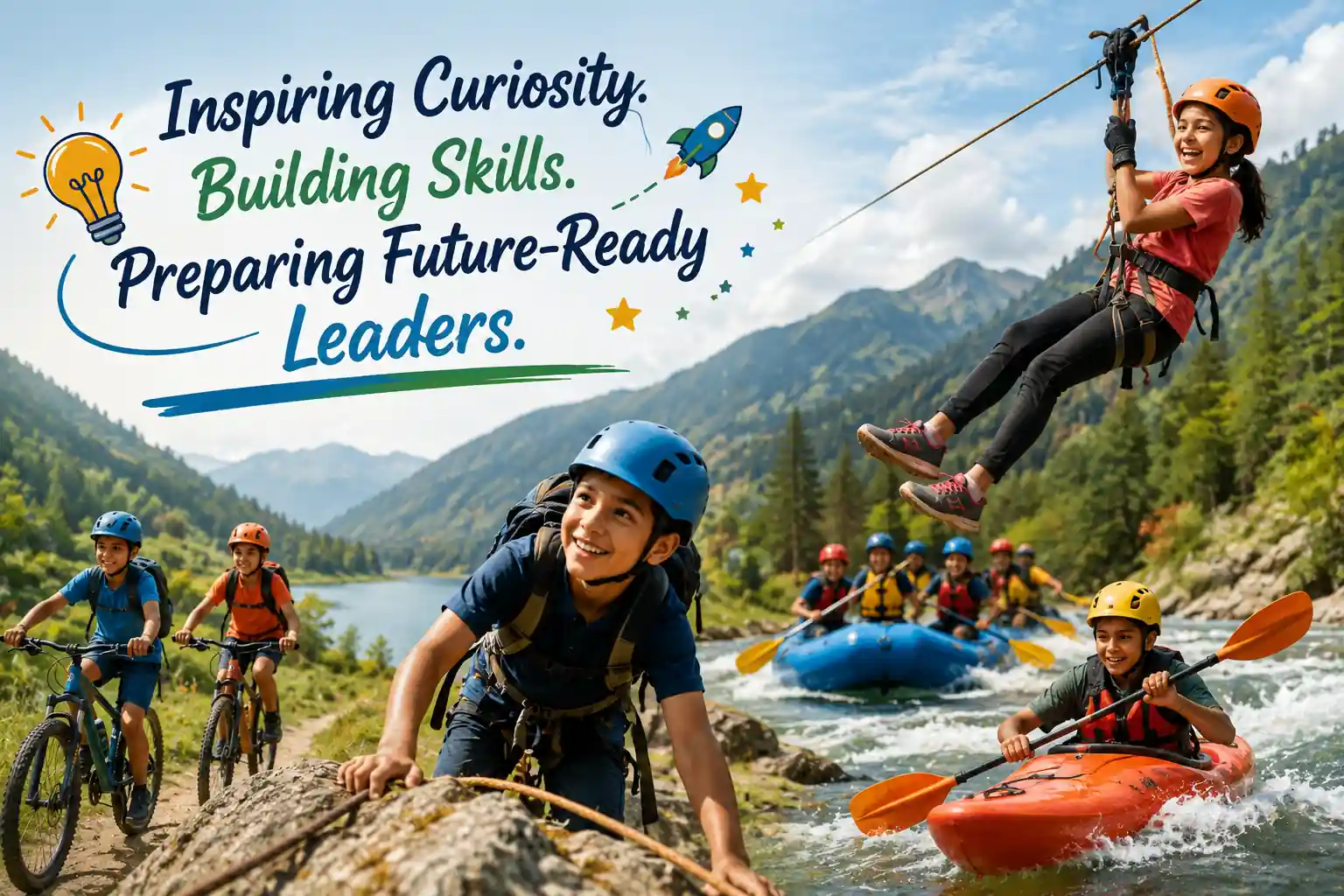

Today’s students will enter a world where innovation, automation, artificial intelligence, and emerging technologies are reshaping industries faster than ever before. STEM Education in School Programs equips students with the knowledge, practical skills, and mindset needed to thrive in this rapidly changing environment. Instead of simply memorizing concepts, students actively explore, experiment, solve real-world challenges, and develop confidence through experiential learning.
Schools worldwide are increasingly integrating STEM into their educational programs because it nurtures curiosity, creativity, teamwork, communication, and leadership alongside academic excellence. Whether through robotics, coding, engineering projects, environmental studies, or science experiments, STEM prepares learners not just for examinations but for lifelong success.
This guide explains why STEM education has become essential in modern schools, its benefits, practical implementation, and how experiential learning programs maximize student outcomes.
What is STEM Education
STEM stands for:
- Science
- Technology
- Engineering
- Mathematics
Rather than teaching these subjects independently, STEM combines them into interdisciplinary learning experiences where students solve practical problems.
For example, instead of learning physics from a textbook alone, students may design a bridge, calculate its strength, build a prototype, and test its performance. This integrated approach makes learning engaging, meaningful, and memorable.
Why STEM Education in School Programs Matters
Traditional classroom learning provides theoretical knowledge, but STEM programs encourage students to apply concepts in real-life situations.
Modern employers increasingly value skills such as:
- Critical thinking
- Creative problem-solving
- Collaboration
- Digital literacy
- Innovation
- Adaptability
- Decision-making
These competencies are developed naturally through STEM-based school programs.
Students learn to ask questions, investigate solutions, test ideas, analyze failures, and improve outcomes—skills that remain valuable throughout life.
Benefits of STEM Education in School Programs
Develops Critical Thinking Skills
STEM activities encourage students to evaluate situations logically rather than memorizing answers.
Students learn to:
- Analyze problems
- Identify patterns
- Compare solutions
- Make informed decisions
- Think independently
These abilities benefit academic performance as well as everyday life.
Encourages Innovation and Creativity
Innovation begins with curiosity.
Hands-on STEM projects encourage students to:
- Design new solutions
- Build prototypes
- Improve existing ideas
- Think beyond conventional methods
Creativity becomes practical when students transform ideas into working models.
Improves Problem-Solving Ability
Every STEM project presents challenges.
Whether building a robot or designing a water filtration model, students learn persistence through trial and error.
They understand that failure is part of learning, building resilience and confidence.
Builds Teamwork and Leadership
Most STEM school programs involve collaborative projects.
Students practice:
- Leadership
- Delegation
- Communication
- Conflict resolution
- Shared responsibility
These interpersonal skills prepare students for future workplaces.
Strengthens Digital Literacy
Technology is now part of every profession.
STEM introduces students to:
- Coding
- Robotics
- Artificial Intelligence basics
- Data analysis
- Digital tools
- Computer programming
Digital confidence becomes an essential life skill.
Makes Learning More Engaging
Students enjoy learning when they participate rather than simply listen.
Interactive STEM activities include:
- Robotics competitions
- Engineering design challenges
- Science experiments
- Coding games
- Innovation workshops
- Environmental projects
Active participation significantly improves knowledge retention.
How Experiential Learning Enhances STEM Education
Experiential learning transforms STEM concepts into real-world experiences.
Instead of only studying scientific theories, students apply them through:
- Outdoor investigations
- Engineering challenges
- Nature exploration
- Renewable energy projects
- Scientific observations
- Team-based innovation tasks
This approach improves understanding while making learning enjoyable.
Schools that combine STEM with experiential education often observe higher student engagement and stronger conceptual clarity.
STEM Activities Included in School Programs
Schools can introduce STEM through age-appropriate activities.
Primary School
- Simple science experiments
- LEGO engineering
- Nature observation
- Mathematical games
- Beginner coding
Middle School
- Robotics
- Electronics
- Model bridge construction
- Environmental science
- Drone demonstrations
Senior School
- Artificial Intelligence projects
- Machine Learning basics
- IoT models
- Renewable energy systems
- 3D printing
- App development
- Engineering competitions
These experiences prepare students for higher education and emerging careers.
Essential Skills Students Gain Through STEM Education
A well-designed STEM program develops far more than technical knowledge.
Students build:
- Critical thinking
- Analytical reasoning
- Communication skills
- Creativity
- Leadership
- Collaboration
- Innovation mindset
- Decision-making
- Adaptability
- Confidence
- Project management
- Presentation skills
These competencies remain valuable regardless of future career choices.
The Role of Teachers in STEM Education
Teachers become facilitators rather than traditional lecturers.
Their responsibilities include:
- Encouraging inquiry
- Guiding investigations
- Supporting experimentation
- Promoting teamwork
- Inspiring innovation
- Providing constructive feedback
Professional development also helps educators confidently deliver modern STEM learning experiences.
How Schools Can Successfully Implement STEM Programs
Successful STEM implementation requires careful planning.
Schools should focus on:
- Hands-on project-based learning
- Age-appropriate curriculum integration
- Safe laboratory and activity environments
- Qualified instructors
- Regular innovation workshops
- Outdoor experiential learning
- Collaboration with industry experts
- Continuous assessment through projects rather than rote examinations
A balanced combination of classroom instruction and practical activities delivers the best learning outcomes.
The Future of STEM Education
Future careers will increasingly depend on technology, automation, and interdisciplinary thinking.
Growing sectors include:
- Artificial Intelligence
- Robotics
- Data Science
- Cybersecurity
- Biotechnology
- Environmental Engineering
- Renewable Energy
- Aerospace
- Space Technology
- Smart Manufacturing
Students exposed to STEM early develop confidence in adapting to these evolving opportunities.
Why Parents Should Encourage STEM Learning
Parents play an important role by encouraging curiosity beyond the classroom.
Simple activities such as:
- Science museums
- DIY experiments
- Coding platforms
- Educational games
- Robotics kits
- Nature exploration
- Astronomy observations
help reinforce classroom learning while making education enjoyable.
Supporting curiosity at home strengthens a child’s confidence and love for lifelong learning.
Choosing the Right STEM School Program
An effective STEM program should offer:
- Hands-on learning experiences
- Qualified STEM educators
- Safe learning environments
- Small group collaboration
- Real-world problem-solving
- Innovation-focused curriculum
- Leadership development
- Experiential outdoor learning
- Continuous skill assessment
Programs combining STEM with adventure-based experiential learning often create deeper engagement by connecting classroom concepts with real-life applications.
Conclusion
STEM Education in School Programs is transforming how students learn, think, and prepare for the future. By integrating science, technology, engineering, and mathematics with experiential learning, schools create environments where curiosity becomes innovation and knowledge becomes practical action.
Beyond academic success, STEM helps students develop resilience, creativity, collaboration, leadership, and digital confidence—qualities that employers and universities increasingly value. As education evolves, schools that invest in meaningful STEM experiences empower students to become adaptable, responsible, and future-ready citizens capable of solving tomorrow’s challenges with confidence.
