 Max Participants :
8
Max Participants :
8
 Trail Type :
Starting and ending at the same point
Trail Type :
Starting and ending at the same point

Itinerary Description
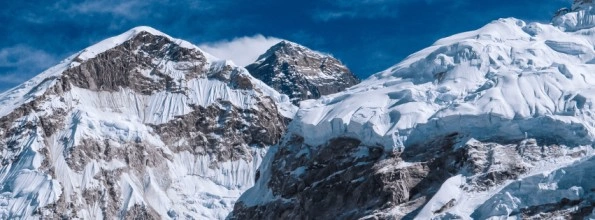
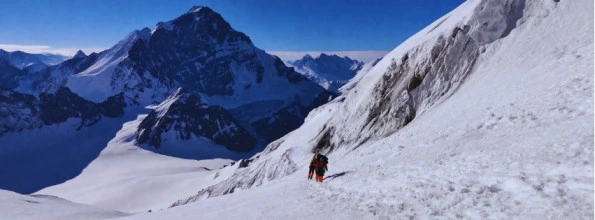
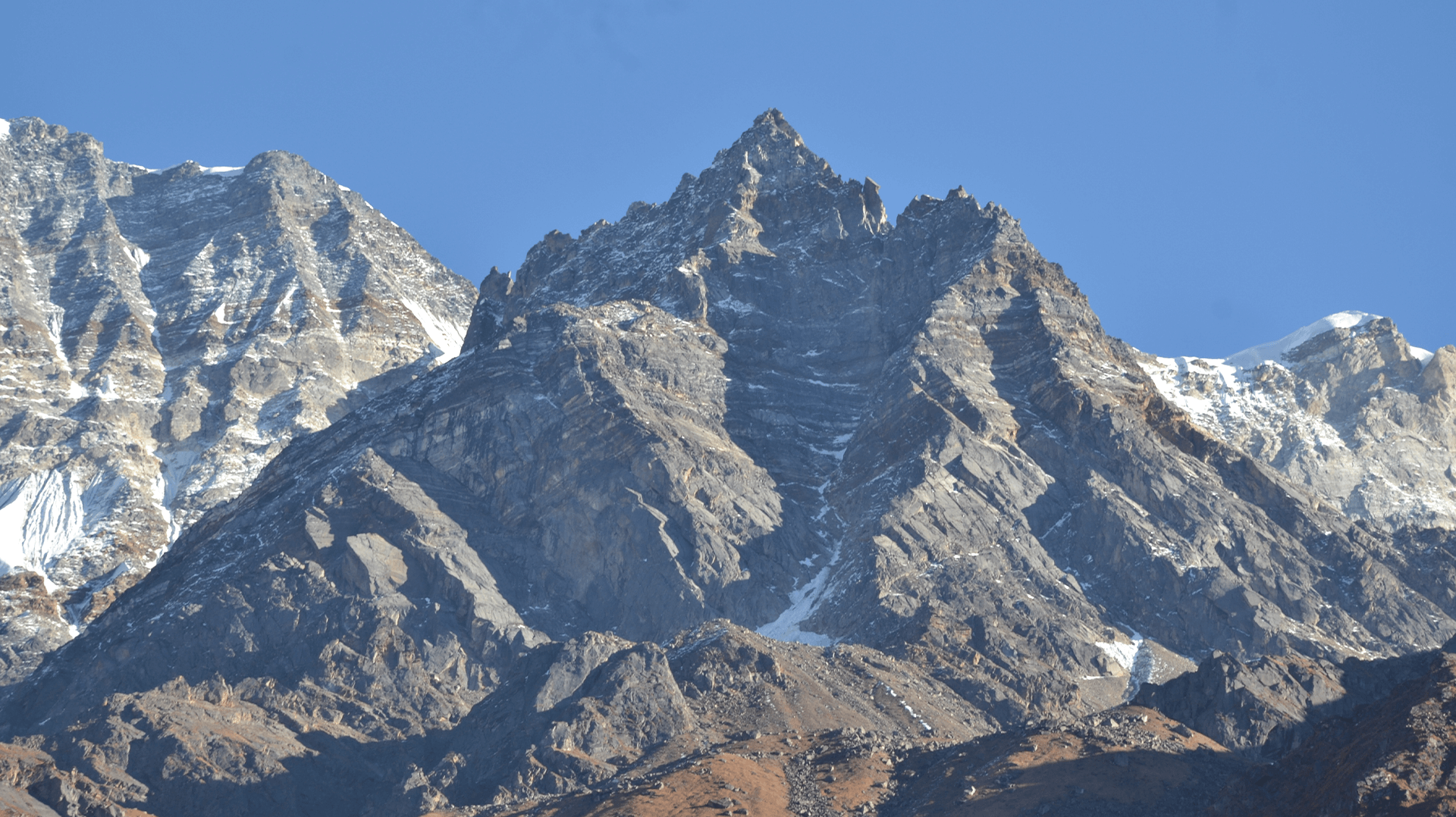
On an incredible mountaineering journey to conquer Kang Yatse 1 & 2, two stunning peaks in the Himalayas. Kang Yatse 2 offers breathtaking views from just over 20,000 feet, while Kang Yatse 1 poses challenges with its steep climbs and technical terrain. This expedition demands not just physical strength but also mountaineering expertise and mental resilience, navigating through tricky terrains like moraines and crevasses.
Starting from Leh and passing through Markha Valley in Ladakh, the expedition takes you through awe-inspiring landscapes and unique cultural experiences. Kang Yatse 1, standing tall at 6,400 meters, presents a technical challenge suitable for experienced mountaineers, while Kang Yatse 2 at 6,240 meters is more accessible.
The journey includes traversing through scenic valleys, encountering local wildlife, and witnessing cultural landmarks like monasteries and prayer flags. Kang Yatse 1 requires ice and snow climbing skills, making it a thrilling adventure for mountaineers seeking a challenge. The best months for this expedition are July to September.
Overall, this dual summit expedition promises unforgettable memories, panoramic views, and a true test of mountaineering skills and endurance.
Essential Expedition Notes
Best Season: July to September, with peak conditions in August. Early season (June-July) may have deeper snow on the routes, while late season (September) offers stable weather and colder temperatures.
Technical Difficulty:
Kang Yatse 2 (6,250 m): Alpine PD (Peu Difficile/Little Difficult). Does not require advanced mountaineering skills but demands excellent physical condition and prior high-altitude experience.
Kang Yatse 1 (6,400 m): Alpine AD+/D- (Assez Difficile to Difficile). Requires technical climbing skills, experience with fixed ropes, and comfort with exposed knife-edge ridges.
Permits: Kang Yatse 1 and 2 are trekking peaks requiring permits through the Indian Mountaineering Foundation (IMF). These must be arranged by your expedition operator well in advance, particularly for foreign nationals, and may take up to six months to process at a cost of approximately 300-400 USD.
Acclimatization: This itinerary builds in critical acclimatization days at strategic points. Do not underestimate their importance—rushing this process invites serious altitude sickness that can end your expedition and endanger your health.
Physical Preparation: This expedition demands excellent cardiovascular fitness, prior high-altitude trekking experience, and ideally previous experience with technical climbing. Participants should complete at least six months of training including regular cardio workouts, strength training, and practice with mountaineering equipment.
Medical Clearance: Mandatory medical clearance from a physician familiar with high-altitude medicine is required before participation. Comprehensive travel and evacuation insurance that covers climbing to 6,500 meters is absolutely essential.



Short Itinerary
Arrive in Leh (3500 mts)
Rest and Acclimatize in Leh (3500 mts). Visit Thiksay Monastery and Shanti Stupa
Drive to from Leh (3500 mts) to Skiu (3500 mts) 75 km (3 hours) and Trek to Sara (3600 mts) 11 km (5 to 6 hours)
Sara (3600 mts) to Markha (3750 mts) 10 km (5 to 6 hours)
Markha (3750 mts) to Thochuntse (4300 mts) 10 to 11 km (5 to 6 hours )
Thochuntse (4300 mts) to Kang Yatse Base Camp (5100 mts) 8 to 9 Km (6 to 7 hours )
Rest and Acclimatization at Base Camp (5100 mts)
Climb Kang Yatse 2 (6250 mts) and return to Base Camp (5100 mts) 6 km both side (11 to 12 hours )
Rest and Acclimatization at Base Camp (5100 mts)
Base Camp (5100 mts) to Advance Base Camp (5425 mts)
Advance Base Camp (5425 mts) to Summit Camp (5700 mts)
Summit Camp (5700 mts) to Kang Yatse 1 Summit (6400 mts) and back to Base Camp (5100 mts)
Base Camp (5100 mts) to Chukdo (3900 mts)via Kongmaru La (5200 mts) 16 km (8 hours)and drive to leh (3 hours)
Departure from Leh (3500 mts)
Buffer day
Detailed Itinerary
Day 1
Arrive in Leh (3500 mts)
Your expedition begins as your flight descends through the Himalayas toward Kushok Bakula Rimpochee Airport, offering breathtaking aerial views of the Indus Valley and the distant Stok Range. The moment you step onto the tarmac at one of the world's highest commercial airports, the thin, crisp air delivers your first encounter with Ladakh's extreme altitude .
The entire day is dedicated to one critical activity: complete rest. At 3,500 meters, your body immediately begins the complex process of acclimatization, producing additional red blood cells to cope with the reduced oxygen. You will receive a detailed expedition briefing covering the 15-day schedule, safety protocols, and an initial gear inspection. The golden rules of high-altitude survival are emphasized - drink at least four to five liters of water daily despite the absence of thirst, move slowly and deliberately, and recognize early warning signs of altitude sickness. An early dinner of easily digestible local cuisine precedes an early night, as your body craves rest while adapting to this challenging environment.
Day 2
Rest and Acclimatize in Leh (3500 mts). Visit Thiksay Monastery and Shanti Stupa
A full day in Leh allows your body to continue its physiological adaptation while gently introducing you to Ladakh's rich Buddhist heritage. After a leisurely breakfast, we embark on a carefully paced sightseeing tour designed to keep exertion minimal while maximizing cultural immersion.
The afternoon includes a visit to Leh Palace, a 17th-century royal residence that echoes Lhasa's Potala Palace. Though now partially in ruins, its museum contains fascinating artifacts from Ladakh's royal history. Your expedition leader conducts individual health checks in the evening, monitoring oxygen saturation levels to ensure proper acclimatization before tomorrow's departure.
Day 3
Drive to from Leh (3500 mts) to Skiu (3500 mts) 75 km (3 hours) and Trek to Sara (3600 mts) 11 km (5 to 6 hours)
An early morning departure takes us east from Leh along the Indus River, the landscape transforming from the relative green of the capital to the stark, dramatic beauty of the Changthang region. At Chilling, we reach the road-head where our trekking crew loads equipment onto ponies, and we cross the iconic iron bridge over the Zanskar River, marking our official entry into the Markha Valley within the Hemis National Park.
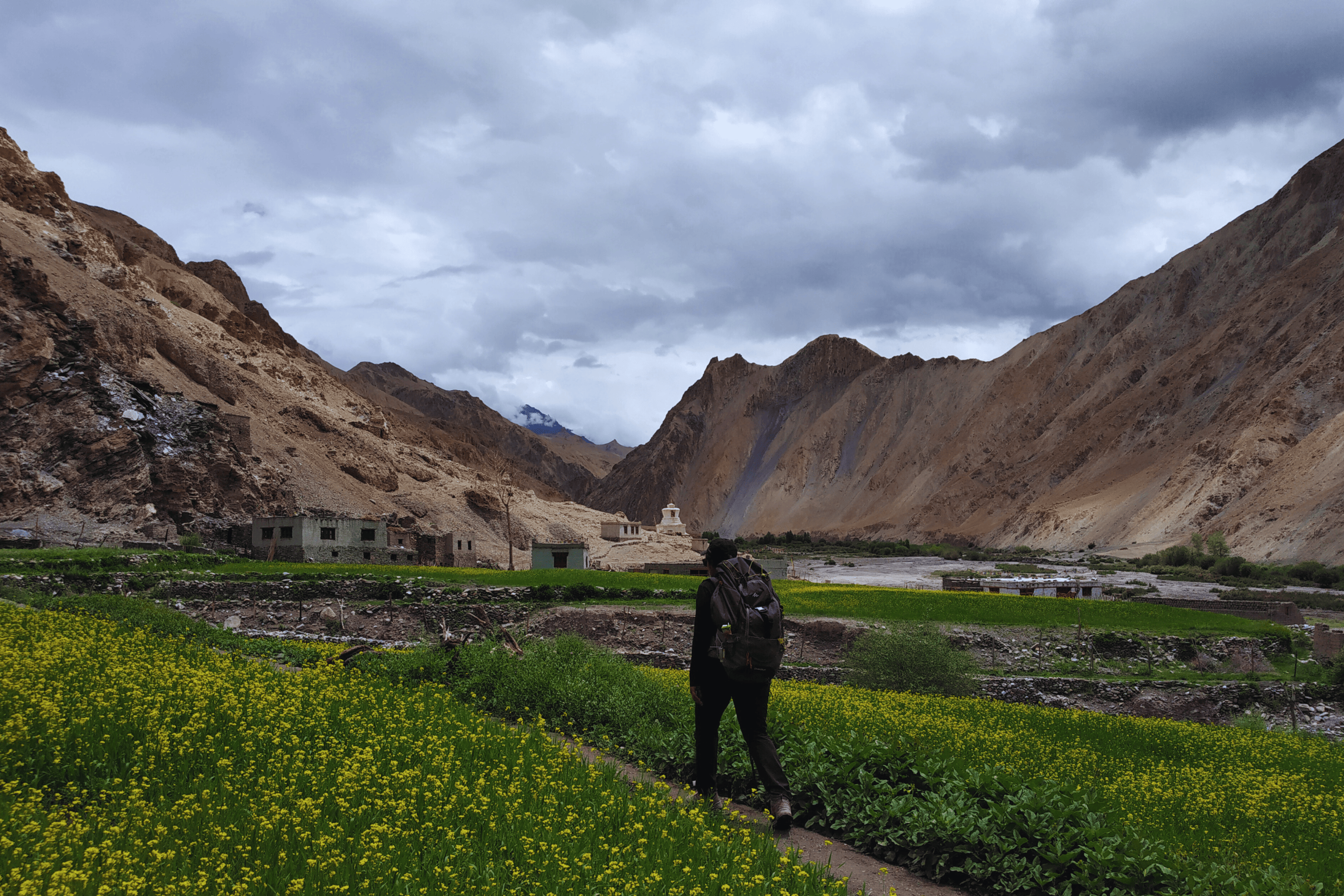
The initial trail follows the Markha River through a wide, arid valley flanked by rugged mountains in shades of rust and grey. The walking is gentle, allowing your body to ease into trekking rhythm while you absorb the otherworldly landscape. Scattered willow and sea buckthorn bushes provide the only vegetation, their bright orange berries a stunning contrast against the monochrome mountains. Sara village appears after approximately five hours—a small settlement with traditional Ladakhi homes where we establish our first wilderness camp beside a clear stream.
Day 4
Sara (3600 mts) to Markha (3750 mts) 10 km (5 to 6 hours)
Today's trek takes you deeper into the Markha Valley, following the river upstream through a landscape that gradually transforms from barren desert to irrigated green patches where villages cling to life. The trail meanders through willows, poplars, and sea buckthorn thickets, crossing numerous side streams on simple wooden bridges.
The valley opens occasionally to reveal traditional Ladakhi settlements where life continues as it has for centuries. Farmers tend terraced fields of barley and buckwheat, their irrigation channels carrying glacial meltwater through intricate systems. You may encounter local women in traditional goncha dresses or monks walking between monasteries - cultural encounters that provide a window into the resilient spirit of mountain communities.
Markha village, our destination, is the largest settlement in the valley, home to approximately twenty families. Its whitewashed houses cluster beneath a dramatic ruined fort perched on a rocky outcrop: a reminder of the valley's strategic importance on ancient trade routes. We establish camp near the village, with time to explore the old monastery. The distant profile of Kang Yatse becomes visible for the first time, its twin summits a tantalizing preview of the days ahead.
Day 5
Markha (3750 mts) to Thochuntse (4300 mts) 10 to 11 km (5 to 6 hours )
Leaving Markha, we cross the river several times as the valley narrows and the terrain becomes more dramatic. The trail passes beneath Humlung Monastery, a small gompa clinging to cliffsides where monks once meditated in isolation. The path climbs steadily through increasingly spectacular landscapes, offering views of the surrounding peaks that grow more impressive with each step.
We pass through Hankar, the highest permanent village in the Markha Valley, perched dramatically on a mountainside. Beyond Hankar, the valley constricts significantly, and the landscape transforms from pastoral settlements to raw, high-altitude wilderness. The trail winds through rocky gorges and across alluvial fans, with Kang Yatse growing larger with every step.
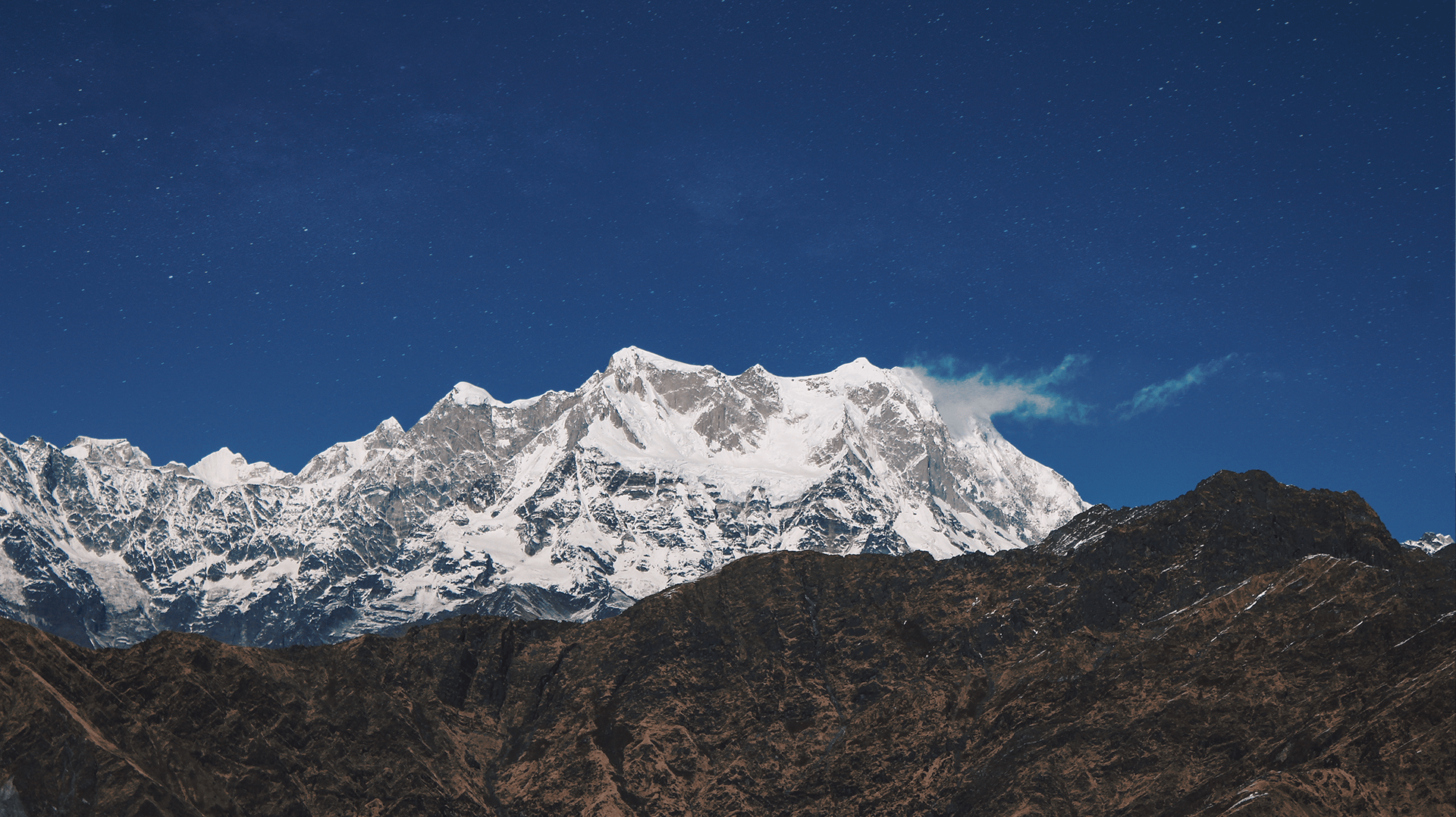
Thochuntse, our campsite, sits in a high meadow at 4,300 meters. From here, the twin summits of Kang Yatse dominate the eastern horizon - the lower western peak (our first objective) and the higher technical eastern summit now clearly visible. The air is noticeably thinner at this elevation, and even simple tasks require conscious effort.
Day 6
Thochuntse (4300 mts) to Kang Yatse Base Camp (5100 mts) 8 to 9 Km (6 to 7 hours )
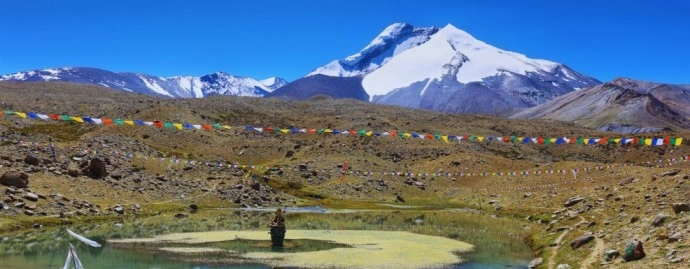
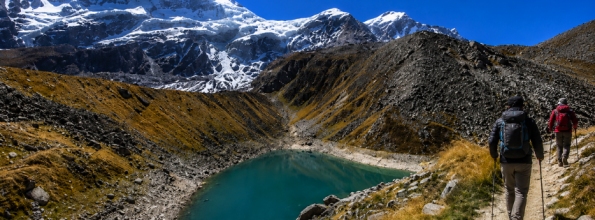
Today's trek represents a significant step upward, gaining over 800 meters in elevation as we leave the last traces of vegetation behind and enter the true alpine zone. The trail climbs through rocky terrain, passing small tarns and moraines left by retreating glaciers. Prayer flags mark the route, their mantras carried by the wind toward the mountain's summit.
As we gain altitude, the views expand dramatically. Nimaling Plain spreads below us, a vast high-altitude pasture where Ladakhi herders graze their yaks and dzos during summer months. The twin peaks of Kang Yatse rise directly ahead, their glaciers gleaming in the afternoon light . The Kang Yatse Base Camp at 5,100 meters occupies a rocky plateau with a small stream providing water—our home for the next several days. This camp sits in one of the most spectacular settings imaginable, surrounded by peaks of the Zanskar and Ladakh ranges.
Upon arrival, the priority is hydration and rest. At this altitude, the air contains barely half the oxygen available at sea level. Our camp is equipped with comfortable expedition tents, sleeping mats, and high-quality sleeping bags rated for extreme cold. The cook team prepares a nourishing dinner designed for high-altitude digestion.
Day 7
Rest and Acclimatization at Base Camp (5100 mts)
This strategically placed rest day is essential for your body to produce additional red blood cells and adapt to the extreme altitude before attempting Kang Yatse 2. At 5,100 meters, even minimal exertion feels demanding, and your body requires time to adjust.
The day is structured around gentle activity - nothing that raises your heart rate significantly. After a leisurely breakfast, we may take a short acclimatization walk to higher ground, following the "climb high, sleep low" principle that optimizes physiological adaptation. Your expedition leader conducts thorough health checks, monitoring oxygen saturation and heart rates to ensure everyone is acclimatizing properly.
The afternoon includes a detailed briefing about tomorrow's Kang Yatse 2 summit attempt, including route discussions, timing, weather considerations, and emergency protocols. This is also an opportunity to review and prepare your technical gear for the challenges ahead.
Day 8
Climb Kang Yatse 2 (6250 mts) and return to Base Camp (5100 mts) 6 km both side (11 to 12 hours )
00:30 – Wake-up call in the freezing darkness. Headlamps illuminate the camp as you dress in multiple layers, drink warm fluids, and prepare for the most challenging day of your life. The cook team provides a light, easily digestible breakfast designed for high-altitude exertion.
02:00 – Departure from Base Camp. The initial climb follows a rocky moraine, your headlamps creating pools of light on the uneven terrain. The pace is deliberately slow - at this altitude, even the fittest climbers move at a crawl. Your climbing leader sets a rhythm designed to preserve energy while maintaining progress.
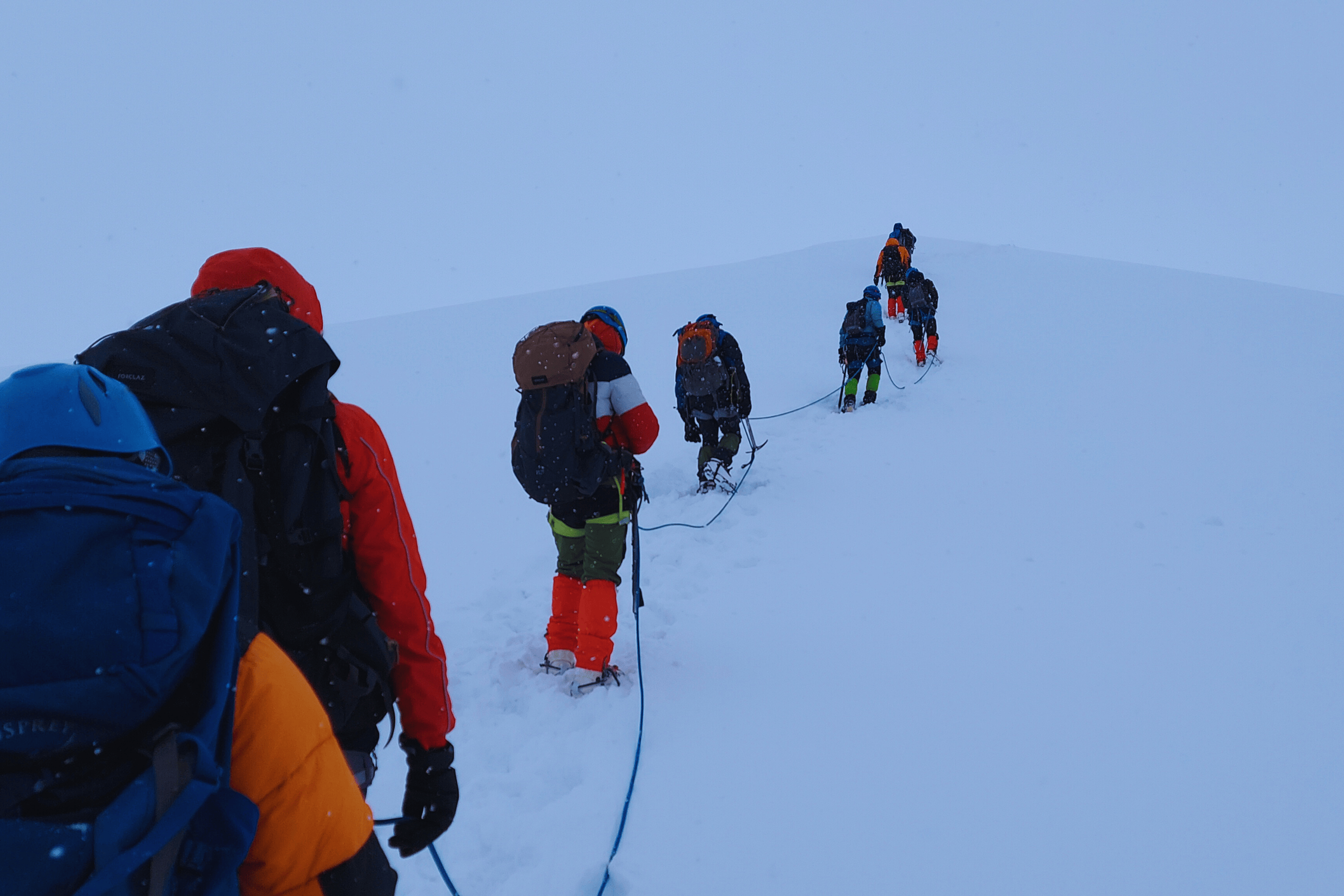
04:00 – Reaching the snowline at approximately 5,400 meters. Here we pause to don crampons and rope up for glacier travel. The snow underfoot is hard-packed from the cold, providing excellent traction. Above us, the mountain's northwest ridge rises against a sky brilliant with stars.
06:30 – The gradient steepens as we approach the summit ridge. This section requires careful footwork and concentration, but the rope team provides security. The first hints of dawn begin to color the eastern sky, transforming the peaks around us into silhouettes against the approaching light.
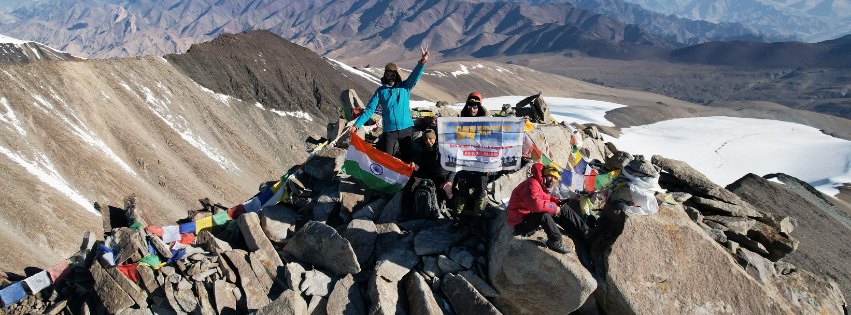
08:00 – Summit arrival at 6,250 meters. As you crest the final ridge and see the summit prayer flags, an overwhelming sense of achievement floods through you despite the physical exhaustion. Kang Yatse 2 is considered a trekking peak and does not require advanced technical mountaineering skills, though good physical condition and prior high-altitude experience are essential . The view from the summit defies description - the entire Zanskar Range spreads below, with Kang Yatse 1, the technical higher peak, looming nearby across a knife-edge ridge.
09:00 – Begin descent. At this altitude, you cannot linger - the body cannot sustain this elevation indefinitely. After celebration photos and a moment of personal reflection, we begin the careful descent. The return journey requires intense concentration as fatigue sets in and the warming sun softens the snow.
13:30 – Arrival back at Base Camp. The sight of our tents brings an indescribable relief. Hot drinks and a warm meal await, your body slowly recovering from the extreme demands of the morning. The expedition team conducts health checks on everyone, ensuring no lingering effects of altitude exposure.
Day 9
Rest and Acclimatization at Base Camp (5100 mts)
After the immense effort of the Kang Yatse 2 summit, today is dedicated to complete recovery while maintaining the acclimatization levels essential for the more challenging Kang Yatse 1. Your body has endured extraordinary demands and requires time to repair and regenerate.
The day is unstructured - you may sleep late, read, journal about yesterday's experience, or simply absorb the magnificent mountain surroundings. Gentle stretching is encouraged, but any significant exertion is avoided. The expedition team ensures you remain well-hydrated and nourished with easily digestible meals.
The afternoon includes a comprehensive briefing about the Kang Yatse 1 segment of the expedition. Unlike its western neighbor, Kang Yatse 1 at 6,400 meters is a technical peak requiring advanced mountaineering skills. The route involves steep snow slopes, a knife-edge traverse, and requires fixed ropes on the final 500 meters . Your climbing leader explains the upcoming camp rotations, the technical challenges, and the increased safety protocols for this more demanding ascent.
Day 10
Base Camp (5100 mts) to Advance Base Camp (5425 mts)
After a nourishing breakfast, we begin the next phase of our expedition - moving toward the more formidable Kang Yatse 1. The trail from Base Camp follows a different route, climbing steadily through rocky terrain toward the mountain's eastern aspect. Unlike the straightforward approach to Kang Yatse 2, this path immediately signals the increased technical difficulty ahead.
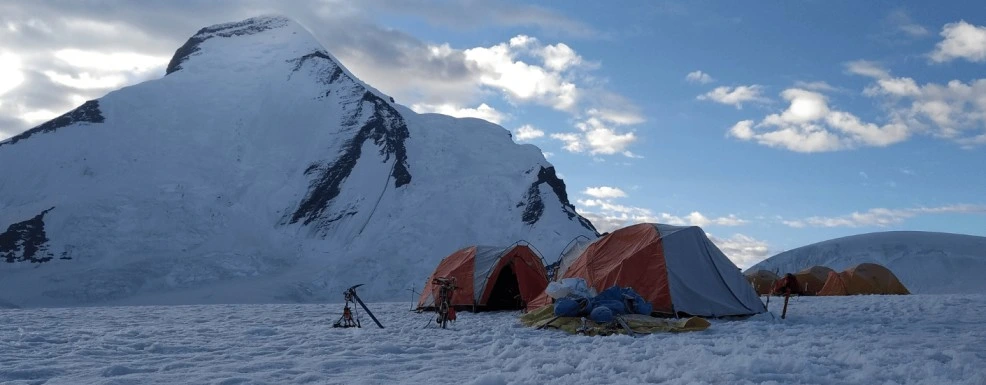
The terrain grows increasingly dramatic as we gain elevation, with the mountain's steep faces and hanging glaciers coming into clearer view. Advance Base Camp at 5,425 meters is strategically positioned for access to the technical routes above. From here, climbers can assess conditions and plan the final push.
Upon arrival, we establish camp and settle in for the evening. The altitude is immediately noticeable - even simple movements require conscious effort. Your climbing leader conducts a detailed route briefing, discussing the terrain ahead, potential hazards, and the specific techniques required for the next day's climb to Summit Camp.
Day 11
Advance Base Camp (5425 mts) to Summit Camp (5700 mts)
Today's move to Summit Camp is short in distance but significant in challenge and elevation gain. The route climbs steeply through rocky terrain and onto snow slopes, requiring careful footwork and concentration. This is where the technical nature of Kang Yatse 1 becomes fully apparent.
The climb follows a route that may involve steep snow slopes and potentially fixed ropes depending on conditions . The last 500 meters to the summit of Kang Yatse 1 is particularly steep and requires technical climbing skills . Your climbing team moves carefully, maintaining rope discipline and constant communication.
Summit Camp at 5,700 meters is a bare, exposed site in a truly wild setting - perched high on the mountain with breathtaking views of the surrounding peaks and valleys far below. The afternoon is spent resting, hydrating, and mentally preparing for the summit attempt that will begin in the early hours of tomorrow morning. Your climbing leader conducts a final detailed briefing on summit day protocols, timing, and safety procedures.
Day 12
Summit Camp (5700 mts) to Kang Yatse 1 Summit (6400 mts) and back to Base Camp (5100 mts)
00:00 – Wake-up call in the extreme cold. At 5,700 meters, the temperature plummets well below freezing. Dressing requires methodical attention: every layer must be perfect, every piece of gear properly positioned. A light breakfast provides essential fuel.
01:30 – Departure from Summit Camp. The initial climb in darkness requires intense concentration, your headlamp illuminating only the immediate terrain. The route follows the North East ridge, which is rated Alpine AD+/D- for its technical difficulty . Fixed ropes may be in place on the steeper sections.
04:00 – Reaching the technical crux. The final 500 meters to the summit is very steep and requires advanced climbing technique . This is the most demanding section of the entire expedition - a knife-edge traverse with exposure on both sides, requiring careful rope management and steady nerves.
06:30 – Summit arrival at 6,400 meters. The eastern summit, the true high point of Kang Yatse, rewards you with a 360-degree panorama that few ever witness. On clear days, distant peaks of the Karakoram range, including perhaps K2, are visible on the horizon . The sense of achievement is overwhelming - you have climbed one of Ladakh's most iconic and challenging peaks.
07:30 – Begin descent. At this altitude, extended summit stay is impossible and dangerous. After celebration photos and a moment of personal reflection, we begin the careful descent. The technical sections require even more concentration now as fatigue sets in.
12:00 – Return to Summit Camp for a brief rest and warm drinks before continuing the descent.
15:30 – Back at Advance Base Camp. The relief of reaching camp after such an immense day is indescribable.
18:00 – Continue descent to Base Camp (5,100 m) if energy permits and conditions allow, or rest at Advance Base Camp before completing the descent tomorrow morning. Your expedition leader makes this decision based on team conditions and safety considerations.
Day 13
Base Camp (5100 mts) to Chukdo (3900 mts)via Kongmaru La (5200 mts) 16 km (8 hours)and drive to leh (3 hours)
After a celebratory breakfast, we break camp and begin our final day of trekking. The route descends gradually to Nimaling Plain, where herds of yaks and dzos graze against a backdrop of spectacular peaks. The trail then climbs steadily toward Kongmaru La at 5,200 meters - one of the highest passes of the entire journey.
The ascent to the pass is demanding but rewarding, with each switchback revealing new perspectives of the mountains we've come to know intimately over the past two weeks. At the summit, prayer flags whip in the wind, and a 360-degree panorama unfolds that encompasses the entire Markha Valley, the Zanskar Range, and the peaks we've conquered. This is a moment for final photographs and offering prayers of gratitude to the mountain gods.
The descent from Kongmaru La is steep and sustained, dropping over 1,300 meters to the village of Chokdo. The trail winds through dramatic gorges and past abandoned settlements, the vegetation gradually returning as we lose altitude. At Chokdo, our vehicles await for the drive back to Leh. The three-hour journey follows the Markha River and then the Indus, offering a final tour through Ladakh's diverse landscapes.
Arrival in Leh brings hot showers and comfortable beds - luxuries that feel extraordinary after days in the wilderness. A celebratory dinner at a traditional Ladakhi restaurant brings the expedition team together one last time, with summit stories shared and contact information exchanged among friends who have shared an experience that will bond them for life.
Day 14
Departure from Leh (3500 mts)
Your expedition concludes with airport transfers as per your flight schedule. The drive to Kushok Bakula Rimpochee Airport offers final glimpses of the Stok Range, their peaks now familiar friends. As you board your flight and watch the Himalayas recede through the aircraft window, you carry with you not just photographs and certificates, but the profound knowledge that you have stood atop two 6,000-meter peaks - a member of an exclusive fraternity of high-altitude climbers who have conquered both the accessible western summit and the technical eastern peak of Ladakh's most iconic mountain.
Day 15
Buffer day
This extra day is built into the itinerary to account for the unpredictable nature of high-altitude mountaineering. Weather delays, the need for additional acclimatization, or unexpected circumstances may require adjusting the schedule. This buffer ensures that your summit attempts have the best possible chance of success while maintaining the safety protocols essential at extreme altitude. If not needed for contingencies, this day can be used for additional exploration in Leh, visiting monasteries missed earlier, or simply for rest and recovery before your departure.
WHAT'S INCLUDED
- ●Hotel stay Leh (Day 1,2 and 13 ) on double or triple sharing basis
- ●Meals during the trek (Day 3 Lunch till Day 13 Lunch)
- ●Forest Permits/Camping Charges, if any (Upto the amount charged for Indian nationals)
- ●Experience & Mountaineering course certified Expedition Leader with First Aid certification
- ●Experience Trek guide/Sherpa, cook, helpers, porters & mules for carrying common luggage
- ●Transport Leh to Leh
- ●Tents on twin sharing basis, Sleeping bags, mats
- ●Safety Equipment includes Helmet, Rope, Harness, Carabiners, Micro spikes/ Crampons, Safety kit and Gaiters, etc if required
- ●First aid medical kits and oxygen cylinder
WHAT'S NOT INCLUDED
- ●Meals in Leh
- ●Meals during road journeys
- ●Buffer Day Charge
- ●Cost of any kind of Insurance. Since insurance is mandatory, kindly get yourself insured from our partners ASC360 through www.asc360.com
- ●Portage of personal bags during the trek
- ●Any Expense of personal nature
- ●Any Expense not specified in the inclusions list.
- ●Leh Local Transport for Vist any place
Are you eligible for this adventure?
Annapurna Base Camp Trek takes you to a height of 4,130M and is rated a moderate level trek for its long trekking distances. For its elevation and distances, it is recommended for trekkers with some prior experience in the high-altitudes.
Grade
Challenging
Max Altitude
6400 & 6250 mts
Distance
82 km

WMRS Level Required

Terrain

Prerequisite Skills

Fitness Benchmark
WMRS Level Required
WMRS 8
Annapurna Base Camp Trek is a level 4 adventure on the Bikat Rating Scale.
This makes it mandatory for you to have high-altitude experience of preferably multiple treks marked at level 3 on the WMRS. The altitude, the terrain, and the nature of the climb demand a certain level of endurance and a need for you to be aware of how your body reacts to the various features of the high-altitude environment.
If you do not know what level of WMRS trek would suit you best, worry not! Fill out this Form:
We will send you a progression chart to help you comfortably get out of your comfort zone in order to level up and ultimately reach your highest potential in the big, bad world of outdoor adventure.
Frequently Asked Questions
Packing List
This is a list of essential items for individuals going on a trek with Wanderin’ Man Adventures. This list contains only those items which the participants are required to bring with them. The list excludes those items which are provided by Wanderin’ Man Adventures on the trek. We have divided the items into five categories. All the items in the list are essential except for those marked as optional.
🟩 Trekking Gear
- Rucksack bag with rain cover
- Day Pack Bag - Recommended for treks with summit day
- Head Torch with spare Batteries
- UV protection sunglasses
- Water Bottles - 2 bottles of 1 liter each
🟩 Footwear
- Non-skid, deep tread, high-ankle trekking shoes - 1
- Pair of light weight Slipper/Sandals for the campsite - 1
🟩 Clothing
- Quick Dry Warm lower or Track Pants - 2
- Full sleeves T-shirts/Sweatshirts (1 for every 2 days of trekking)
- Pair of thick woolen socks (1 pair for every two days of trekking)
- Thermal Body warmer Upper & Lower - 1
- Undergarments (1 for each day of the itinerary)
- Warm jacket closed at wrist & neck - 1
- Full sleeves sweater - 1
- Rain wear (Jacket & Pants) - 1
- Pair of water-proof, warm gloves - 1
- Woolen cap - 1
- Sun shielding Hat - 1
- Multipurpose Buff - 2
🟩 Toiletries
- Personal toiletries kit (Small Towel, Toilet paper, paper soap, Bar soap, toothbrush, toothpaste, cold cream, etc.)
- Sun screen lotion small pack (SPF 30 & Above) - 1
- Lip Balm small pack - 1
🟩 Utensils
- Small size, Lightweight & Leak proof lunch box - 1
- Plate - 1
- Spoon - 1
- Tea/Coffee (plastic) Mug - 1
🟩 Miscellaneous
- Camera (Optional)
- Carry your medicines in plenty in case you have any specific ailment. Consult your doctor before joining the trek.
- Dry fruits, Nuts, Chocolate bars (Optional)
Note-
- For long treks, please carry a spare sunglasses.
- For winter trek please try to carry a thermal water bottle.
- For long winter treks, please carry an extra pair of warm pants.
Why Wanderin' Man?
(SET- Safety, Expertise & Trust )

Safety
- ●Small Group Size in the ratio of 6:1 (participant to leader)
- ●No compromise on safety and sustainability promise
- ●Experienced and Certified Mountaineering Professional Leaders
- ●Region Mapped with Emergency Evacuation Plan
- ●Certified Standard Equipment by UIAA (International Climbing and Mountaineering Federation certification) & other Similar Bodies
- ●Minimized Risk Management Standard Operating Procedure are applied for every Trek and tour
- ●Certified First Aid Support and Doctors* with constant availability of Safety Equipments like Medical Kit, Rescue Kit
- ●Constant communication is aided with the help of Communication Devices
- ●Certified and registered Transporter for transportation purpose

Expertise
- ●Founders of the company have extensive experience of 15 years having organized approx 2000+ trekking, Expeditions and other adventure activities.
- ●Wanderin’ Man Adventures operating expeditions above 8000 mts.
- ●Under the umbrella of Wanderin’ Man Adventures 15 + adventure activities Programs have been organized
- ●Founders have mountaineering certifications from the esteemed mountaineering institutes of India.
- ●Team is composed of experienced mountaineers and trek leaders with thorough understanding of norms and procedures.

Trust
- ●Trust has been the hallmark of our company since its inception be it any program on the list.
- ●Special emphasis is laid on the use of standard procedures and equipments as per the mountaineering norms
- ●95% of our clients have availed our service on repeat basis.
- ●Our business has expanded primarily based on the “word of mouth” from our existing clients to new ones
What Our Customers Say


Cancellation Policy
Cash Refund (All events including Friendship Peak Expedition except other Mountaineering Expeditions) - Cash refunds are only available for bookings made without any discounts, such as promotional codes or dynamic discounts. Additionally, cash refunds are not available for shifted batch bookings or if the booking status is "Booked". Add-ons are non-refundable. The amount of the refund will be determined based on the following guidelines:
Cancellations made up to 45 days before the departure date
Cancellations made up to 31 days before the departure date
Cancellations made between 30 and 21 days before the departure date
Cancellations made between 20 and 11 days before the departure date
Cancellations made less than 11 days before the departure date are not eligible for a cash refund.
Voucher Refund Policy
Voucher Refund: This option is available for all types of bookings including the bookings made under promotional offers. The Wanderin' Man Adventures would offer you a short-term voucher that would enable you with a flexibility to book any other Wanderin' Man Adventures event using the voucher.
The option of claiming a voucher is available till 7 days prior to the departure of the event. The refund of the amount would be processed as per deduction guidelines outlined below:
The amount for refund processing would always be calculated basis the net amount paid* for booking the event with respect to the Base Price of the event (excluding additional components like transport, rent, portage, etc.).
Please note that the voucher issued would not include the service tax amount paid while making the booking. However, when you use the voucher to book again on our website, service tax would not be applicable on the voucher amount.
Validity of the voucher would be 24 months from the date of issue.
*Net Amount Paid would be the amount paid to Wanderin' Man Adventures at the time of booking after adjusting for all rebates provided by applying vouchers.
Similar Adventures
Khopra Ridge Trek
Less popular, less crowded, more beautiful alternative to ABC
- Nepal
- 10 Days
- BRS 4
- 4767 m
Tarsar Marsar Trek
A Shorter and Easier Alternative to the Kashmir Great Lakes Trek
- Kashmir
- 7 Days
- BRS 4
- 4024 m

Hampta Pass Trek
An Enchanting Cross-Over from Manali to Spiti
- Himachal
- 5 Days
- BRS 4
- 4200 m
Related Itinerarys