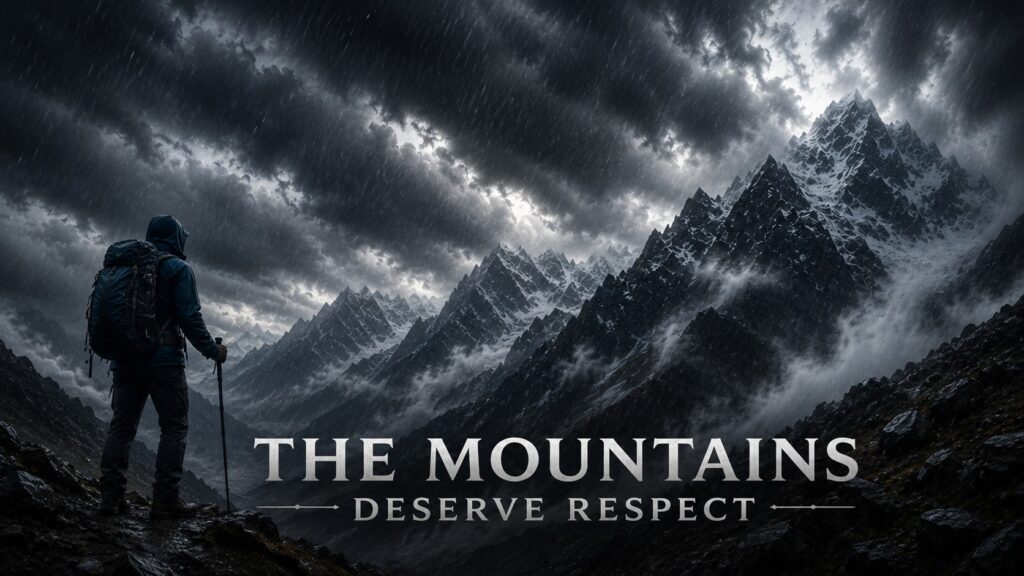
Himalayan Trekking Safety: How to Stay Safe in Bad Weather
A Himalayan trek rarely goes exactly according to plan. You may leave camp beneath a clear blue sky and, a few hours later, find yourself walking through rain, fog, strong winds or snowfall. At altitude, conditions can change quickly, and a trail that felt comfortable in the morning can become slippery, exposed or difficult to navigate by afternoon. That is why Himalayan trekking safety in bad weather begins with one simple principle:
Do not prepare for the weather you expect. Prepare for the weather you might encounter.
Good mountain safety is not about eliminating adventure. It is about recognising risk early, making informed decisions and knowing when continuing is no longer worth the risk.
Why Himalayan Weather Can Change So Quickly
Mountain weather is affected by altitude, terrain, wind, cloud formation and local geography. Conditions can therefore differ dramatically between a valley, forest trail, campsite and exposed ridge. A trekker may encounter:
- Heavy rain
- Snowfall or snowstorms
- Thunderstorms and lightning
- Strong winds
- Dense fog
- Hail
- Sudden temperature drops
- Poor visibility
- Slippery or muddy trails
- Swollen streams
- Falling rocks or unstable slopes
The important lesson is not to fear these conditions, but to respect how quickly they can alter the risk on a route. A beautiful mountain morning is never a guarantee of a safe mountain afternoon.
Check the Weather Before You Trek
Weather awareness should begin before you reach the trailhead. Check reliable forecasts and official weather warnings for the region. In India, the India Meteorological Department (IMD) is an important source of weather forecasts and warnings. Do not rely on a forecast alone: ask your trek leader or local guide about actual ground conditions. Recent rainfall, snow accumulation, stream levels, trail damage and visibility may influence the decision more than a general forecast. Before setting out, ask:
- What weather is expected today?
- Are thunderstorms or lightning possible?
- Is heavy rain or snowfall forecast?
- Could strong winds affect exposed sections?
- Are visibility conditions likely to deteriorate?
- Are streams or rivers safe to cross?
- Is the route suitable for today’s conditions and the group’s ability?
A forecast tells you what may happen. Local experience helps you understand what it means for the trail.
When NOT to Trek
Knowing when not to trek is just as important as knowing how to trek. Do not start—or seriously consider postponing—the trek when:
- Severe thunderstorms or lightning are forecast.
- Heavy snowfall is expected to make navigation unreliable.
- Strong winds make exposed ridges or passes hazardous.
- Heavy rain has created unstable slopes or dangerous crossings.
- There is significant landslide, avalanche or rockfall risk.
- Authorities or local officials have issued warnings or closures.
- A member of the group is seriously unwell or exhausted.
- The group lacks appropriate equipment for the conditions.
- There is no realistic emergency communication or evacuation plan.
There is no shame in cancelling a trek because of dangerous weather.
The mountain does not award extra points for taking avoidable risks.
Dress for Changing Himalayan Weather
The best trekking clothing system is one that allows you to respond to changing conditions. Instead of relying on one thick jacket, use layers:
- Moisture-wicking base layer
- Warm insulating layer
- Waterproof and windproof outer layer
- Waterproof trousers or rain protection
- Warm hat
- Gloves
- Thermal or woollen socks
- Suitable trekking footwear
Keep your waterproof jacket somewhere accessible. A rain shell packed underneath everything else is not much help when the rain starts suddenly. The CDC recommends appropriate clothing, insulation and staying dry when exposed to cold environments. citeturn0search3
What to Do When Heavy Rain Starts
Rain does more than make you wet. It can turn a firm trail into mud, reduce visibility, loosen rocks and increase the flow of mountain streams. When heavy rain begins:
- Reduce your pace.
- Increase your attention on slippery sections.
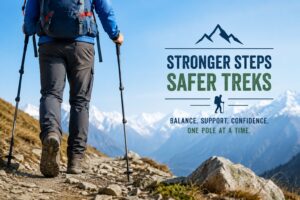
- Use trekking poles for stability.
- Keep phones, cameras and documents waterproof.
- Avoid standing beneath unstable slopes.
- Stay away from swollen streams.
- Remain with your group.
- Follow the trek leader’s instructions.
- Stop or turn back if the route becomes unsafe.
Never assume a stream is safe because it was safe an hour ago.
Water levels can change rapidly after rainfall, including rainfall that occurs upstream.
How to Stay Safe During Snowfall
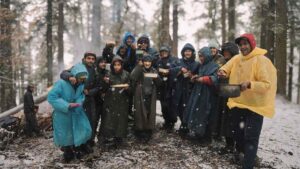
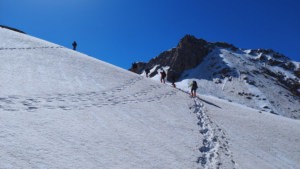
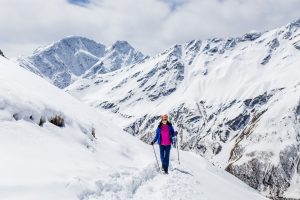
Snow changes both the appearance and behaviour of a mountain trail. Fresh snow can cover rocks, route markers and existing footprints. Heavy snowfall can reduce visibility and make navigation increasingly difficult. If snowfall becomes significant:
- Stay close to your group.
- Follow the established route.
- Do not wander away for photographs or exploration.
- Keep spare clothing dry.
- Protect your hands, feet and head.
- Monitor your energy and warmth.
- Follow the leader’s decision to continue, stop or retreat.
If the route can no longer be safely identified, navigation takes priority over progress.
Treat Lightning as an Immediate Warning
Thunderstorms require quick decisions. Exposed ridges, summits and open terrain can become particularly hazardous during lightning activity. The National Park Service advises moving toward safe shelter, avoiding exposed ridges, peaks, open areas, isolated tall objects and water. citeturn0search1turn0search7
When lightning threatens:
- Leave exposed ridges and summits.
- Move toward safer terrain or substantial shelter as quickly as practical.
- Avoid isolated trees and other tall objects.
- Stay away from water.
- Do not remain on exposed rock.
- Follow your trek leader immediately.
Do not assume that a tent provides adequate protection from lightning. NPS guidance specifically notes that tents are not safe lightning shelter. citeturn0search1
If the weather is telling you to leave an exposed position, listen early—not after the storm is directly overhead.
Protect Yourself From Cold and Hypothermia
Cold becomes more dangerous when combined with rain, wind, fatigue and wet clothing. Watch for warning signs such as:
- Persistent shivering
- Clumsiness
- Poor coordination
- Confusion
- Slurred speech
- Increasing drowsiness
If someone becomes seriously cold, get them into suitable shelter, remove wet clothing, provide dry insulation and seek medical assistance. Do not dismiss significant confusion, impaired coordination or unusual drowsiness as ordinary trekking fatigue.
Do Not Confuse Weather Problems With Altitude Problems
Bad weather and altitude can occur together, making it harder to understand what is happening to a trekker. At high altitude, the body needs time to acclimatise to reduced oxygen availability. The CDC recommends gradual acclimatisation and advises against ascending when symptoms of altitude illness are present or worsening. citeturn0search0turn0search3
Watch for:
- Headache
- Dizziness
- Nausea
- Unusual fatigue
- Difficulty sleeping
- Increasing breathlessness
Do not simply blame these symptoms on a difficult day or bad weather.
If altitude illness is suspected and symptoms worsen, descent becomes the priority.
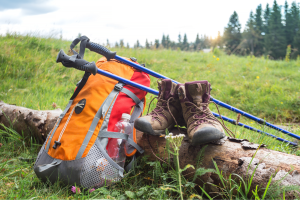
Carry a Weather-Ready Trekking Kit
Your backpack should prepare you for changing conditions, not merely today’s forecast.
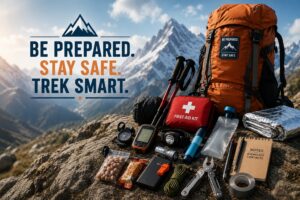
Carry:
- Waterproof rain jacket
- Backpack rain cover
- Extra warm layer
- Spare socks
- Waterproof bags
- Headlamp and spare batteries
- First-aid kit
- Trekking poles
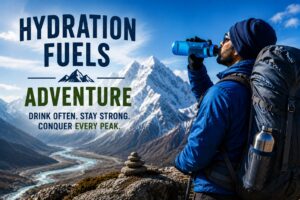
- Adequate water
- Emergency food
- Navigation equipment
- Power bank
- Emergency contact information
For remote routes, understand the group’s emergency communication and evacuation arrangements before departure. A small amount of preparation can prevent a minor weather problem from becoming a major one.
Use the Three-Question Mountain Safety Check
When conditions deteriorate, stop and ask three questions.
Is the Route Still Safe?
Has rain made the trail unstable? Has snow hidden the route? Has visibility fallen too far? Has a stream become dangerous? If the answer is yes, reassess immediately.
Is the Group Still Safe?
Consider cold exposure, fatigue, injuries, altitude symptoms and the ability of the slowest member to continue safely. A trek should be managed according to the group’s condition—not the strongest person’s ability.
Can We Safely Return?
If the weather continues to deteriorate, could you still descend safely?
Continuing upward should never leave you without a safe way back.
Expert Perspective: Good Trekking Is Good Risk Management
Professional mountain leadership is not about predicting every weather event. It is about recognising changing risk and acting before the situation becomes critical. Experienced trek leaders assess several factors together:
Weather + Terrain + Altitude + Group Condition + Time + Exit Options
That is why a professional may change an itinerary, shorten a day’s route or turn a group around even when the original plan looked perfectly reasonable that morning. This risk-management approach is consistent with established guidance on altitude, cold exposure and lightning safety from organisations including the CDC and National Park Service.
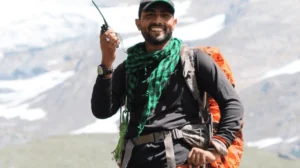
Expert Reviewer: Wakeel Ahmad
Founder, Wanderin’ Man Adventures | 15 years’ experience
Know When to Turn Back
Turning around is one of the most valuable skills a trekker can develop. Stop or retreat when:
- Visibility becomes dangerously poor.
- Lightning threatens exposed terrain.
- Snow makes navigation unreliable.
- The trail becomes unstable.
- A stream becomes unsafe to cross.
- Wind becomes hazardous.
- A participant develops serious altitude or cold-related symptoms.
- The trek leader determines that conditions are beyond the safe operating limit.
The summit is optional. Returning safely is not.
Make Safety Part of the Adventure
The best Himalayan experiences are not created by ignoring risk. They are created by understanding it. Check the weather. Carry the right equipment. Dress in layers. Stay with your group. Listen to experienced leaders. Recognise altitude and cold-related warning signs. And know when not to trek. The mountains do not need to be conquered in a single attempt. Sometimes the smartest adventure decision is to stop, turn around and return another day.
Respect the weather. Respect the terrain. Respect your limits.
Because the greatest Himalayan adventure is not simply reaching the destination.
It is coming home safely with a story worth telling.