Essential Item Kit for Experienced Trekkers: for emergency support
Emergency Support Essential Item Kit for Experienced Trekkers, is a critical part of safe expedition planning. Trekking in remote mountains, high-altitude regions, and technically demanding terrain requires much more than stamina, experience, and the right mindset. Even highly skilled trekkers can face unpredictable situations such as altitude sickness, sudden weather changes, navigation errors, injuries, equipment failure, or long delays in rescue support. In such conditions, preparation becomes a core part of survival.
That is exactly why an Emergency Support Essential Item Kit for Experienced Trekkers matters so much. This is not just another trekking checklist or general backpacking list. Instead, it is a carefully planned collection of emergency supplies, survival tools, medical items, and backup gear designed to help trekkers respond effectively when things go wrong in remote mountain environments.
Whether you are trekking across a high pass, moving through a glacier zone, crossing isolated valleys, or camping in severe weather, the right emergency support kit can help you stabilize the situation, protect yourself from exposure, stay hydrated, navigate safely, and hold out until rescue arrives or self-rescue becomes possible.
Why an Emergency Support Essential Item Kit for Experienced Trekkers Is So Important
As trekkers gain more experience, they often move away from crowded trails and begin exploring more remote routes. These routes may be more rewarding, but they also come with higher risks. In many mountain regions, mobile networks disappear, rescue operations take time, and access to medical help is extremely limited. Because of that, even a manageable problem can turn serious very quickly.
For example, a twisted ankle on a popular day trail may be inconvenient. The same injury on a remote ridge at high altitude, in bad weather, can become a dangerous emergency. In the same way, dehydration, a wrong turn, damaged gear, or an unplanned overnight stop can create a chain of problems if you are not equipped to handle them.
An Emergency Support Essential Item Kit for Experienced Trekkers is important because it helps you:
- respond quickly to injuries and health problems
- stay warm and protected during sudden weather exposure
- navigate when trails disappear or visibility drops
- communicate distress signals or emergency coordinates
- maintain hydration and calorie intake during delays
- repair essential trekking gear in the field
- stay mentally calm because you have a practical response plan
In short, this kit supports self-reliance, reduces panic, and gives you a much better chance of making good decisions in a stressful situation.
First Aid and Medical Essentials in an Emergency Support Essential Item Kit for Experienced Trekkers
A strong medical section is the backbone of any trekking emergency kit. In the mountains, injuries and illness rarely happen at a convenient time or location. Therefore, experienced trekkers should carry enough medical support to manage minor injuries, stabilize more serious issues, and prevent complications until professional help becomes available.
This is especially important at altitude, where physical stress, dehydration, cold, and lower oxygen levels can intensify medical problems. A headache can be more than fatigue. A blister can become a mobility issue. A mild stomach problem can turn into dehydration very quickly. Because of this, medical preparedness should never be treated as optional.
Medical Supplies Every Trekking Emergency Kit Should Include
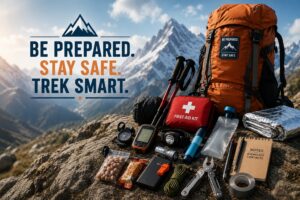
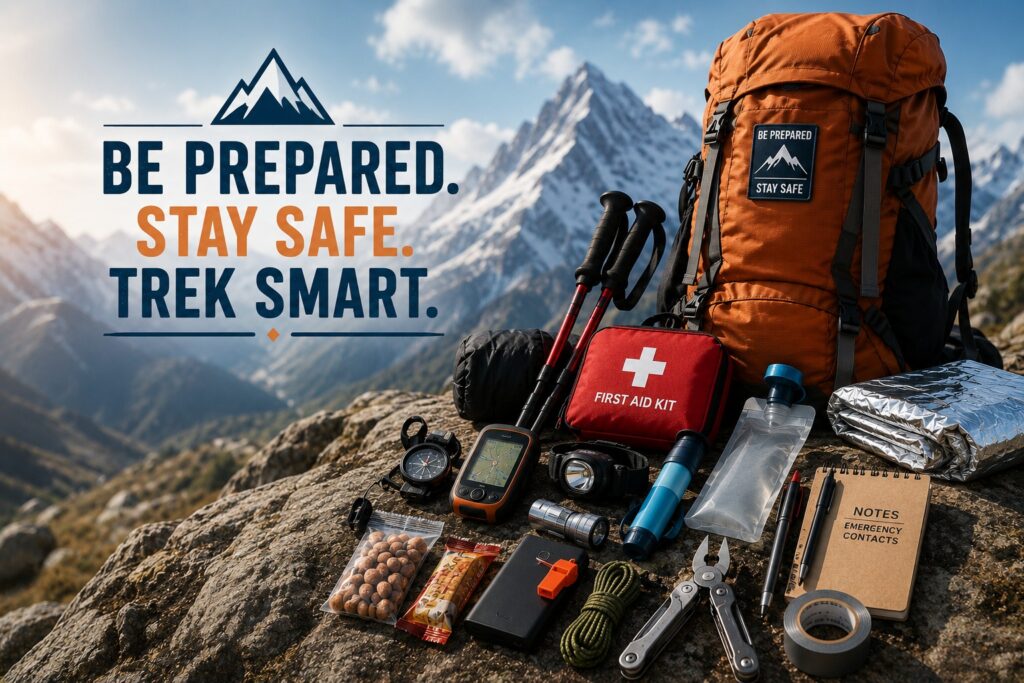
Your first-aid and medical kit should ideally include:
- high-altitude medication prescribed for Acute Mountain Sickness (AMS)
- pain relievers and anti-inflammatory tablets
- sterile gauze pads and wound dressings
- crepe bandages and adhesive bandages
- antiseptic wipes and disinfectant solution
- antibiotic ointment for cuts and abrasions
- blister pads or moleskin for foot care
- personal prescription medicines
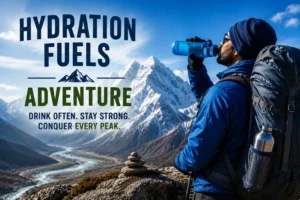
- oral rehydration salts (ORS)
- electrolyte tablets or hydration supplements
- tweezers and small medical scissors
- adhesive tape for bandaging support
Just as importantly, know how to use everything in your kit before the trek begins. Carrying supplies helps, but knowing when and how to use them is what makes the difference in an actual emergency.
Navigation and Communication Tools in an Emergency Support Essential Item Kit for Experienced Trekkers
Even experienced trekkers can lose orientation in mountain terrain. Trails can disappear under snow, fog can erase visibility, cairns can be missed, and route conditions can change from one season to the next. That is why navigation and communication tools are among the most important parts of an Emergency Support Essential Item Kit for Experienced Trekkers.
A good rule is simple: never rely on one navigation method alone. GPS devices can fail, batteries can die, and mobile phones can become useless in cold temperatures or no-network zones. Redundancy is essential in the backcountry.
Navigation and Communication Gear for Remote Trekking Safety
Include the following navigation and communication items in your trekking emergency support kit:
- handheld GPS device
- offline maps downloaded on a phone or GPS app
- printed topographic trail maps
- waterproof compass
- emergency whistle
- satellite phone for remote expeditions
- Personal Locator Beacon (PLB) or satellite messenger
- high-capacity power bank
- spare charging cables stored in a waterproof pouch
- backup batteries if your devices require them
These tools do more than help you stay on route. They also allow you to share your location, call for help, or signal distress if an emergency becomes serious.
Shelter and Weather Protection Gear in an Emergency Support Essential Item Kit for Experienced Trekkers
Mountain weather can shift without warning. A clear morning can turn into sleet, strong winds, snowfall, freezing rain, or a sudden temperature drop. If you are forced to stop because of injury, route blockage, exhaustion, or weather, shelter becomes one of your most important survival priorities.
That is why every Emergency Support Essential Item Kit for Experienced Trekkers should include lightweight but effective weather protection and emergency shelter gear. These items can help you preserve body heat, reduce exposure, and buy critical time until conditions improve.
Emergency Shelter Gear for High-Altitude Trekking and Cold Protection
Your mountain emergency shelter kit should include:
- emergency bivy sack
- thermal survival blanket
- lightweight tarp or emergency shelter sheet
- waterproof poncho
- stormproof outer shell or rain jacket
- insulated gloves
- wool cap or thermal headwear
- spare thermal socks
- compact sitting pad or insulation layer for the ground
These items may not seem exciting when the weather is good, but in a survival situation they can make a dramatic difference. In the mountains, staying dry and retaining heat is often just as important as treating an injury.
Fire, Light, and Warmth Essentials in an Emergency Support Essential Item Kit for Experienced Trekkers
Fire and light are not just comfort items in the wilderness—they are survival tools. Fire can provide warmth, help dry wet gloves or socks, melt snow for water, assist with morale, and sometimes help signal your position. Light is equally important if you are moving after sunset, setting up an emergency shelter, searching for gear, or handling a medical problem in the dark.
Because mountain conditions are often wet, cold, and windy, fire-starting tools should always have backup options.
Fire-Starting and Lighting Tools for Trekking Safety and Survival
Useful fire and light essentials include:
- windproof waterproof lighter
- waterproof matches in a sealed case
- ferro rod or compact fire starter
- emergency candle
- high-lumen headlamp
- small backup flashlight
- extra batteries
- rechargeable battery backup
The goal here is reliability. If one method fails because of moisture or cold, another should still work.
Food, Water, and Energy Backup in an Emergency Support Essential Item Kit for Experienced Trekkers
When a trek does not go according to plan, energy and hydration can drop faster than expected. Long delays, bad weather, altitude, and stress all increase the body’s demands. If you are injured, lost, or waiting out a storm, calorie intake and water access become essential to staying alert and physically capable.
That is why emergency food and water backup should always be part of an Emergency Support Essential Item Kit for Experienced Trekkers.
Emergency Food and Water Supplies for Remote Trekking Survival
Carry lightweight but high-value supplies such as:
- high-calorie energy bars
- nuts and trail mix
- dried fruit
- peanut butter sachets or energy gels
- dehydrated meals or instant meals
- electrolyte supplements
- oral rehydration support
- water purification tablets
- portable water filter
- UV purifier if you use one
- collapsible water bottle
- spare hydration pouch or backup water container
The ideal emergency food is compact, shelf-stable, calorie-dense, and easy to consume when you are cold, tired, or under stress.
Tools and Repair Equipment in an Emergency Support Essential Item Kit for Experienced Trekkers
Gear failure in the mountains can be much more than an inconvenience. A broken pack strap, damaged trekking pole, ripped tent, torn rain layer, or snapped buckle can affect mobility, shelter, and warmth. In some situations, it can even compromise your ability to continue safely.
For that reason, every Emergency Support Essential Item Kit for Experienced Trekkers should include a compact repair setup that can handle temporary field fixes.
Repair Tools Every Trekking Emergency Support Kit Should Carry
Useful repair and utility tools include:
- multi-tool
- sturdy trekking knife
- strong duct tape
- heavy-duty zip ties
- paracord or utility cord
- compact sewing kit
- repair adhesive for outdoor gear
- spare buckles, clips, or tent repair patches
These items do not take much space, but they can help restore critical function to damaged gear when you are far from support.
Personal Safety and Emergency Documents in an Emergency Support Essential Item Kit for Experienced Trekkers
During a serious emergency, rescue teams may need quick access to your identity, health details, and emergency contacts. If you are injured, disoriented, or unable to speak clearly, this information can save time and improve the quality of response.
That is why documentation is a practical part of an Emergency Support Essential Item Kit for Experienced Trekkers, not an afterthought.
Safety Documents and Identification for Emergency Trekking Preparedness
Keep the following items in a waterproof pouch:
- government-issued ID copy
- emergency contact list
- medical information card
- blood group details
- allergy information
- insurance details if relevant
- small notebook
- waterproof pen
- personal safety alarm if permitted in your trekking region
A notebook can also be useful for leaving route notes, recording symptoms, or communicating basic information in an emergency.
Additional Survival Gear for an Emergency Support Essential Item Kit for Experienced Trekkers
Beyond the core categories, there are a few small items that can be surprisingly useful when a situation becomes uncertain. These are not always used, but when they are needed, they can make a big difference.
Backup Survival Essentials for Mountain Trekking Emergencies
Consider carrying:
- signal mirror
- reflective tape
- emergency whistle backup
- chemical light sticks
- compact binoculars if your route demands them
- spare sunglasses
- sunscreen and lip balm
- insect repellent where relevant
- emergency cash
- spare trekking pole repair parts
These additions can improve visibility, comfort, communication, and self-sufficiency in remote environments.
How to Organize an Emergency Support Essential Item Kit for Experienced Trekkers
Having the right items is only half the job. If your emergency gear is buried at the bottom of your pack or scattered across multiple compartments, it may not be useful when you need it most. Organization is a major part of emergency preparedness.
A practical setup usually works best:
- keep first-aid supplies in one clearly marked pouch
- store navigation tools where they are easy to reach
- use waterproof dry bags for electronics and documents
- keep shelter and survival items accessible near the top of the pack
- separate daily-use gear from true emergency backup gear
- check medicine expiry dates and battery charge levels before every trek
- replace used items immediately after returning home
The easier your emergency kit is to access, the faster you can respond under pressure.
Final Thoughts on an Emergency Support Essential Item Kit for Experienced Trekkers
An Emergency Support Essential Item Kit for Experienced Trekkers is not about overpacking or carrying unnecessary weight. It is about carrying the right gear for the kind of terrain, weather, altitude, and remoteness you are choosing to enter.
Experience absolutely improves confidence and judgment. However, mountains remain unpredictable. Weather can turn suddenly, routes can change, and small problems can escalate quickly when help is far away. A well-planned trekking emergency kit gives you options, time, and control when conditions become difficult.
By carrying the right first-aid supplies, navigation tools, communication devices, shelter gear, emergency food, repair items, and safety documents, you improve your ability to handle mountain emergencies with clarity rather than panic.
In the end, preparation is not extra caution—it is part of responsible adventure. And in remote mountain terrain, the right emergency support kit may be the most valuable piece of gear you carry.