Environmental Education with Adventure Activities for Schools
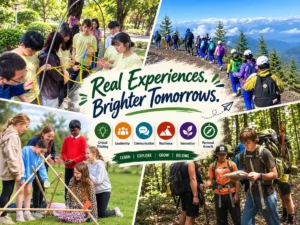
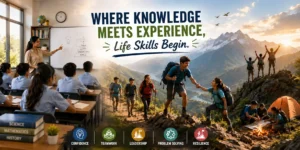
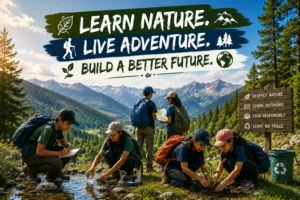
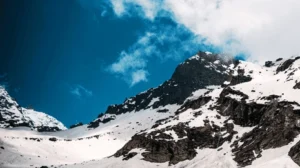
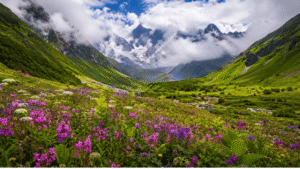
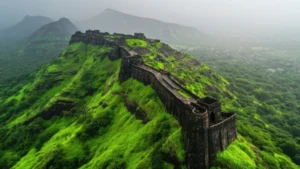
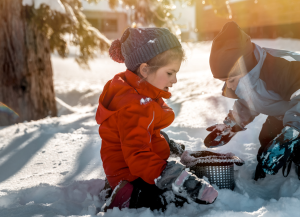
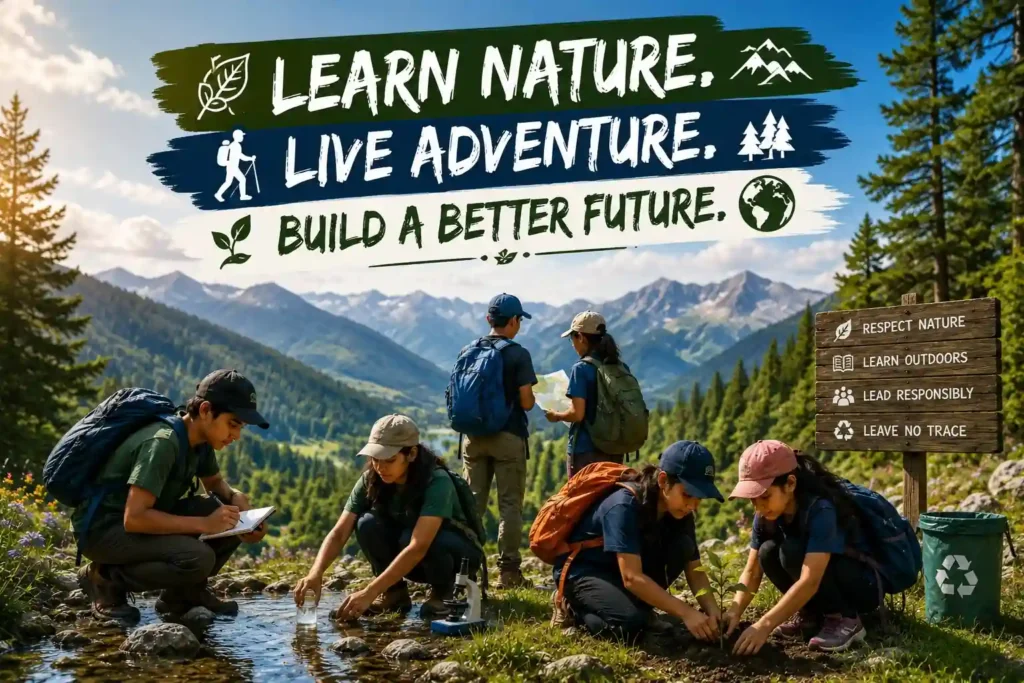
Students do not have to learn about the environment only from textbooks. A forest trail can become a biology lesson, a campsite can become a sustainability laboratory, and a trekking route can turn geography into a hands-on experience. Environmental education with adventure activities allows schools to connect classroom concepts with real outdoor experiences. Students can observe ecosystems, investigate biodiversity, practise responsible outdoor behaviour and work together to solve practical problems. This approach also fits India’s emphasis on experiential learning. The National Education Policy 2020 encourages experiential learning and connections between subjects and real-life experiences.
Why Environmental Education Matters in Schools
Environmental education is not simply about teaching students the names of plants, animals or natural resources. It can help them understand how people, ecosystems and resources are connected. UNESCO describes Education for Sustainable Development as an approach that develops knowledge, skills, values, attitudes and behaviours that support more sustainable societies. Outdoor learning can make these ideas more tangible. Students can:
- Observe biodiversity in a real habitat
- Understand relationships within ecosystems
- Investigate water, soil and vegetation
- Discuss responsible resource use
- Recognise human impacts on nature
- Develop observation and questioning skills
- Reflect on their own environmental behaviour
The result is a learning experience that connects knowledge with action.
Why Adventure Activities Make Environmental Learning More Engaging
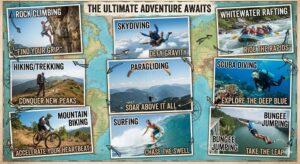
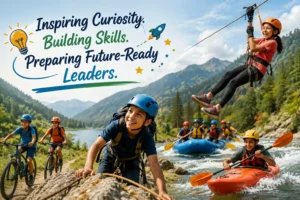
Adventure activities create situations in which students have to observe, communicate, make decisions and work together. Consider a supervised trek. Students are not simply walking from one point to another. Along the route, teachers and outdoor educators can ask them to identify vegetation, observe changes in terrain, record weather conditions or discuss how human activity affects the landscape. Suitable activities can include:
- Nature walks
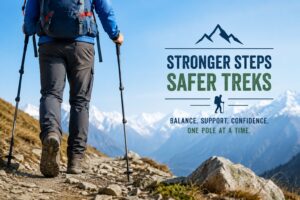
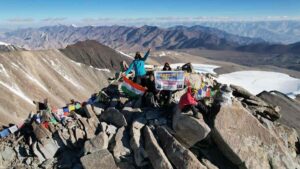
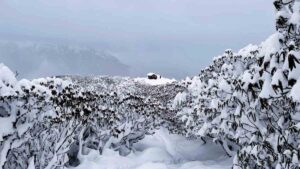
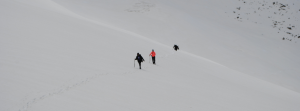
- Trekking
- Forest exploration
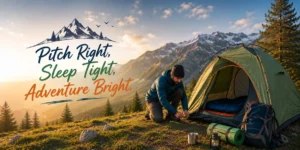
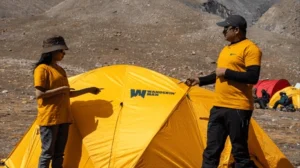
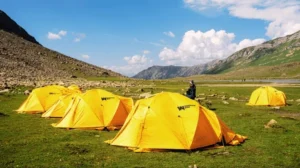
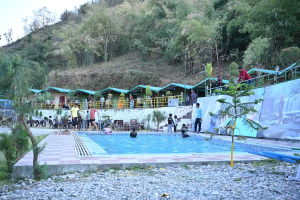
- Camping
- Birdwatching
- Orienteering
- Cycling
- River and watershed studies
- Biodiversity observation
- Conservation challenges
- Environmental field projects
The activity should always have a clear learning objective rather than being adventure for adventure’s sake.
How Schools Can Combine Environmental Education with Adventure
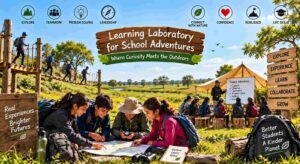
1. Turn Nature Camps into Outdoor Classrooms
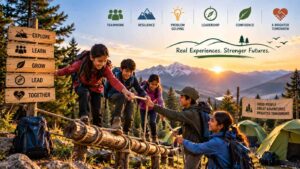
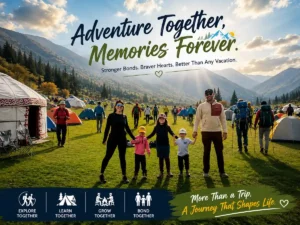
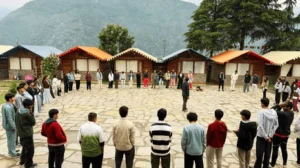
A well-designed residential camp can combine outdoor activity with structured learning. Students might investigate:
- Local ecosystems
- Native plants
- Forest habitats
- Soil
- Water resources
- Wildlife
- Waste management
- Sustainable living
Teachers can introduce a topic before the camp, facilitate observation during the activity and conduct reflection afterwards.
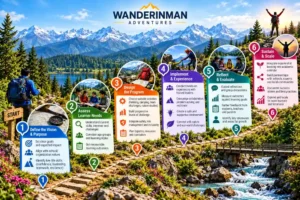
This creates a simple learning cycle:
Prepare → Experience → Observe → Discuss → Reflect → Apply
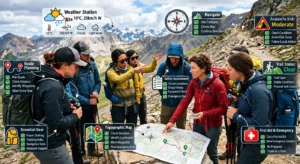
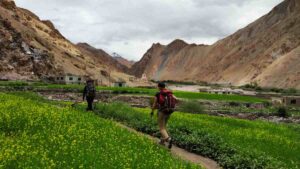
2. Turn Trekking into a Moving Environmental Classroom
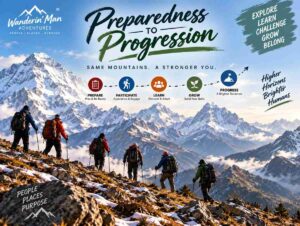
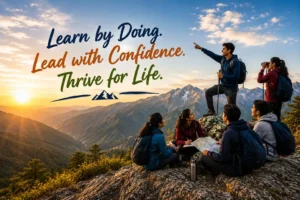
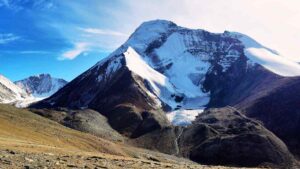
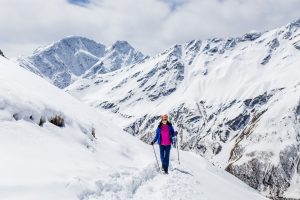
A trekking trail can provide a sequence of learning opportunities. Students can be encouraged to:
- Identify plants
- Observe animal signs
- Compare vegetation at different elevations
- Examine soil and rocks
- Record weather conditions
- Observe streams and drainage
- Discuss erosion
- Identify human impacts on trails
Instead of treating the destination as the only objective, the journey itself becomes part of the lesson. This is particularly useful for geography, environmental science, biology and interdisciplinary projects.
3. Use Citizen Science Projects
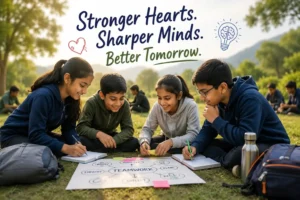
Adventure programs can become more meaningful when students collect and organise observations. Possible school projects include:
| Activity | Possible Learning Outcome |
|---|---|
| Bird count | Biodiversity and observation |
| Tree mapping | Ecology and data collection |
| Butterfly identification | Species diversity |
| Water observation | Water resources |
| Waste audit | Consumption and sustainability |
| Weather recording | Environmental data |
| Trail survey | Human impact and conservation |
The important point is to give students a question to investigate, rather than simply asking them to collect information. UNESCO’s recent guidance on assessing Education for Sustainable Development also highlights the importance of learning approaches that develop competencies such as systems thinking, collaboration, ethical decision-making and action.
4. Teach Responsible Outdoor Behaviour
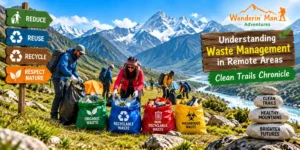
Adventure should come with environmental responsibility. Students can learn to:
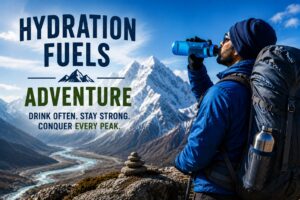
- Carry reusable water bottles
- Avoid unnecessary single-use plastic
- Carry waste back
- Stay on designated trails
- Avoid disturbing wildlife
- Respect plants and habitats
- Use designated camping areas
- Minimise environmental impact
- Leave natural objects where they are found
These practices turn environmental education from a classroom concept into observable behaviour. For the school’s broader sustainability approach, UNESCO’s Green School framework is also relevant because it encourages schools to integrate sustainability into teaching, operations, governance and community engagement.
5. Create Environmental Conservation Challenges
Schools can introduce age-appropriate team challenges such as:
- Biodiversity documentation
- Trail-cleanliness surveys
- Waste-segregation challenges
- Plastic-reduction campaigns
- Tree and habitat observation
- Water-conservation investigations
- Environmental poster projects
The objective should not simply be to “win”. Instead, students should be encouraged to understand what problem they are addressing, what evidence they collected and what they learned from the activity.
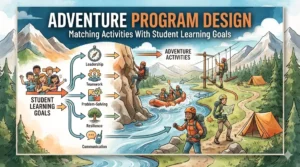
Adventure Activity → Environmental Learning
Different activities can support different learning objectives.
| Adventure activity | Environmental learning |
|---|---|
| Nature walk | Plants, habitats and ecosystems |
| Trekking | Mountain ecology and conservation |
| Camping | Responsible outdoor living |
| Birdwatching | Biodiversity |
| Cycling | Low-impact mobility |
| River exploration | Water resources |
| Orienteering | Geography and navigation |
| Rock activities | Terrain and responsible use of natural spaces |
This mapping helps schools select activities according to their curriculum and learning goals, rather than choosing activities only for entertainment.
What Students Can Develop Through Outdoor Environmental Programs
A well-designed program can combine subject learning with practical skills. Students may practise:
- Observation
- Communication
- Teamwork
- Problem-solving
- Critical thinking
- Decision-making
- Leadership
- Adaptability
- Environmental responsibility
- Reflection
However, these outcomes should not simply be claimed after every activity. Schools can define the intended outcomes before the program and then collect evidence afterwards. That makes the educational value easier to demonstrate.
Safety Must Come Before Adventure
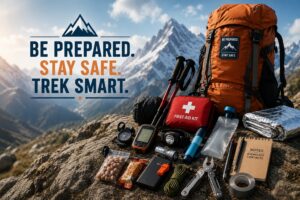
School outdoor programs require structured risk management. Schools and adventure providers should consider:
- Age-appropriate activities
- Qualified and appropriately trained instructors
- Suitable participant-to-instructor ratios
- Equipment inspection
- Weather monitoring
- Route assessment
- First-aid arrangements
- Emergency procedures
- Medical information and consent
- Clear student briefings
- Teacher and parent communication
Adventure should challenge students appropriately without exposing them to unnecessary risk. The provider should also be able to explain what happens if weather, health, terrain or other conditions require the activity to change. For guidance on evaluating school adventure providers, link to Boxes to Check Before Choosing a School Adventure Program.
How Schools Can Measure Learning Outcomes
The program should not end when students return to school. Teachers can assess learning through:
- Reflection journals
- Observation sheets
- Group presentations
- Environmental quizzes
- Student portfolios
- Biodiversity records
- Conservation-project results
- Teamwork observations
- Before-and-after questionnaires
- Student action plans
For example, instead of simply asking students whether they “enjoyed” a nature camp, teachers could ask:
What did you observe?
What surprised you?
What environmental problem did you identify?
What evidence did you collect?
What could you do differently after returning to school?
This turns an adventure experience into a measurable learning process.
From Outdoor Experience to Lasting Environmental Awareness
The strongest programs do not end when the bus returns to school.
Students can continue their learning through:
- School biodiversity clubs
- Waste-reduction projects
- Campus tree surveys
- Water audits
- Nature journals
- Recycling initiatives
- Student-led environmental campaigns
This creates continuity between the outdoor experience and everyday school life. UNESCO’s current approach to sustainable schools similarly emphasises connecting learning with school operations and community engagement rather than treating sustainability as an isolated classroom topic.
How to Choose the Right Adventure Education Partner
Before selecting a provider, schools should ask:
- Are activities age appropriate?
- Are instructors suitably trained?
- Is there a documented safety process?
- Are activities self-operated or outsourced?
- How are equipment and routes checked?
- What are the emergency procedures?
- How are weather changes handled?
- How are teachers involved?
- What learning objectives can the program support?
- How are student outcomes evaluated?
A good provider should be able to explain both the adventure experience and the educational purpose behind it.
For more guidance, see How to Plan for a Successful School Adventure Camp and Measuring Learning Outcomes of Adventure Programs.
Conclusion: Make the Outdoors Part of the Classroom
Environmental education with adventure activities can help schools move from teaching students about nature to giving them opportunities to observe, question, investigate and act within the natural world. A trek can become a geography lesson. A nature walk can become a biodiversity investigation. A campsite can become a sustainability laboratory. A conservation challenge can become a lesson in teamwork and responsibility. The key is thoughtful design. When schools combine clear learning objectives, age-appropriate adventure, environmental responsibility, qualified supervision and post-activity reflection, outdoor programs can become meaningful extensions of classroom learning.
Planning an Environmental Adventure Program for Your School?
Wanderin’ Man Adventures can help schools design structured outdoor experiences that combine adventure, experiential learning, environmental awareness and student development.