From Experience to Innovation: How Experiential Learning Builds Life Skills
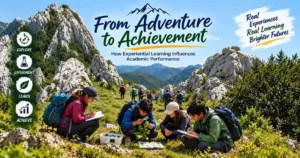
Education is not only about remembering information. It is also about learning how to think, respond, communicate, adapt and create. A student may know the definition of leadership, but leading a team through a real challenge teaches something different. A textbook can explain problem-solving, but facing an unexpected situation outdoors makes a learner practise it. This is where experiential learning builds life skills that can influence how young people approach school, work and everyday life. Experiential learning transforms education from something students receive into something they actively experience. Through learning by doing, reflection and real-world challenges, students can develop confidence, creativity, resilience and the ability to make thoughtful decisions.
What Is Experiential Learning?
Experiential learning is an approach in which people learn through experience, action, reflection and application. Instead of simply listening to an explanation, learners participate in activities that require them to observe, make decisions, solve problems and reflect on what happened.
It can happen through:
- Outdoor learning and adventure activities
- Team-building challenges
- Nature exploration
- Field projects
- Simulations and practical experiments
- Community activities
- Leadership exercises
- Problem-solving tasks
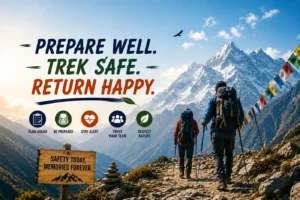
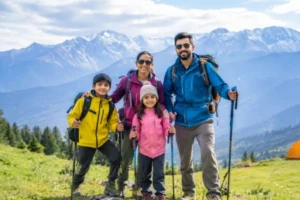
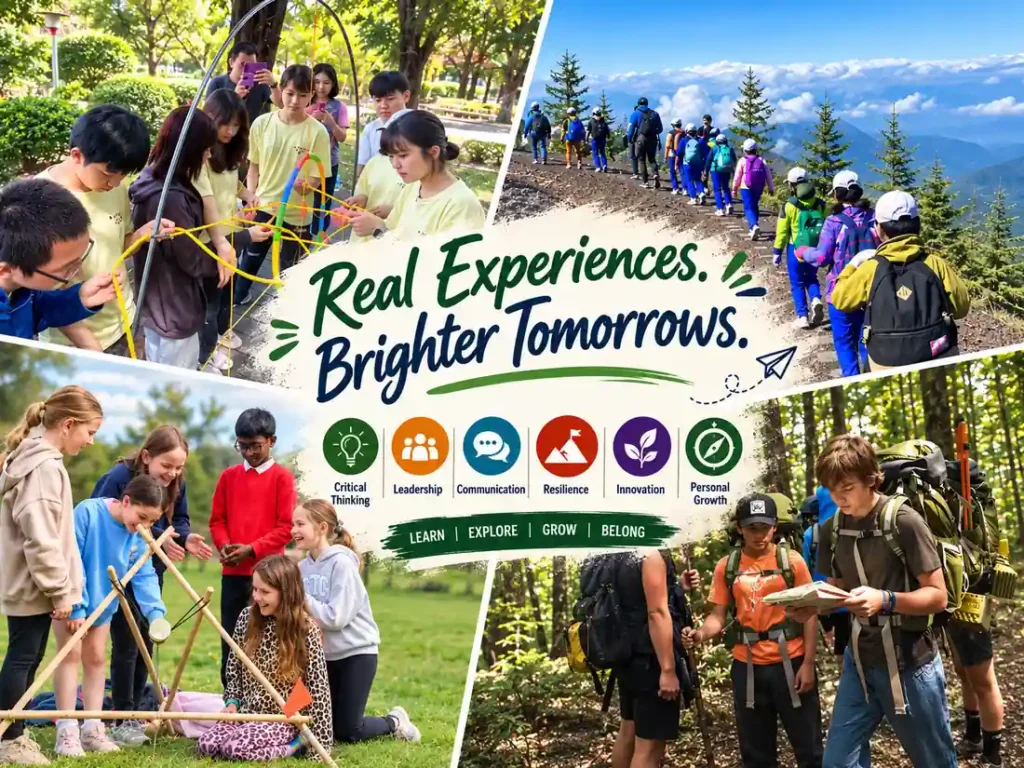
The important element is not simply the activity itself. The real value comes from connecting the experience with learning. A trekking activity, for example, can become an opportunity to practise planning, communication, teamwork, resilience and decision-making.
How Experiential Learning Builds Life Skills
Life skills develop through practice. When students encounter meaningful challenges, they get opportunities to test their abilities in situations that are different from ordinary classroom routines. Experiential learning can strengthen several important capabilities.
1. Creativity and Innovation
Innovation begins with curiosity. Outdoor challenges and practical activities often require students to look at situations from different perspectives. There may not be one obvious solution. Participants have to ask questions, experiment and think creatively. This encourages a valuable mindset:
“There must be another way.”
That mindset can become the foundation for innovation in academics, careers and everyday life.
2. Problem-Solving and Critical Thinking
Real-world challenges rarely arrive with instructions that explain exactly what to do. Students may have to analyse a situation, identify possible solutions, consider consequences and choose an approach. This makes problem-solving more meaningful than simply answering a question with a predetermined solution. Experiential education therefore helps learners move from:
Knowing → Thinking → Applying → Improving
3. Leadership and Decision-Making
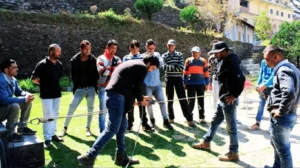
Leadership is not simply about giving instructions. A good leader needs to listen, communicate, understand different perspectives and make decisions when circumstances change. Team challenges, outdoor activities and group projects create opportunities for students to practise these behaviours. They learn that leadership also involves responsibility, empathy and accountability.
4. Communication and Teamwork
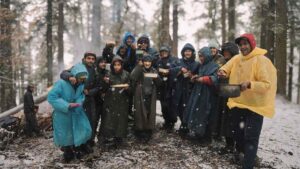
Many challenges cannot be completed successfully by one person. Participants need to communicate clearly, listen to others, divide responsibilities and support teammates. An outdoor team activity can make communication practical. Students quickly discover that unclear instructions, poor coordination or failure to listen can affect the entire group. These experiences can strengthen interpersonal skills that are useful far beyond school.
5. Resilience and Adaptability
Not everything goes according to plan. A route may change. A task may become more difficult than expected. A first attempt may fail. Such moments can become powerful learning opportunities when students are encouraged to reflect, adjust their approach and try again. This develops resilience—the ability to respond constructively to difficulty. Students gradually learn that setbacks do not necessarily mean failure. Sometimes, they are part of the learning process.
From Experience to Innovation: Why the Connection Matters
Innovation is often associated with technology, business or scientific discovery. But before innovation can happen, people need the ability to observe problems, question assumptions, experiment and learn from mistakes. Experiential learning creates opportunities to practise these behaviours. Imagine a group of students given a challenge with limited resources. They have to plan, communicate, test ideas and modify their strategy. The outcome is important—but the thinking process is even more valuable. The experience teaches them to become active problem-solvers rather than passive recipients of information.
That is how experiential learning can connect life skills with innovation.
Learning Beyond the Classroom
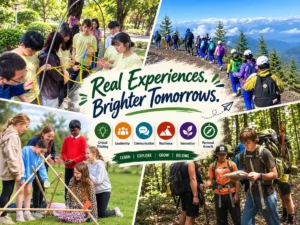
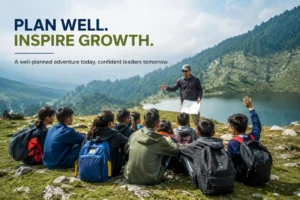
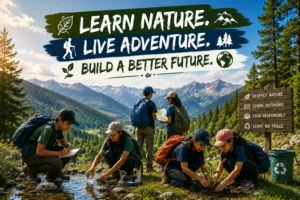
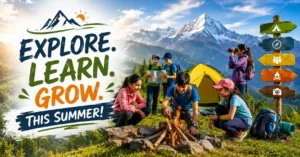
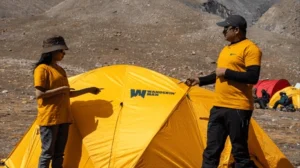
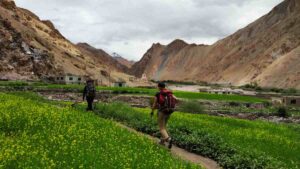
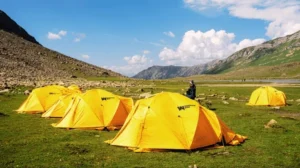
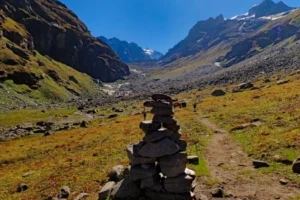
The classroom remains an important learning environment, but education does not have to stop at its walls. A forest can become a science laboratory. A mountain trail can become a lesson in resilience. A team challenge can become a leadership exercise. A campsite can become a practical lesson in responsibility. This is the power of outdoor education and learning beyond the classroom. Students encounter situations where knowledge, behaviour and decision-making come together. The result is a more connected form of learning.
Reflection Turns Experience Into Learning
Experience alone does not automatically create meaningful learning. Reflection is what helps learners understand what happened and why it matters. After an activity, students can ask:
- What happened?
- What worked?
- What did not work?
- How did we respond to the challenge?
- What could we have done differently?
- What did I learn about myself?
- Where can I apply this learning in everyday life?
These questions transform an activity into a learning experience. Reflection helps students carry lessons from the trail, field or activity into the classroom and eventually into real life.
The Transformational Power of Experiential Education
The most valuable outcome of experiential education may not be a certificate or a completed activity. It may be a change in mindset. A student who was hesitant to speak may become more confident. A learner who avoided challenges may become more willing to try. A team member who preferred working alone may discover the value of collaboration. Someone who viewed mistakes negatively may begin to see them as opportunities for improvement. These small changes can contribute to personal growth, confidence building and lifelong learning.
How Schools Can Use Experiential Learning
Schools do not need to completely redesign education to introduce experiential learning. They can begin with structured experiences connected to specific learning outcomes. For example:
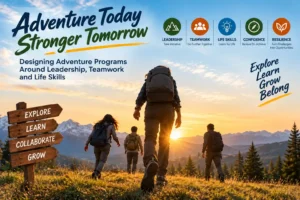
Leadership: team challenges and student-led activities
Problem-solving: practical challenges with multiple possible solutions
Creativity: design-and-build projects
Communication: collaborative outdoor tasks
Environmental awareness: nature-based learning
Resilience: progressive challenges followed by reflection
The key is to ensure that every activity has a clear purpose.
Adventure becomes more educational when challenge, safety, reflection and learning objectives work together.
From Life Skills to Lifelong Capability
The world students enter after school will continue to change. They will encounter new technologies, unfamiliar problems, changing workplaces and situations that cannot always be predicted. Academic knowledge remains important, but students also need the ability to adapt, communicate, think critically, collaborate and create. That is why life skills should not be treated as an additional subject. They should become part of how students learn.
Experiential learning provides a bridge between knowledge and capability.
It gives learners opportunities to experience challenges, make decisions, learn from outcomes and apply those lessons again.
Conclusion: Experience Can Become the Beginning of Innovation
Experiential learning is more than learning outside the classroom. It is a way of helping learners connect knowledge with action. When students experience challenges, reflect on them and apply what they have learned, they can develop creativity, resilience, leadership, communication, problem-solving and adaptability. And these are not simply school skills. They are life skills. The journey from experience to innovation begins when learners stop asking only, “What do I know?” and start asking:
“What can I do with what I know?”
That is where meaningful learning begins—and where education can help prepare young people not only to face the future, but to create possibilities within it.
Turn Learning Into Experience
The most meaningful lessons are often the ones students experience, reflect on and carry forward. At Wanderin’ Man Adventures, we help schools turn outdoor experiences into purposeful learning opportunities that develop leadership, teamwork, communication, creativity, resilience, problem-solving and confidence. From experiential learning camps and adventure activities to trekking and structured outdoor challenges, our programmes are designed to connect learning beyond the classroom with real-world life skills.
Give your students more than an activity. Give them an experience that can shape how they think, lead and grow.