Adventure Sports in India: The Changing Face & Paradigm Shift
Adventure Sports in India Are Entering a New Era
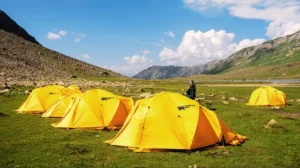
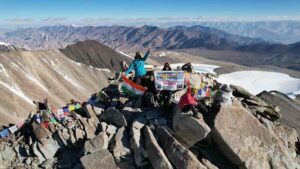
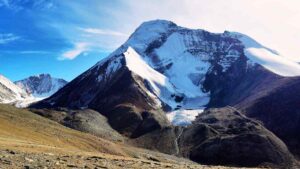
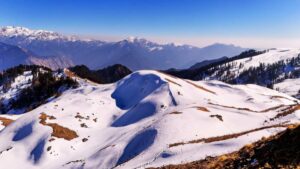
Adventure sports in India are moving beyond the traditional pursuit of adrenaline and extreme challenges. Trekking, mountaineering, rafting, skiing, mountain biking, camping, rock climbing and other outdoor activities are increasingly becoming part of experiential travel, education, wellness and personal development. India’s extraordinary geographical diversity—from the Himalayas and Western Ghats to rivers, forests, deserts and coastlines—creates an exceptional environment for outdoor adventure. But the biggest change is not simply the number of activities available.
It is why people participate.
Today’s adventure traveller increasingly wants challenge, discovery, learning, connection with nature and meaningful experiences—not just a photograph at a destination.
From Adrenaline to Experiential Adventure
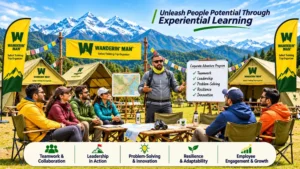
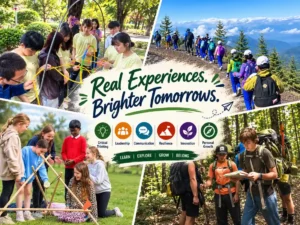
The traditional perception of adventure sports focused heavily on physical difficulty and risk. A modern adventure experience can be much broader. A Himalayan trek can develop resilience and environmental awareness. A school adventure camp can create opportunities for leadership and teamwork. A family camping programme can strengthen communication and relationships. A cycling expedition can encourage endurance, independence and self-discovery. This creates a more meaningful model:
Challenge + Experience + Learning + Reflection + Transformation
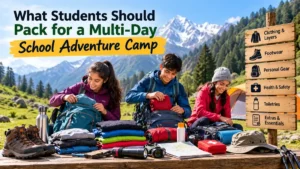
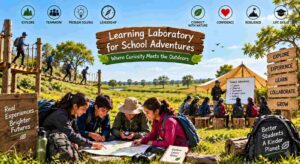
Adventure therefore becomes more than an activity. It becomes an environment in which people can discover how they respond to uncertainty, teamwork, physical effort and unfamiliar situations. For schools interested in structured outdoor learning, see our guide to experiential school programs and student learning.
India’s Adventure Sports Landscape Is Becoming More Diverse
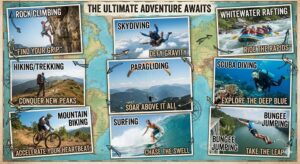
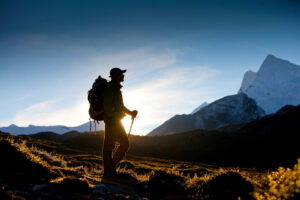
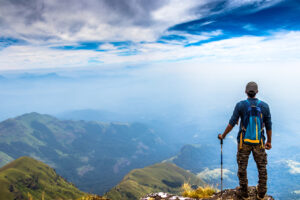
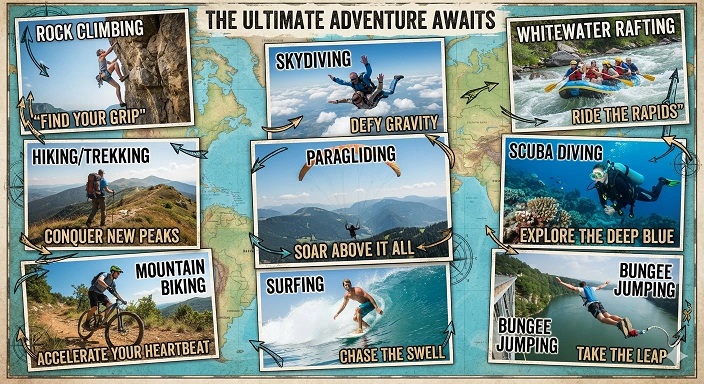
The Himalayas remain one of India’s most important adventure destinations, but adventure tourism is no longer limited to Himalayan trekking. Popular outdoor activities include:
- Trekking and hiking
- Mountaineering
- Camping
- Rock climbing
- River rafting
- Kayaking
- Mountain biking
- Skiing
- Paragliding
- Cycling expeditions
- Nature and wildlife exploration
- Outdoor team challenges
Different landscapes create different possibilities. Mountain regions support trekking, climbing and skiing; rivers create opportunities for rafting and kayaking; forests and rural landscapes support camping, nature exploration and cycling; coastal destinations can support water-based adventure activities. This geographic diversity gives India the potential to serve beginners, families, students, experienced adventurers and specialised expedition groups.
The New Adventure Traveller Wants Meaning
Adventure tourism is increasingly becoming experience-driven. Travellers may want to:
- Challenge themselves physically
- Disconnect from routine
- Reconnect with nature
- Spend meaningful time with family
- Develop confidence
- Learn practical outdoor skills
- Explore unfamiliar cultures and landscapes
- Build resilience
- Experience something beyond conventional sightseeing
This is why adventure tourism increasingly overlaps with wellness, education, leadership development and personal growth. A successful adventure is therefore not necessarily the most extreme one. It is the one that is appropriately designed for the participant, safely managed and meaningful.
Safety Is Now a Core Part of Adventure Sports
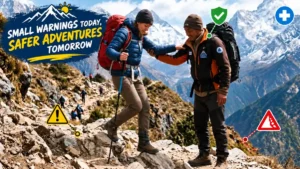
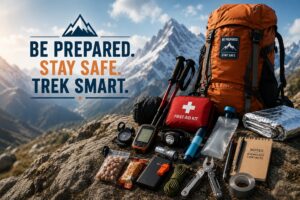
Adventure involves inherent risk. The objective of professional adventure management is not to pretend that risk does not exist, but to identify, assess and manage it responsibly. The Ministry of Tourism’s National Strategy for Adventure Tourism recognizes the need for safety management and risk mitigation. India’s adventure-tourism guidelines cover land-, air- and water-based activities, while the strategy identifies safety management as a key component of responsible adventure tourism. Professional adventure programmes should therefore consider:
- Activity-specific risk assessment
- Experienced and appropriately trained leaders
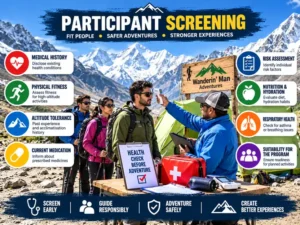
- Participant screening
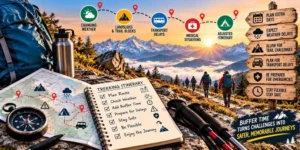
- Weather and route assessment
- Equipment inspection
- Emergency communication
- First-aid preparedness
- Medical and evacuation planning
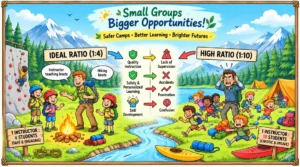
- Appropriate leader-to-participant ratios
- Activity-specific safety briefings
- Contingency planning
- Incident and near-miss learning
The international ISO 21101 standard provides requirements for safety management systems for adventure-tourism providers and remains current following its 2025 review. The principle is simple:
Adventure should challenge participants without compromising responsible safety management.
For more practical guidance, read our guide to planning a successful school adventure camp.
Technology Is Reshaping Adventure Sports
Technology is changing how adventure programmes are planned, delivered and monitored. Modern adventure operations can use:
- GPS navigation
- Digital mapping
- Weather forecasting
- Satellite communication
- Emergency communication systems
- GPS-enabled tracking
- Wearable devices
- Digital route planning
- Online participant information
- Mobile photography and video
Technology can improve situational awareness and planning, but it should support professional judgement rather than replace it. A GPS device cannot replace an experienced mountain leader. A weather application cannot eliminate the need to observe changing mountain conditions. Technology is most valuable when combined with preparation, local knowledge and sound decision-making.
Adventure Education Is Growing Beyond the Classroom
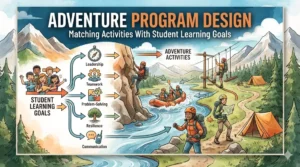
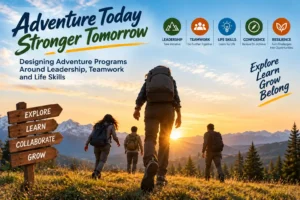
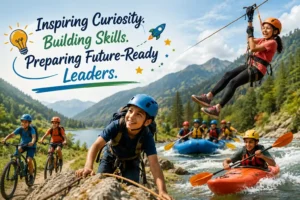
One of the most important developments is the connection between adventure and education. Outdoor programmes can give students opportunities to practise:
- Leadership
- Communication
- Teamwork
- Decision-making
- Problem-solving
- Responsibility
- Resilience
- Environmental awareness
- Adaptability
A team challenge can turn leadership from a classroom concept into a practical experience. A navigation exercise can require decision-making. A trek can teach preparation, pacing and responsibility. The educational value becomes stronger when activities are followed by reflection and structured discussion. For more on this approach, explore our article on how adventure experiences develop life skills.
Family Adventure Is Becoming More Experiential
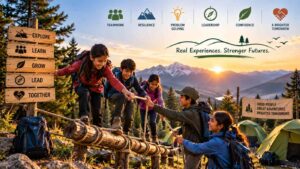
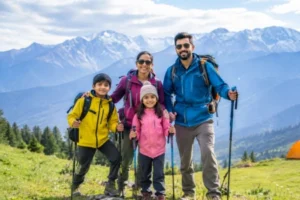
Adventure is also becoming increasingly relevant to families. Family trekking, camping, cycling, nature exploration and age-appropriate outdoor challenges can create opportunities for parents and children to cooperate and learn together. Children can develop:
- Confidence
- Independence
- Communication
- Responsibility
- Problem-solving
- Perseverance
Parents should nevertheless select programmes based on age, physical ability, experience, difficulty, supervision, medical preparedness and emergency arrangements. Our guide to family adventure programmes explains how outdoor experiences can combine recreation, learning and family bonding.
Sustainable Adventure Tourism Matters
The growth of adventure tourism also creates a responsibility to protect the environments in which adventure takes place. Responsible adventure tourism should consider:
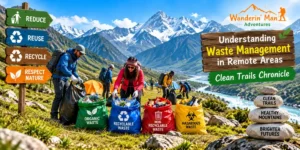
- Minimising waste
- Avoiding unnecessary single-use plastics
- Respecting wildlife
- Staying on appropriate trails
- Protecting local ecosystems
- Respecting local communities and cultures
- Using resources responsibly
- Following destination-specific environmental rules
The International Organization for Standardization also has a dedicated standard, ISO 20611, addressing good practices for sustainability in adventure tourism. Sustainability should therefore not be treated as an optional marketing message. It should become part of how adventure programmes are designed and operated.
What Professional Adventure Operators Should Deliver
The future of adventure tourism will increasingly favour operators who combine experience, safety, professionalism and purpose. Before choosing an operator, participants, parents and institutions should look for:
- Experienced leadership
- Qualified activity leaders
- Clear safety procedures
- Appropriate equipment
- Emergency and evacuation planning
- Suitable participant-to-leader ratios
- Transparent itineraries
- Activity-specific preparation
- Environmental responsibility
- Evidence of genuine operational experience
The Adventure Tour Operators Association of India (ATOAI) publishes SOPs and promotes safety, quality, sustainability, compliance and professional training within adventure tourism.
What We Believe at Wanderin’ Man Adventures
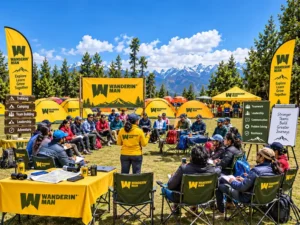
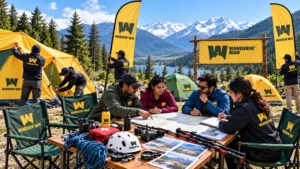
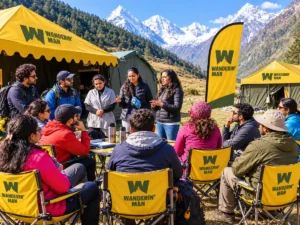
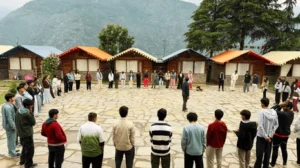
At Wanderin’ Man Adventures, we believe adventure should be more than simply reaching a destination. Our approach combines adventure, preparation, safety, learning and meaningful outdoor experiences. For school programmes, the objective can extend beyond activity participation to include teamwork, leadership, communication, resilience and confidence. For families and individual travellers, programmes can be designed around exploration, connection, challenge and responsible enjoyment. Our school programme framework highlights experienced facilitators, certified mountaineering professionals, emergency planning, first-aid support and insurance arrangements.
This reflects a broader philosophy:
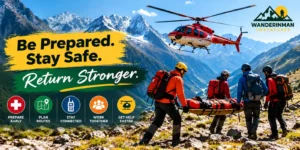
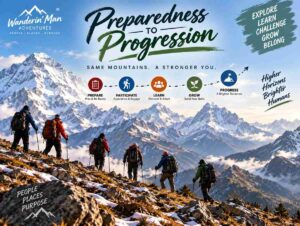
Prepare well. Adventure responsibly. Learn from the experience. Return stronger.
The Future of Adventure Sports in India
The next phase of adventure sports in India is likely to be shaped by five major forces:
1. Professionalisation
Participants are becoming more aware of safety, leadership quality and programme design.
2. Experiential Travel
Travellers increasingly want experiences rather than passive sightseeing.
3. Technology
Digital navigation, communication and planning tools will continue to improve adventure operations.
4. Sustainability
Protecting mountains, forests, rivers and local communities will become increasingly important.
5. Purposeful Adventure
Adventure will increasingly connect with education, wellness, leadership, family bonding and personal development.
The winners in this evolving sector will not necessarily be the operators offering the most extreme experiences. They will be the organisations that can combine adventure + safety + expertise + sustainability + meaningful outcomes.
Frequently Asked Questions
What are the most popular adventure sports in India?
Trekking, mountaineering, camping, rafting, mountain biking, skiing, rock climbing, paragliding, kayaking and cycling are among the major adventure activities available across different parts of India.
Are adventure sports in India safe?
Adventure activities involve inherent risks. Safety depends on factors such as activity selection, weather, participant preparedness, equipment, leadership, risk assessment and emergency planning. Participants should choose professional operators with appropriate safety systems.
What should I check before booking an adventure programme?
Check the operator’s experience, activity-specific qualifications, safety procedures, equipment, emergency arrangements, participant-to-leader ratio, insurance provisions and cancellation or contingency policies.
Can adventure activities support student learning?
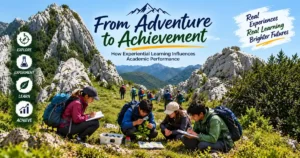
Yes. When programmes are intentionally designed around learning objectives and reflection, outdoor activities can provide opportunities to practise leadership, communication, teamwork, problem-solving, resilience and responsibility.
Is adventure tourism environmentally sustainable?
It can be, provided programmes are designed around responsible travel, waste reduction, ecosystem protection, respect for local communities and appropriate destination management.
What is the future of adventure sports in India?
The sector is likely to become increasingly professional, technology-enabled, safety-conscious, sustainable and connected with education, wellness and experiential travel.
Ready to Experience the New Era of Adventure?
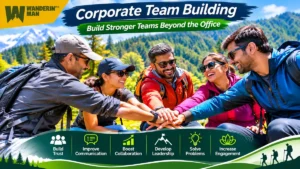
Whether you are a school planning an experiential learning programme, a family looking for a meaningful outdoor experience, a corporate team seeking an outdoor challenge, or an individual looking for a Himalayan adventure, the right programme begins with thoughtful planning. Explore Wanderin’ Man’s adventure and outdoor programmes or school experiential learning programmes and discover how professionally designed outdoor experiences can turn adventure into learning, growth and lasting memories.
Adventure is not simply about going farther, higher or faster.
It is about discovering what you are capable
Ready to Experience the New Era of Adventure?
Adventure is no longer simply about seeking an adrenaline rush. The best experiences combine challenge, learning, exploration, safety and meaningful connection with the outdoors. Whether you are planning a school adventure programme, a family outdoor experience, a trekking expedition or a customised adventure programme, the right design should begin with your participants, objectives and environment. At Wanderin’ Man Adventures, we design experiential outdoor programmes around participant needs, structured activities and responsible adventure practices.
Planning an adventure programme?
Explore our adventure programmes, discover our school and family experiences, or speak with our team about creating a customised programme for your group.
Make your next adventure more than a trip. Make it an experience that stays with you.