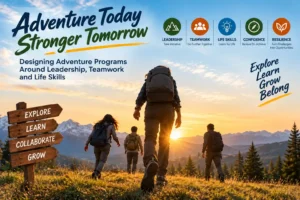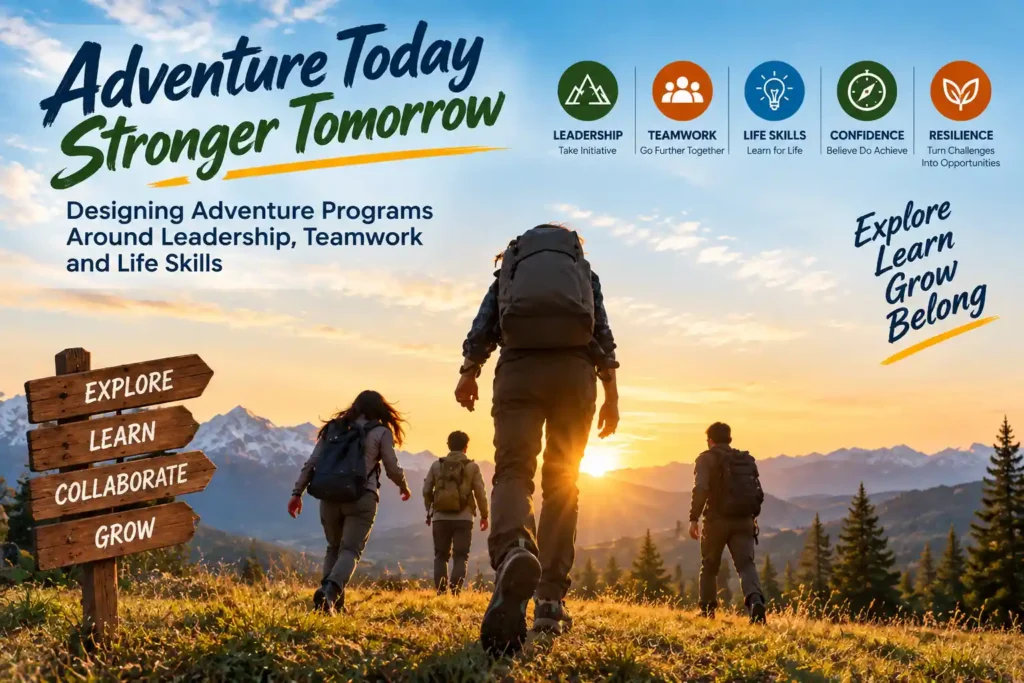
Designing Adventure Programs Around Leadership, Teamwork and Life Skills
Adventure is more than trekking, climbing or camping. When thoughtfully planned, it becomes a powerful learning environment where students make decisions, solve problems, communicate, take responsibility and support one another. The real value lies in designing adventure programs around specific learning outcomes rather than simply putting students through a series of exciting activities. A well-designed outdoor program can transform a day on the trail into an opportunity to develop leadership, teamwork, resilience, confidence and practical life skills.


7
Why Adventure Programs Should Have Learning Objectives
An adventure activity becomes more meaningful when students understand why they are doing it.
For example:
- Trekking can develop endurance, responsibility and resilience.
- Navigation can strengthen decision-making and problem-solving.
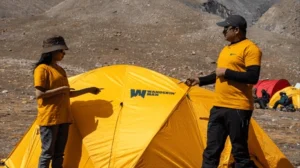
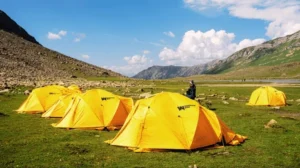
- Tent pitching can encourage planning and teamwork.
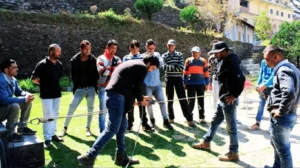
- Rope activities can develop trust and communication.
- Group challenges can build leadership and collaboration.
- Reflection sessions can improve self-awareness and emotional learning.
This approach shifts adventure from a recreational outing to experiential learning. Instead of asking, “Did the students enjoy the activity?”, educators can also ask:
“What did students learn, and how will they apply it beyond the adventure?”
Designing Adventure Programs Around Leadership
Leadership should not mean selecting one student to be the “leader” throughout the program. Effective adventure programs create opportunities for shared and situational leadership. Students can rotate responsibilities such as:
- Route planning
- Group coordination
- Equipment management
- Time management
- Safety observation
- Team motivation
- Decision-making
- Camp organisation
A student who is quiet in the classroom may emerge as a confident decision-maker outdoors. Another student who naturally takes charge may discover that effective leadership also requires listening. This makes adventure an excellent setting for student leadership development.
Leadership Activities That Create Real Learning
Instead of simply conducting a lecture on leadership, facilitators can create challenges where students must:
Plan → Act → Face a problem → Adapt → Reflect → Improve
The learning becomes personal because students experience the consequences of their decisions.
Building Teamwork Through Shared Challenges


7
Teamwork is easy to discuss but harder to practise.
Adventure challenges naturally create situations where students depend on each other. A group may need to cross an obstacle, transport equipment, navigate a trail or establish a campsite together. The activity itself is only part of the learning. The facilitator should encourage students to examine:
- Who communicated effectively?
- Did everyone get an opportunity to contribute?
- How were disagreements handled?
- Did the team listen to quieter members?
- What happened when the first strategy failed?
- How did the group respond to pressure?
These questions turn team-building activities into structured learning experiences. The goal is not simply to finish first. It is to understand how a team succeeds together.
Developing Life Skills Beyond the Classroom
One of the strongest reasons for designing adventure programs is the opportunity to develop practical life skills. Students can practise skills that are difficult to teach through conventional classroom instruction.
Communication Skills
Outdoor challenges require students to give clear instructions, listen carefully and communicate under pressure.
Problem-Solving Skills
When a planned route changes or a team challenge does not work, students must consider alternatives rather than wait for an immediate answer.
Decision-Making
Adventure environments provide opportunities to evaluate options, consider consequences and make responsible choices.
Resilience
Not every challenge will go according to plan. Students learn that setbacks are part of learning and that persistence matters.
Responsibility
Managing personal equipment, maintaining group discipline and caring for the environment encourage students to become more accountable.
Confidence
Successfully completing a challenging task can change how students perceive their own capabilities.
Choosing the Right Adventure Activities


6
The most exciting activity is not necessarily the most educational one.
Activity selection should begin with the learning objective.
| Learning Goal | Suitable Adventure Activity |
|---|---|
| Leadership | Group expedition, route planning |
| Teamwork | Rope challenges, group obstacles |
| Communication | Blindfold challenges, navigation |
| Resilience | Trekking, endurance challenges |
| Problem-solving | Navigation and strategy games |
| Responsibility | Camping and equipment management |
| Confidence | Climbing, rappelling and graded challenges |
| Environmental awareness | Nature walks and conservation activities |
The principle is simple:
Learning objective first. Activity second.
This prevents adventure programs from becoming a random collection of activities.
Adding Reflection to Adventure Learning
One of the most overlooked elements of outdoor education is reflection. An activity may last 30 minutes, but the learning can continue for much longer when students discuss what happened.
A facilitator can ask:
What happened? → Why did it happen? → What did you learn? → What would you do differently? → Where can you apply this learning?
This process connects the outdoor experience to school, relationships and future professional life. Reflection therefore acts as the bridge between adventure and transformation.
Designing Age-Appropriate Adventure Programs
Adventure programs should be designed according to the students’ age, physical ability, emotional maturity and previous outdoor experience.
Younger students may benefit from:
- Nature exploration
- Simple team games
- Low-rope activities
- Basic camping
- Treasure hunts
- Cooperative challenges
Older students can gradually progress toward:
- Trekking expeditions
- Navigation
- Leadership challenges
- Outdoor survival skills
- Multi-day camping
- Expedition planning
Progressive difficulty allows students to move beyond their comfort zones without creating unnecessary risk. Safety, supervision, equipment and emergency planning should always remain fundamental to program design.
Measuring the Impact of Adventure Programs
A professionally designed adventure program should have measurable outcomes. Schools can assess development through:
- Pre- and post-program questionnaires
- Facilitator observations
- Student reflection journals
- Team performance
- Leadership responsibility
- Peer feedback
- Teacher observations
- Personal action plans
The objective is not to reduce personal growth to a score. Rather, assessment helps schools understand whether the program is actually contributing to leadership, teamwork, confidence, communication and life-skill development. Outdoor experiential learning programmes increasingly use this combination of challenge, responsibility and reflection to connect adventure with broader educational outcomes.
From Adventure Activity to Life Experience
The most successful adventure programs follow a simple philosophy:
Challenge the student. Support the student. Let the student think. Let the student act. Then help the student reflect.
A trek becomes more than walking. A rope challenge becomes more than balancing. Camping becomes more than staying outdoors. A difficult situation becomes an opportunity to practise leadership, teamwork, resilience, communication and responsibility. That is the difference between an adventure trip and a purpose-designed adventure learning program.
Conclusion: Designing Adventure Programs That Create Future-Ready Students
Designing adventure programs around leadership, teamwork and life skills requires more than choosing exciting destinations and activities. It requires clear objectives, carefully sequenced challenges, trained facilitators, safety systems and meaningful reflection. When these elements come together, the outdoors becomes a living classroom. Students return not only with photographs and memories, but with something more valuable—greater confidence, stronger relationships, practical problem-solving abilities and a deeper understanding of themselves and others. The ultimate goal of adventure education is not simply to help students reach the destination.
It is to help them discover who they can become along the way.
Ready to Turn Adventure Into Learning?
Schools can design adventure experiences around specific outcomes such as leadership development, teamwork, resilience, communication, confidence, environmental awareness and life skills. A thoughtfully designed program can make every trail, challenge and campsite part of a larger educational journey.