Why Resilience May Be the Most Important Skill Students Learn Outdoors
Why Resilience Skills for Students Matter
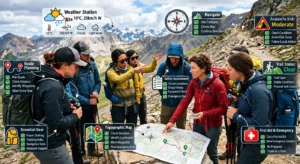
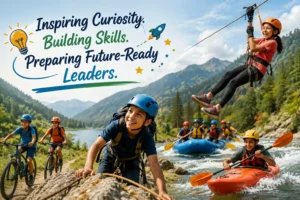
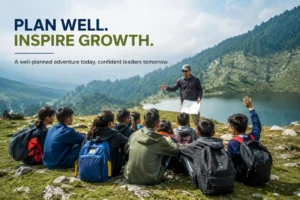
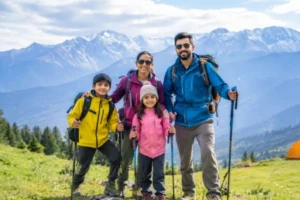
Students today face academic pressure, social expectations, uncertainty and constant digital stimulation. While classrooms develop knowledge, resilience skills for students are often strengthened when they encounter real challenges beyond the classroom. Outdoor adventure programs create these opportunities naturally. A trek, camping expedition, climbing activity or team challenge can place students in unfamiliar situations where they must adapt, make decisions and keep moving forward. This is where outdoor education becomes more than recreation. It becomes a practical environment for developing resilience, confidence, leadership, problem-solving and emotional strength.
What Is Resilience in Students?
Resilience is the ability to cope with challenges, recover from setbacks and continue working toward a goal despite difficulties. For students, resilience does not mean avoiding failure or pretending that challenges are easy. It means learning to respond constructively when things do not go according to plan. Outdoor learning provides repeated opportunities to practise this mindset. A student may struggle to complete a trek, feel nervous before an adventure activity or become frustrated during a team task. With appropriate guidance, these experiences can teach an important lesson:
“I may find this difficult, but I can learn how to handle it.”
How Outdoor Adventure Builds Student Resilience
1. Challenges Push Students Beyond Their Comfort Zone
Comfort zones are useful, but students also need controlled opportunities to step outside them. Outdoor adventure activities introduce manageable challenges. Walking a longer trail, crossing an obstacle course or participating in a group expedition can initially feel intimidating. When students successfully overcome these challenges, they gain evidence that effort and persistence can produce results.
This strengthens student confidence, adaptability and resilience.
2. Outdoor Activities Turn Failure Into Learning
Failure becomes meaningful when students can reflect on it. A team may take the wrong route, struggle with a task or fail to complete an activity on the first attempt. Instead of immediately providing the solution, instructors can encourage students to analyse what happened and try again. This develops a growth mindset. Students begin to understand that mistakes are not necessarily evidence of inability. They can become opportunities for learning, adjustment and improvement.
3. Experiential Learning Makes Resilience Practical
Traditional lessons often explain concepts. Experiential learning for students allows them to experience those concepts directly. Outdoor education combines action, reflection and application. For example, students may learn about leadership in class, but an outdoor team challenge requires them to communicate, listen, delegate and make decisions in real time. Similarly, resilience becomes something students practise rather than simply define.
Outdoor Education Develops Problem-Solving Skills
Unexpected situations are a natural part of outdoor activities. Weather conditions may change. A team may need to modify its plan. An activity may require a different approach.Under trained supervision, students learn to pause, assess the situation and consider possible solutions.
This strengthens:
- Critical thinking
- Decision-making
- Creative problem-solving
- Adaptability
- Risk awareness
- Communication skills
These are transferable skills that students can use in academics, relationships and future workplaces.
Teamwork Teaches Students to Cope With Setbacks
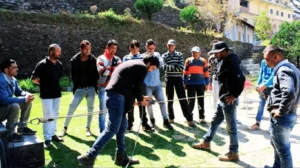
Resilience is not always an individual journey.Outdoor adventure programs frequently involve teamwork. Students learn that different people have different strengths, weaknesses and perspectives.A student who struggles physically may contribute through planning or communication. Another may demonstrate leadership during a difficult moment. Through collaboration, students discover that asking for help is not weakness. It is often a sign of self-awareness. This helps develop social resilience and emotional resilience in children and teenagers.
How Outdoor Adventure Builds Confidence
Confidence grows when students experience achievement. Outdoor programs can create small but meaningful milestones:
- Completing a difficult trail
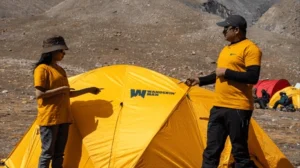
- Successfully setting up a campsite
- Supporting a teammate
- Solving a challenge
- Learning a new outdoor skill
- Managing nervousness during an activity
Each achievement provides a sense of progress. Instead of receiving confidence only through praise, students experience it through action. That distinction matters because confidence built through experience can become more durable and authentic.
Nature Helps Students Develop Emotional Strength
Outdoor environments provide something that classrooms and screens cannot fully replicate: direct interaction with nature. Time outdoors can encourage students to slow down, observe their surroundings and become more comfortable with uncertainty. Camping, trekking and nature-based activities can also create opportunities for reflection. Students learn that discomfort, fatigue and uncertainty are temporary experiences. With preparation, support and persistence, they can often manage them successfully. This contributes to emotional development, self-awareness and mental resilience.
Resilience, Leadership and Independence Go Together
Resilient students are often better prepared to take responsibility. Outdoor programs can gradually introduce students to decision-making and leadership responsibilities appropriate to their age.
They may be asked to:
- Organise equipment
- Support teammates
- Follow safety procedures
- Make group decisions
- Communicate concerns
- Take responsibility for assigned tasks
These experiences develop student leadership skills and independence while reinforcing resilience.
How Schools Can Use Adventure Programs for Life Skills
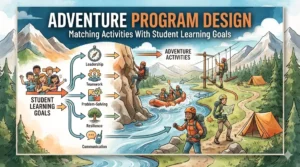
Schools can make outdoor education more meaningful by connecting activities with clearly defined learning outcomes. Before an adventure program, teachers can discuss expectations and possible challenges. During the activity, instructors can observe teamwork, communication, decision-making and persistence. Afterward, students can participate in reflection sessions.
Useful questions include:
What challenged you?
How did you respond when something went wrong?
What did your team do well?
What would you do differently next time?
This reflection transforms an exciting outdoor experience into a structured student life-skills learning opportunity.
Measuring Resilience Through Outdoor Learning
Resilience can be assessed through observable behaviours rather than simply asking students whether they feel resilient. Schools and program leaders can monitor:
- Persistence after setbacks
- Willingness to attempt difficult tasks
- Ability to seek help
- Response to feedback
- Team participation
- Decision-making under pressure
- Adaptability when plans change
- Reflection after challenges
Simple pre- and post-program questionnaires, instructor observations and student reflection journals can help demonstrate changes in confidence, adaptability and problem-solving.
Why Resilience Matters Beyond School
The value of resilience extends far beyond a school adventure program. Students will eventually encounter examinations, university decisions, career uncertainty, workplace challenges, changing relationships and unexpected failures. Academic knowledge is important, but the ability to keep learning when things become difficult is equally valuable. Outdoor education gives students a safe environment in which to practise this ability. They learn that setbacks are not always stopping points.
Sometimes, they are turning points.
Choosing the Right Student Adventure Program
Not every outdoor activity automatically develops resilience. The quality of program design matters. Schools should look for professionally supervised adventure programs, appropriate safety systems, qualified instructors, age-appropriate challenges, meaningful reflection and clear educational objectives. The strongest programs combine adventure, experiential education, teamwork, safety and reflection rather than treating outdoor activities simply as entertainment.
Conclusion: Let Students Experience Resilience
Resilience cannot be developed entirely through lectures or textbooks. Students need opportunities to face challenges, make mistakes, seek solutions and discover their own capabilities. That is why outdoor adventure can be such a powerful learning environment. When students climb, trek, camp, navigate, collaborate and overcome uncertainty, they are learning more than outdoor skills. They are learning how to keep going when things become difficult. And perhaps that is one of the most valuable lessons education can provide.
The trail may end after a few hours or days. The resilience students develop can stay with them for life.