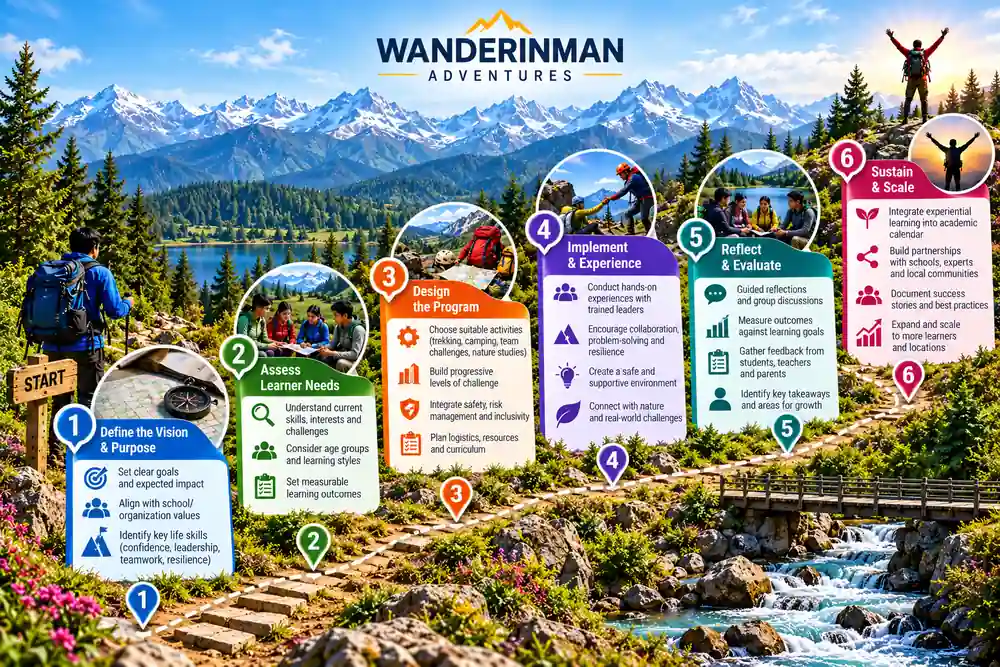
Update to upgrade: a roadmap for experiential learning
Education is no longer just about what students know. It is increasingly about what they can do with that knowledge. In a world shaped by innovation, changing careers, and complex challenges, schools must prepare students to think independently, collaborate effectively, and solve real-world problems. This is where a roadmap for experiential learning becomes essential. By connecting classroom knowledge with practical experiences, schools can transform traditional teaching into meaningful, student-centred education. The goal is not to replace textbooks or examinations. Instead, it is to upgrade learning through experience, reflection, application, and personal development.
Experiential Learning in Practice: What We Have Learned
Experiential learning is most effective when an activity has a clear purpose. At Wanderin’ Man Adventures, our experience delivering outdoor and school programmes has shown us that students learn differently when they are given an opportunity to participate, make decisions, work with peers, face challenges and reflect on what happened. Our school programmes combine outdoor experiences with structured challenges designed around age-appropriate participation, teamwork, leadership, communication, resilience and problem-solving. Rather than treating adventure as an activity separate from education, we use the experience as a learning environment where students can practise skills in real situations. Our school programmes include campus-based adventure activities, outdoor camps, trekking, destination programmes, nature-based experiences and team-building challenges.
This establishes first-hand experience rather than making generic educational claims. Wanderin’ Man’s school programme portfolio currently includes campus programmes, destination programmes, Himalayan camps, trekking and other adventure experiences for different age groups. Wanderin Man
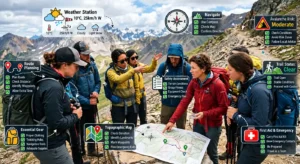
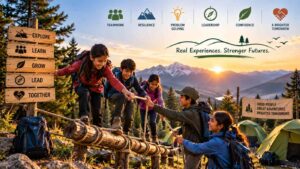
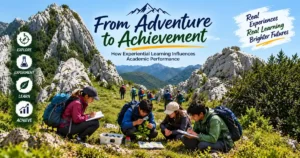
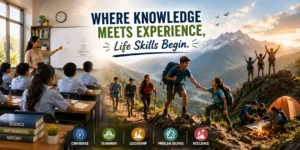
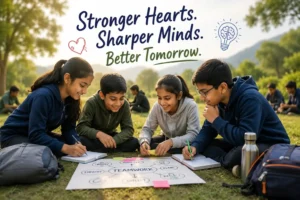
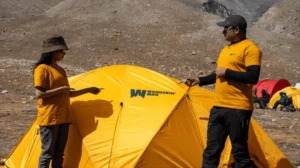
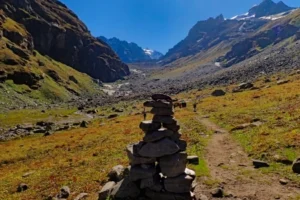
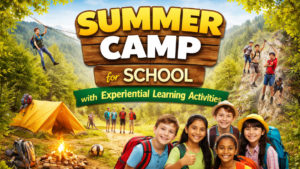
students discovering practical learning through structured outdoor experiences. Alt text: Roadmap for experiential learning through outdoor education and teamwork.
Why Traditional Education Needs an Experiential Learning Upgrade
Traditional classroom instruction provides essential academic foundations. However, knowledge acquired through lectures and textbooks does not automatically translate into practical competence. Students may understand leadership theoretically yet struggle to guide a team. Similarly, they may solve mathematical problems but find it difficult to apply calculations in unfamiliar situations. Experiential learning bridges this knowledge–application gap. It introduces purposeful activities that encourage students to question, experiment, collaborate, and reflect. The CBSE Experiential Learning Handbook provides a useful foundation for integrating experience-based teaching into school education. Schools that combine academic rigour with practical learning opportunities can create more engaging and relevant educational experiences.
Understanding the Experiential Learning Framework
Experiential learning is more than organising field trips, adventure camps, or recreational activities. It is a structured educational approach that transforms experiences into understanding and actionable skills. Educational theorist David Kolb’s experiential learning model identifies four interconnected stages:
- Concrete experience: Students participate in meaningful activities.
- Reflective observation: They examine their actions, decisions, and outcomes.
- Abstract conceptualisation: They connect experiences with principles and academic concepts.
- Active experimentation: They apply their learning to new challenges.
This framework helps educators design experiences with clear learning objectives rather than treating activities as isolated events.

Kolb’s experiential learning cycle — Experience, reflect, conceptualise, and apply. Alt text: Four-stage experiential learning framework for school education.
A Five-Step Roadmap for Experiential Learning in Schools
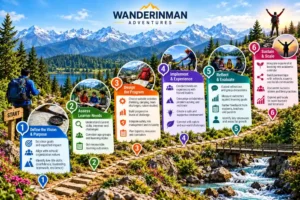
Transforming education requires deliberate planning, appropriate resources, and measurable outcomes. The following five-step roadmap offers schools a practical starting point.
Step 1: Identify Learning Outcomes and Student Competencies
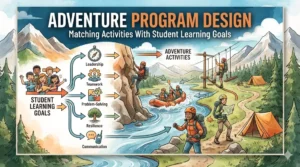
Every experiential learning programme should begin with a simple question: What should students learn or demonstrate? Schools can prioritise competencies such as leadership, communication, collaboration, resilience, creativity, and critical thinking. For example, a team navigation exercise can combine geography, decision-making, communication, and shared responsibility. Defining outcomes ensures that activities support educational development rather than entertainment alone.
Step 2: Integrate Hands-On Learning into the Curriculum
Experiential education becomes more valuable when connected with classroom subjects. Science lessons can incorporate environmental observations, mathematics can involve real-world measurements, and social studies can include community-based projects. Outdoor experiential learning provides opportunities to connect multiple disciplines within one meaningful experience.

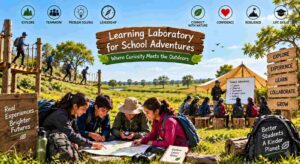
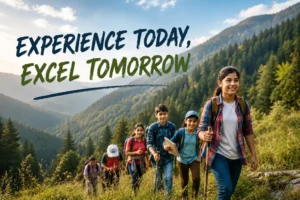
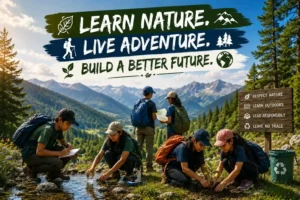
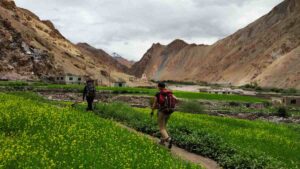
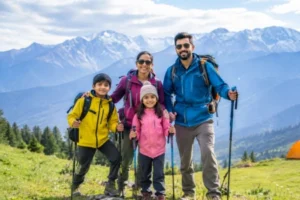
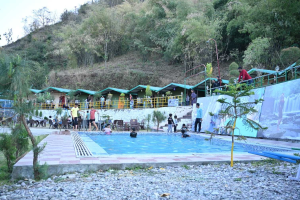
Curriculum-linked experiential education encourages observation, investigation, and real-world understanding. Alt text: Students participating in hands-on environmental learning outdoors.
Step 3: Introduce Progressive Challenges and Adventure-Based Learning
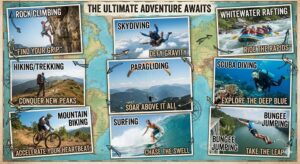
Students develop practical competencies when they encounter age-appropriate challenges that gradually increase in complexity. Structured adventure-based learning can incorporate:
- Team-building challenges to practise collaboration.
- Guided trekking to encourage planning and responsibility.
- Problem-solving simulations to develop analytical thinking.
- Outdoor leadership activities to practise decision-making.
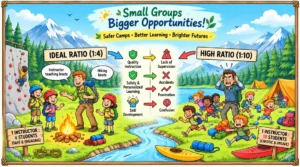
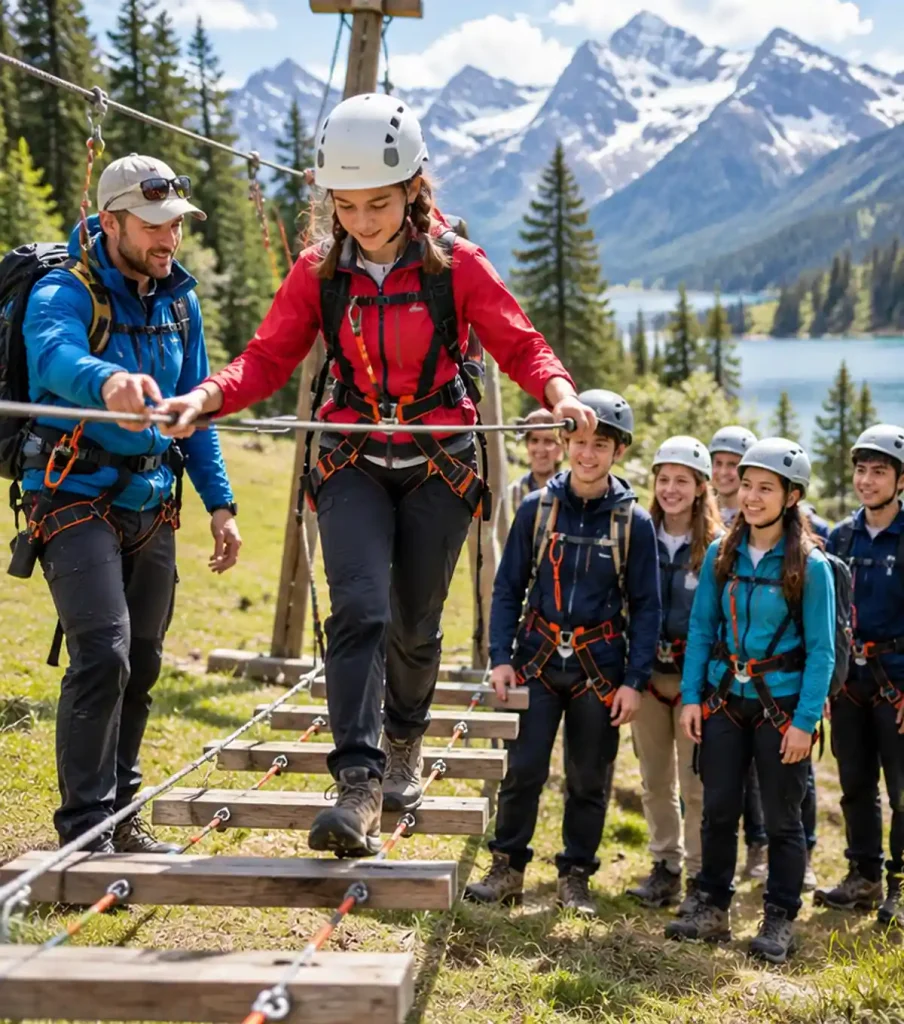
Educators should provide clear instructions, suitable supervision, inclusive alternatives, and appropriate safety arrangements.
Explore how
adventure programmes can develop leadership, teamwork, and life skills.
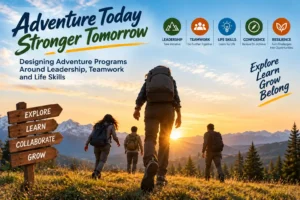
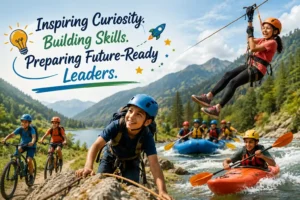
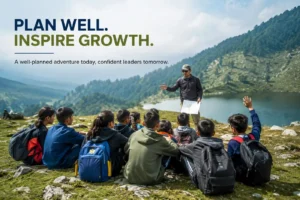
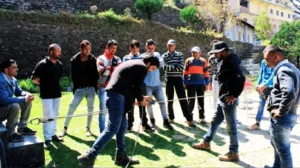
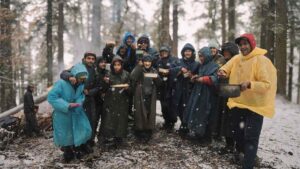
Progressive adventure challenges create opportunities for teamwork, confidence, and responsible decision-making. Alt text: Supervised school adventure learning program developing teamwork and leadership skills.
Step 4: Make Reflection and Feedback Part of Every Experience
Participation alone does not guarantee meaningful learning. Students must understand what happened, why it happened, and what they could improve. After each activity, teachers can encourage reflection through guided discussions, learning journals, peer feedback, and self-assessment. Useful questions include: What challenge did you face? How did your team respond? What would you do differently next time? Reflection helps students connect their experiences with personal growth and classroom knowledge.
Step 5: Measure Learning Outcomes and Continuously Improve
An effective roadmap for experiential learning must include assessment. Schools can evaluate student development through observation rubrics, project portfolios, reflection journals, presentations, and pre- and post-programme assessments. Rather than measuring participation alone, educators should examine demonstrated improvements in communication, problem-solving, teamwork, and independent thinking. Regular feedback from students, teachers, and parents can guide programme improvements.
How Experiential Learning Builds Future-Ready Skills
Experiential learning provides a setting in which students can practise important 21st-century competencies.

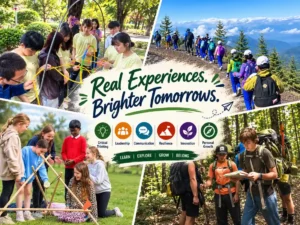
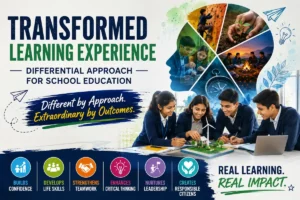
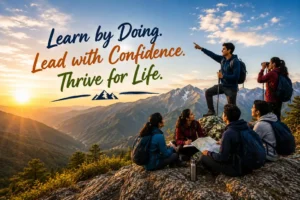
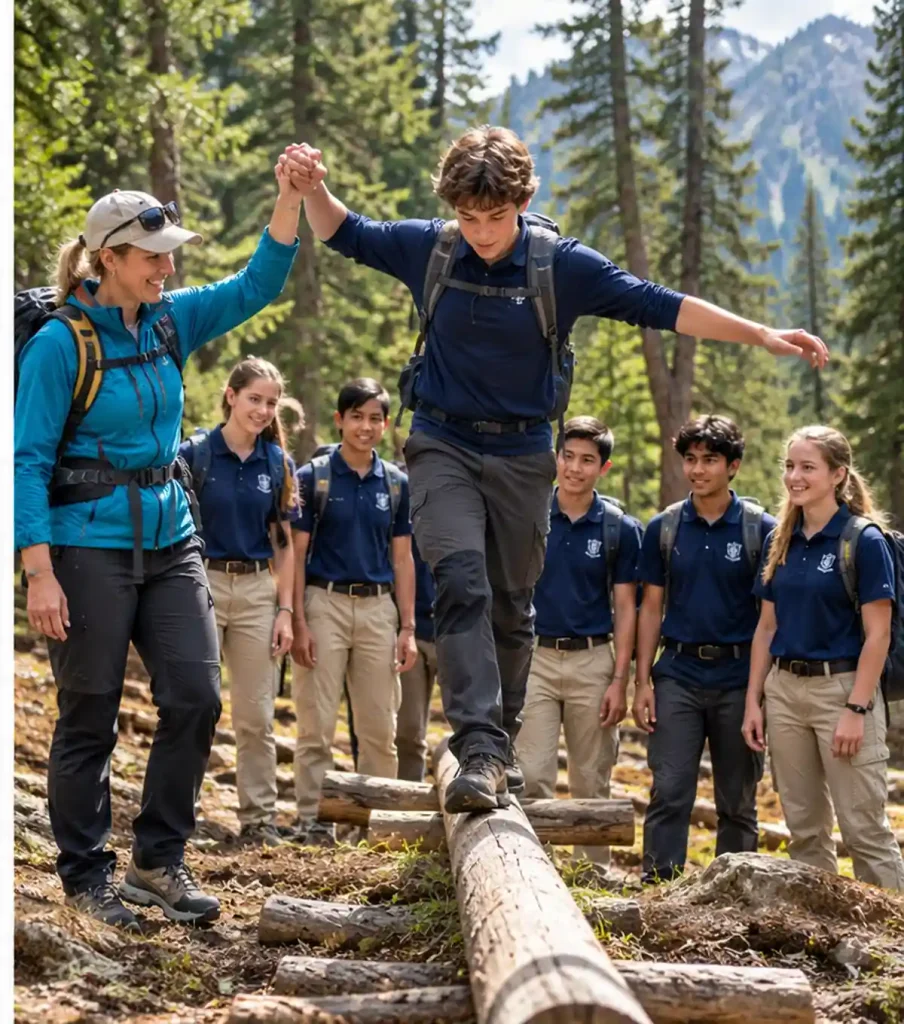
Collaborative challenges encourage students to communicate, evaluate options, and solve problems together. Alt text: Experiential learning activities promoting critical thinking and collaboration among school students.
Its educational value includes opportunities to strengthen:
- Critical thinking: Evaluating situations and selecting appropriate solutions.
- Leadership: Taking initiative while respecting team members.
- Communication: Expressing ideas and listening constructively.
- Adaptability: Responding thoughtfully to unfamiliar challenges.
- Emotional resilience: Managing setbacks and learning from mistakes.
- Environmental responsibility: Understanding the relationship between human actions and nature.
These outcomes require intentional facilitation and reflection. Activities should be designed to develop specific competencies rather than assuming every experience automatically produces them.
Making Experiential Learning Accessible and Sustainable
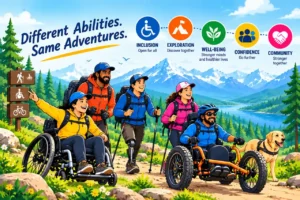
Successful implementation does not necessarily require expensive infrastructure or extensive travel. Schools can begin with classroom simulations, local nature walks, community projects, school gardens, and short outdoor learning programmes. A phased approach allows teachers to test activities, identify student needs, and gradually expand successful initiatives. Importantly, programmes should accommodate different abilities, learning needs, and levels of confidence. For broader guidance, UNESCO’s guidance on curriculum transformation highlights the importance of connecting knowledge with practical and behavioural learning.
How Wanderin’ Man Adventures Supports Experiential Education
At Wanderin’ Man Adventures Pvt. Ltd., we believe meaningful adventure experiences can become powerful opportunities for learning and personal development. Our approach brings together structured outdoor challenges, teamwork, environmental awareness, and guided reflection. Through experiential learning camps, adventure-based school programmes, trekking, and customised outdoor education experiences, we aim to help schools connect academic objectives with practical life skills. Our programmes are designed around age-appropriate activities, defined learning objectives, trained outdoor leaders, and planned safety arrangements. Schools can explore our approach to
planning a successful school adventure camp.

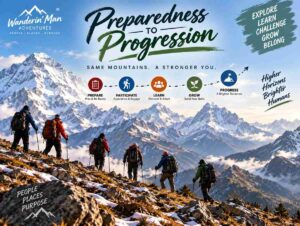
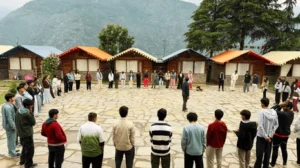
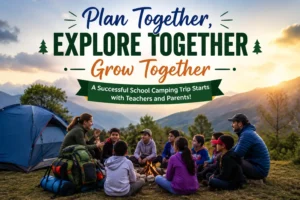
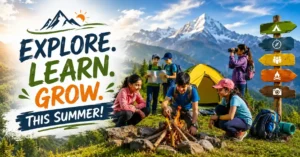
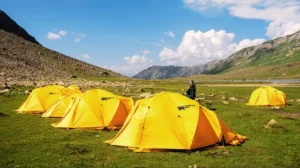
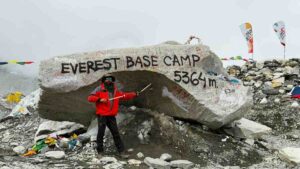
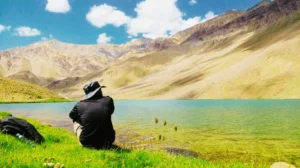
Structured Himalayan outdoor experiences can connect exploration with environmental awareness and personal development. Alt text: School experiential learning camp in the Himalayas with guided outdoor activities.
Conclusion: Update Teaching, Upgrade Learning, Transform Futures
The future of education depends on more than delivering information. It requires helping students understand, question, experience, and apply what they learn. A well-designed roadmap for experiential learning gives schools a practical pathway from traditional instruction towards more engaging, competency-based education. By combining curriculum integration, progressive challenges, guided reflection, and meaningful assessment, educators can create learning experiences that extend beyond examinations. The transformation begins when schools recognise that education is not simply preparation for life. Meaningful learning is also an active part of living.
Partner with Wanderin’ Man Adventures to Transform Learning
Ready to move beyond conventional learning and create experiences that make a lasting educational difference? Wanderin’ Man Adventures Pvt. Ltd. works with schools to design structured adventure and experiential learning programmes that connect classroom knowledge with real-world challenges. Whether your institution wants to introduce outdoor education, strengthen leadership development, encourage collaboration, or organise an immersive school adventure camp, our team can help develop a programme aligned with your educational priorities. Turn learning objectives into meaningful experiences. Turn experiences into practical competencies.
Visit Wanderin’ Man Adventures to explore our school programmes and discuss a customised experiential learning experience for your students.