Beyond the Classroom: Transforming Education
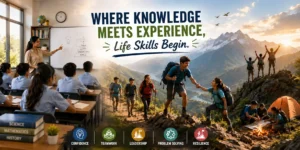
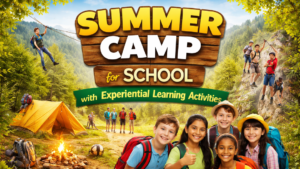
Education is no longer limited to textbooks, examinations and four walls. Beyond the classroom, students can discover, experiment, collaborate and solve real-world problems in ways that traditional teaching alone cannot always provide. From outdoor education and adventure activities to community projects, field visits and experiential learning camps, modern education is increasingly moving toward learning through experience. The goal is not to replace classroom education but to make it more meaningful. When students apply what they learn in real situations, knowledge becomes a skill, an experience and eventually a lifelong capability.
Why Education Needs to Go Beyond the Classroom
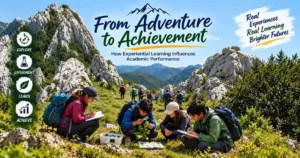
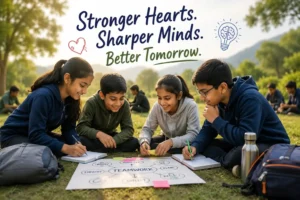
The traditional classroom remains essential for building academic knowledge. However, students also need opportunities to understand how that knowledge works in the real world. A science lesson about ecosystems becomes more memorable when students observe nature directly. Leadership becomes easier to understand when students actually have to lead a team. Problem-solving becomes meaningful when there is a genuine challenge to overcome. This is where education beyond the classroom becomes powerful. Real-world learning encourages students to ask questions, make decisions and learn from both success and failure. Instead of simply receiving information, they become active participants in the learning process.
What Is Experiential Learning?
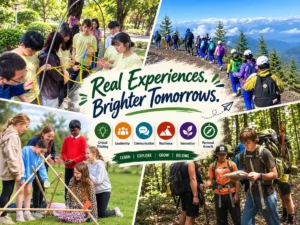
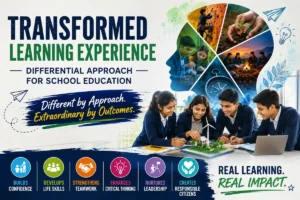
Experiential learning is an approach in which students learn by doing, reflecting and applying their knowledge to practical situations. Instead of asking students only to remember information, experiential education encourages them to experience it. A well-designed activity can involve:
- Observation and exploration
- Teamwork and collaboration
- Problem-solving
- Decision-making
- Communication
- Reflection
- Practical application
The experience becomes the classroom.
This approach can be particularly effective when combined with activity-based learning, outdoor education and adventure-based learning.
How Outdoor Education Transforms Student Learning
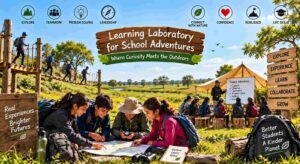
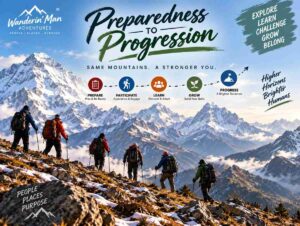
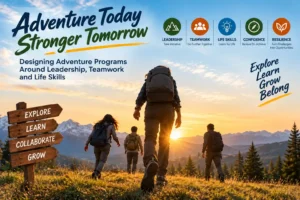
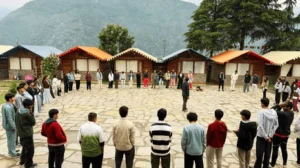
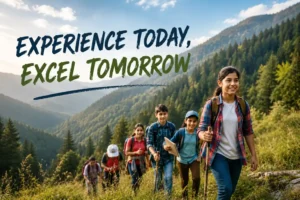
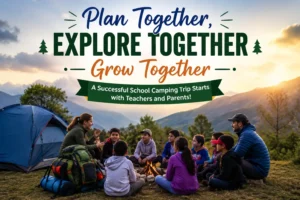
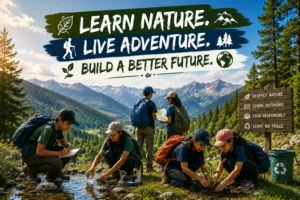
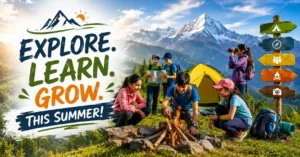
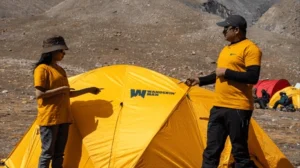
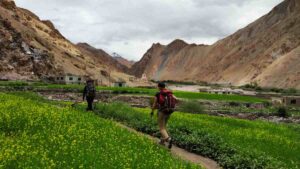
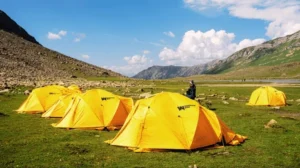
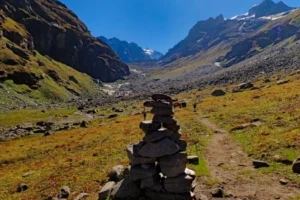
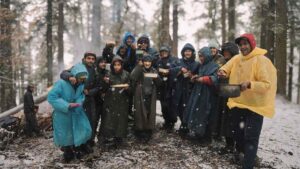
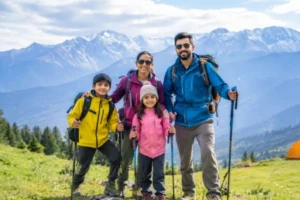
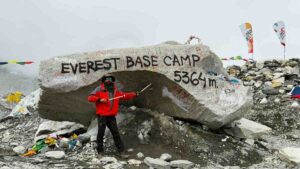
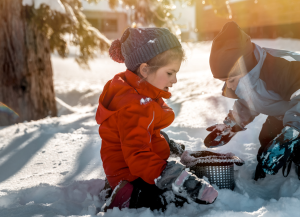
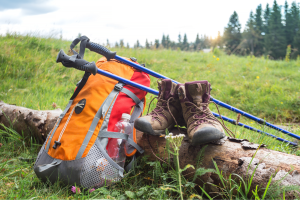
The outdoors provides something that a conventional classroom cannot easily reproduce: uncertainty. A trail changes. Weather changes. Group dynamics change. Students have to respond. Through carefully planned outdoor education, students can develop resilience, adaptability and confidence while remaining engaged with their surroundings. For example, trekking can teach students planning and endurance. Camping can encourage responsibility and cooperation. Navigation activities can develop observation and decision-making. The learning is practical, memorable and connected to real situations.
Adventure-Based Learning Builds Life Skills
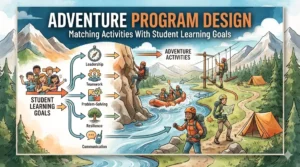
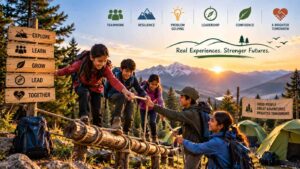
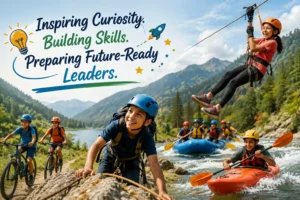
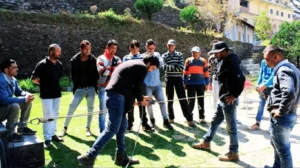
Adventure is not simply about excitement or physical activity. When professionally designed, it can become an effective educational tool. Adventure-based learning places students in situations where they must communicate, cooperate and make decisions. A group challenge may require students to:
- Listen to different opinions
- Divide responsibilities
- Manage limited resources
- Encourage team members
- Solve unexpected problems
- Take responsible decisions
These experiences develop important life skills for students that are difficult to build through theoretical instruction alone. The objective is not to create fearless students. It is to help them understand how to manage uncertainty responsibly.
From Knowledge to Real-World Skills
One of the biggest challenges in modern education is the gap between what students know and what they can actually do. A student may understand the definition of leadership but still struggle to lead a team. Another may know the principles of communication but find it difficult to communicate under pressure. Experiential learning helps bridge this gap.
Students can move through a simple learning cycle:
Experience → Challenge → Reflection → Understanding → Application
This process transforms information into usable knowledge. It also helps students understand that mistakes are not necessarily failures. They can become opportunities to reflect, improve and try again.
Developing Confidence, Leadership and Teamwork
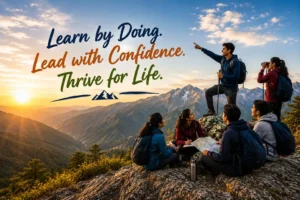
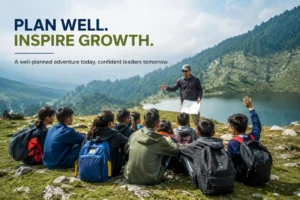
Student development involves much more than academic performance. Schools increasingly need to prepare young people for environments where collaboration, creativity, communication and adaptability matter. Well-designed experiential programs can provide opportunities for students to practise these capabilities. A team expedition, for instance, may require one student to take the lead during one activity while another takes responsibility during a different challenge. Students begin to understand that effective leadership is not about controlling others. It is about taking responsibility, listening and helping a team move forward.
Such experiences can strengthen confidence, leadership, teamwork and communication skills.
Learning Through Adventure Creates Lasting Memories
Students often remember experiences more vividly than information memorised for an examination. There is a reason a student may remember a challenging trek, a night under the stars or a successful team activity years later. Experiences create emotional connections with learning. When students participate actively, learning becomes something they feel and remember, rather than something they simply read. This is one of the strongest arguments for integrating experiential education and school adventure programs into broader educational development.
The Role of Schools in Creating Experiential Learning Opportunities
Schools do not need to abandon conventional teaching to embrace experiential education. Instead, they can create a balanced learning ecosystem.
Classroom teaching can provide the foundation. Field experiences can provide application. Reflection can connect the two.
Schools can introduce:
- Educational field trips
- Nature exploration
- Adventure camps
- Leadership activities
- Environmental projects
- Community engagement
- Outdoor learning
- Team-building challenges
- Experiential learning camps
The important factor is purposeful design.
Every activity should have clear learning objectives rather than being treated simply as entertainment.
How Parents Can Support Education Beyond the Classroom
Parents also play an important role in encouraging learning beyond the classroom. Children can learn through everyday experiences such as travelling, helping with household responsibilities, exploring nature, visiting museums or participating in community activities. Parents can also encourage children to ask questions instead of always providing immediate answers. Allowing young people to make age-appropriate decisions, experience manageable challenges and learn from mistakes can gradually build independence. The objective is to create curious learners who continue learning even when there is no teacher or textbook in front of them.
Building the Future of Holistic Education
The future of education is likely to be increasingly interdisciplinary, experiential and student-centred. Technology can provide access to enormous amounts of information. But information alone does not automatically create capable individuals. Students still need to experience collaboration, responsibility, uncertainty, creativity and problem-solving in the real world. That is why holistic education must combine academic knowledge with practical experiences.,The classroom will remain important. But it should not be the boundary of learning.
Beyond the Classroom: Learning That Stays With Students
Beyond the classroom is more than a phrase. It represents a shift from education as information delivery to education as personal development. When students explore, experiment, collaborate and reflect, they begin to understand themselves as learners and problem-solvers. Experiential learning, outdoor education and adventure-based learning can make this transformation possible when they are thoughtfully planned and professionally conducted. The ultimate objective is simple: prepare students not only to pass examinations, but to navigate life. Because some of the most important lessons cannot be written on a blackboard. They have to be experienced.
Go beyond the classroom. Experience learning. Build skills. Discover potential.