From Textbooks to Trails: The Route Less Traveled
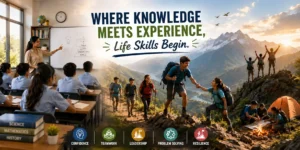
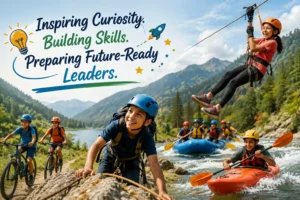
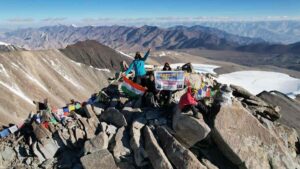
Education does not always need four walls, a blackboard and a textbook. Sometimes, the most powerful lessons begin when students step onto a trail, carry a backpack, work as a team and face a challenge they cannot simply find the answer to in a book. The journey from textbooks to trails represents a shift towards experiential learning—where students learn by doing, observing, questioning and reflecting. A carefully designed school adventure program can transform a simple trek or camping experience into an opportunity to develop confidence, leadership, resilience and real-world problem-solving skills.


7
Why Learning Beyond the Classroom Matters
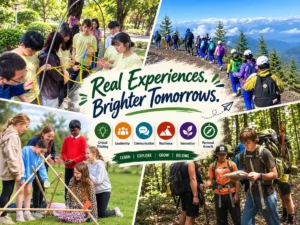
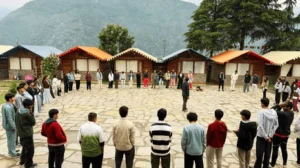
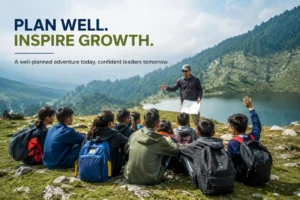
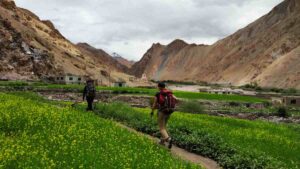
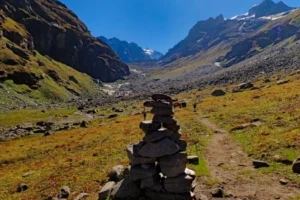
Traditional classroom education provides essential academic knowledge. However, students also need opportunities to apply that knowledge in unfamiliar situations. Outdoor education creates exactly that environment. On a trail, students may need to navigate an unfamiliar route, manage their belongings, communicate with teammates, conserve resources or adjust to changing weather. These seemingly simple experiences encourage decision-making, adaptability and responsibility. The trail becomes an extension of the classroom—but with one important difference: students become active participants rather than passive learners.
From Textbooks to Trails: Learning Through Experience
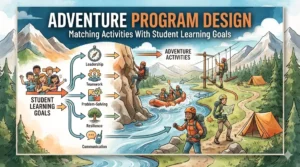
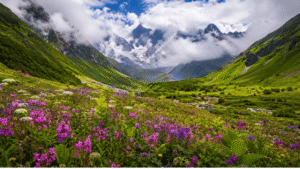
Experiential learning becomes meaningful when students connect an experience with reflection and action. A geography lesson about mountains can become more memorable when students actually walk through a mountain landscape. A lesson about environmental conservation becomes more relevant when students see a fragile ecosystem first-hand. Adventure-based learning can connect academic concepts with practical experiences involving:
- Geography and natural sciences
- Environmental awareness
- Physical fitness
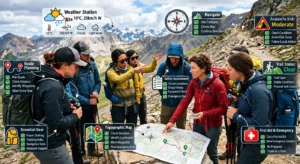
- Navigation and orientation
- Communication
- Leadership and teamwork
- Risk awareness
- Problem-solving
- Personal responsibility
The objective is not to replace classroom education. It is to make classroom learning more connected to real life.


6
Trails Teach What Textbooks Cannot
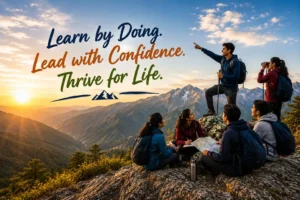
A trail does not provide instant answers. It presents questions. Which route should we take? How do we help a tired teammate? What happens if the weather changes? How should we protect the environment? How do we reach the campsite together? These situations encourage students to think independently. A student who initially hesitates to lead a group may gradually discover confidence after successfully completing a challenging section of a trek. Another student may learn that listening is just as important as speaking when making group decisions.
These are life skills developed through experience, not memorisation.
Building Confidence One Step at a Time
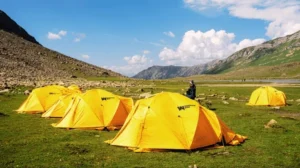
Confidence is often developed through small victories. For some students, completing their first hike can be a meaningful achievement. For others, pitching a tent, crossing a difficult section, speaking before a group or helping a teammate may represent a personal breakthrough. Well-designed student adventure programs create controlled challenges that encourage participants to step outside their comfort zones without compromising safety. The message becomes simple:
“I faced something difficult—and I managed it.”
That mindset can influence how students approach academic pressure, social situations and future challenges.


7
Leadership Is Better Experienced Than Explained
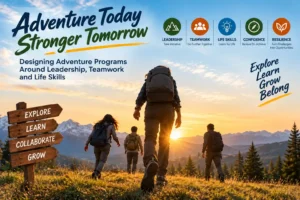
Leadership is often discussed in classrooms. Trails allow students to experience it. A student may become responsible for checking group members, another may help with navigation, while another may motivate teammates during a difficult climb. Such experiences introduce students to practical leadership principles:
- Taking initiative
- Communicating clearly
- Supporting others
- Accepting responsibility
- Making decisions
- Managing setbacks
- Understanding different perspectives
Importantly, leadership does not always mean being at the front. Sometimes it means slowing down for someone else.
Resilience Grows When the Trail Gets Difficult
Outdoor adventures rarely go exactly according to plan. A trail may be steeper than expected. Rain may arrive. A student may feel tired. A group may need to change its pace. These moments provide valuable opportunities to develop resilience and adaptability. Instead of immediately looking for an easy way out, students learn to pause, assess the situation and continue with appropriate support. That lesson can travel far beyond the mountains.


7
Teamwork Becomes Real on the Trail
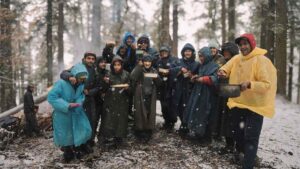
In a classroom activity, teamwork may mean completing a group assignment. On a trail, teamwork can mean something much more immediate. Students must often walk together, communicate, share responsibilities and look after one another. Individual success becomes connected to group success. This develops collaboration, empathy, trust and communication. A strong adventure program therefore does more than take students outdoors. It deliberately creates situations where cooperation becomes necessary.
Nature Becomes the Classroom
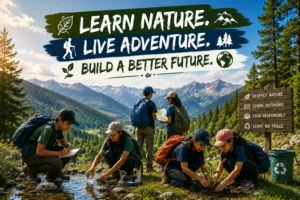
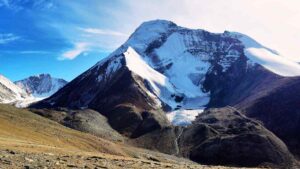
Outdoor education also creates a deeper relationship with the natural world. Students can observe forests, rivers, mountains, wildlife and local communities rather than simply reading about them.
They begin to understand concepts such as:
- Leave No Trace
- Responsible tourism
- Waste management
- Conservation
- Biodiversity
- Water resources
- Local culture
When environmental awareness becomes experiential, sustainability can feel less like a chapter in a textbook and more like a personal responsibility.


6
What Makes a School Adventure Program Meaningful?
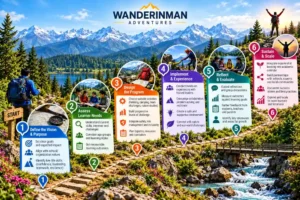
Not every outdoor trip automatically becomes experiential education. A meaningful school adventure program should have clear learning objectives, age-appropriate activities, qualified leaders, proper safety procedures and opportunities for reflection. Schools should consider:
Purpose: What should students learn?
Age and ability: Is the activity appropriate for the participants?
Safety: Are qualified instructors, emergency procedures and appropriate equipment available?
Learning design: Are activities connected to specific developmental outcomes?
Reflection: Will students discuss what they experienced and learned?
Environmental responsibility: Does the program encourage respect for nature?
The best programs combine adventure, education and safety rather than treating adventure as entertainment alone.
The Route Less Traveled Can Lead to Greater Learning
The future of education does not require choosing between textbooks and trails. It requires understanding how they can complement each other.
Textbooks provide knowledge. Trails provide context. Classrooms develop understanding. Experiences test that understanding. Teachers explain leadership. Challenges allow students to practise it. And when students return from the trail, they bring something more valuable than photographs. They bring stories of challenges overcome, teammates supported, decisions made and fears confronted. That is the real meaning of going from textbooks to trails. Sometimes, the route less traveled is not a distraction from education.
It is education—experienced differently.
Conclusion: Take Learning Beyond the Classroom
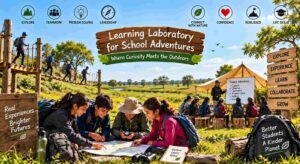
The strongest education prepares students not only to pass examinations but also to navigate uncertainty, work with others, solve problems and respond confidently to challenges. Adventure programs provide a powerful environment for this kind of development. When thoughtfully designed, a trail can become a laboratory for leadership, resilience, teamwork, environmental awareness and personal growth.
The destination may be a mountain, forest or campsite. But the real journey is the transformation of the student.
For schools looking to make learning more experiential, perhaps it is time to move beyond the familiar path—from textbooks to trails.cation does not always need four walls, a blackboard and a textbook. Sometimes, the most powerful lessons begin when students step onto a trail, carry a backpack, work as a team and face a challenge they cannot simply find the answer to in a book. The journey from textbooks to trails represents a shift towards experiential learning—where students learn by doing, observing, questioning and reflecting. A carefully designed school adventure program can transform a simple trek or camping experience into an opportunity to develop confidence, leadership, resilience and real-world problem-solving skills.
7
Why Learning Beyond the Classroom Matters
Traditional classroom education provides essential academic knowledge. However, students also need opportunities to apply that knowledge in unfamiliar situations. Outdoor education creates exactly that environment. On a trail, students may need to navigate an unfamiliar route, manage their belongings, communicate with teammates, conserve resources or adjust to changing weather. These seemingly simple experiences encourage decision-making, adaptability and responsibility. The trail becomes an extension of the classroom—but with one important difference: students become active participants rather than passive learners.
From Textbooks to Trails: Learning Through Experience
Experiential learning becomes meaningful when students connect an experience with reflection and action. A geography lesson about mountains can become more memorable when students actually walk through a mountain landscape. A lesson about environmental conservation becomes more relevant when students see a fragile ecosystem first-hand.
Adventure-based learning can connect academic concepts with practical experiences involving:
- Geography and natural sciences
- Environmental awareness
- Physical fitness
- Navigation and orientation
- Communication
- Leadership and teamwork
- Risk awareness
- Problem-solving
- Personal responsibility
The objective is not to replace classroom education. It is to make classroom learning more connected to real life.
6
Trails Teach What Textbooks Cannot
A trail does not provide instant answers. It presents questions. Which route should we take? How do we help a tired teammate? What happens if the weather changes? How should we protect the environment? How do we reach the campsite together? These situations encourage students to think independently. A student who initially hesitates to lead a group may gradually discover confidence after successfully completing a challenging section of a trek. Another student may learn that listening is just as important as speaking when making group decisions.
These are life skills developed through experience, not memorisation.
Building Confidence One Step at a Time
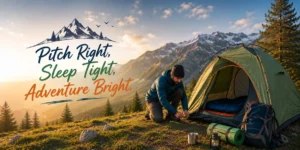
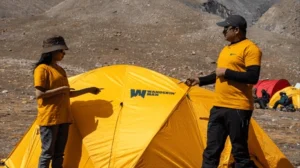
Confidence is often developed through small victories. For some students, completing their first hike can be a meaningful achievement. For others, pitching a tent, crossing a difficult section, speaking before a group or helping a teammate may represent a personal breakthrough. Well-designed student adventure programs create controlled challenges that encourage participants to step outside their comfort zones without compromising safety. The message becomes simple:
“I faced something difficult—and I managed it.”
That mindset can influence how students approach academic pressure, social situations and future challenges.
7
Leadership Is Better Experienced Than Explained
Leadership is often discussed in classrooms. Trails allow students to experience it. A student may become responsible for checking group members, another may help with navigation, while another may motivate teammates during a difficult climb. Such experiences introduce students to practical leadership principles:
- Taking initiative
- Communicating clearly
- Supporting others
- Accepting responsibility
- Making decisions
- Managing setbacks
- Understanding different perspectives
Importantly, leadership does not always mean being at the front. Sometimes it means slowing down for someone else.
Resilience Grows When the Trail Gets Difficult
Outdoor adventures rarely go exactly according to plan. A trail may be steeper than expected. Rain may arrive. A student may feel tired. A group may need to change its pace. These moments provide valuable opportunities to develop resilience and adaptability. Instead of immediately looking for an easy way out, students learn to pause, assess the situation and continue with appropriate support. That lesson can travel far beyond the mountains.
7
Teamwork Becomes Real on the Trail
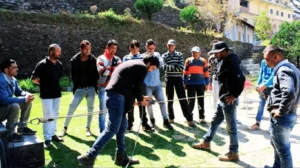
In a classroom activity, teamwork may mean completing a group assignment. On a trail, teamwork can mean something much more immediate. Students must often walk together, communicate, share responsibilities and look after one another. Individual success becomes connected to group success. This develops collaboration, empathy, trust and communication. A strong adventure program therefore does more than take students outdoors. It deliberately creates situations where cooperation becomes necessary.
Nature Becomes the Classroom
Outdoor education also creates a deeper relationship with the natural world. Students can observe forests, rivers, mountains, wildlife and local communities rather than simply reading about them. They begin to understand concepts such as:
- Leave No Trace
- Responsible tourism
- Waste management
- Conservation
- Biodiversity
- Water resources
- Local culture
When environmental awareness becomes experiential, sustainability can feel less like a chapter in a textbook and more like a personal responsibility.
6
What Makes a School Adventure Program Meaningful?
Not every outdoor trip automatically becomes experiential education. A meaningful school adventure program should have clear learning objectives, age-appropriate activities, qualified leaders, proper safety procedures and opportunities for reflection. Schools should consider:
Purpose: What should students learn?
Age and ability: Is the activity appropriate for the participants?
Safety: Are qualified instructors, emergency procedures and appropriate equipment available?
Learning design: Are activities connected to specific developmental outcomes?
Reflection: Will students discuss what they experienced and learned?
Environmental responsibility: Does the program encourage respect for nature?
The best programs combine adventure, education and safety rather than treating adventure as entertainment alone.
The Route Less Traveled Can Lead to Greater Learning
The future of education does not require choosing between textbooks and trails. It requires understanding how they can complement each other. Textbooks provide knowledge. Trails provide context. Classrooms develop understanding. Experiences test that understanding. Teachers explain leadership. Challenges allow students to practise it. And when students return from the trail, they bring something more valuable than photographs. They bring stories of challenges overcome, teammates supported, decisions made and fears confronted. That is the real meaning of going from textbooks to trails. Sometimes, the route less traveled is not a distraction from education.
It is education—experienced differently.
Conclusion: Take Learning Beyond the Classroom
The strongest education prepares students not only to pass examinations but also to navigate uncertainty, work with others, solve problems and respond confidently to challenges. Adventure programs provide a powerful environment for this kind of development. When thoughtfully designed, a trail can become a laboratory for leadership, resilience, teamwork, environmental awareness and personal growth.
The destination may be a mountain, forest or campsite. But the real journey is the transformation of the student.
For schools looking to make learning more experiential, perhaps it is time to move beyond the familiar path—from textbooks to trails.