Roopkund Trek | Ultimate Guide to India’s Mystery Lake
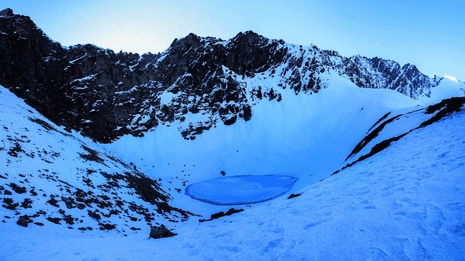
Hidden deep within the Garhwal Himalayas of Uttarakhand, the Roopkund Trek continues to enchant trekkers, historians, photographers, and adventure lovers throughout the years. More commonly referred to as the Skeleton Lake Trek, Roopkund is a journey up the mountains towards a glacial lake encircled by snow-topped mountains, lush green meadows, and centuries-old skeletons that continue to mystify researchers from all around the globe.
As opposed to other treks in the Himalayan region, Roopkund promises much more than just picturesque surroundings. With each step in the trek, you will be passing through forests, bugyals, old pilgrimage paths, and challenging terrains to reach one of the biggest enigmas of archaeology in India.
Be it your first time trekking in the Himalayas or looking for one of the unique trekking trails of the country, this guide will tell you everything there is to know about Roopkund Trek.
What is the Roopkund Trek?
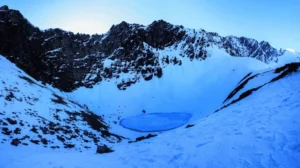
Roopkund Trek is one of the most famous high-altitude treks of India, situated in the Chamoli district of Uttarakhand. The Roopkund trek ends at Roopkund Lake, a small glacial lake which lies at an elevation of about 5,029 meters (16,499 feet).
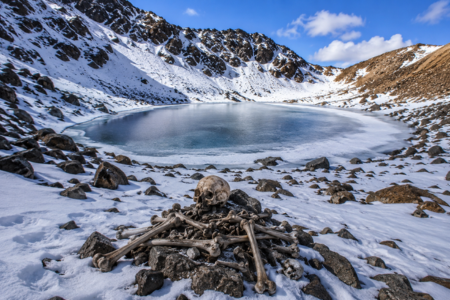
The lake is frozen for most of the year. When the snow melts, several ancient skeletons come into view around its periphery, earning it the name of Skeleton Lake.
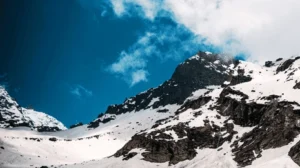
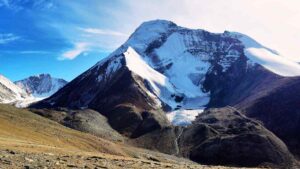
In addition to being shrouded in mystery, the Roopkund Trek is known for its stunning natural beauty as it presents a panoramic view of many spectacular Himalayan mountains, which include:
- Trishul
- Nanda Ghunti
- Chaukhamba
- Neelkanth
- Hathi-Ghoda Peaks
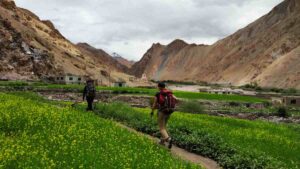
The route also passes through some of Uttarakhand’s most beautiful alpine meadows, such as Ali Bugyal and Bedni Bugyal, making it a paradise for nature lovers and photographers.
Why is Roopkund Called India’s Mystery Lake?
Roopkund Lake is well-known all over the world because of the hundreds of human skeletons found at this place.
For a long time, nobody could explain where they came from; it was one of the biggest mysteries of the Himalayas. There were many myths that explained the presence of human skeletons in terms of soldiers, pilgrims, or traders who died in a terrible storm of snow.
Modern science and DNA testing show that many of them actually died in different periods of time. Some theories say that some of them were killed by the huge hailstones falling in the mountains, while others came there in different eras.
All this combination of archeology, mythology, and nature makes Roopkund a unique place for trekking in India.
Roopkund Trek Highlights
Roopkund Trek is more than a mere reach to a destination; it is a trip through varied Himalayan landscapes and rich culture.
Alpine Meadows
The trip starts with a forest followed by green pastures of Ali Bugyal and Bedni Bugyal, which are amongst the biggest and most beautiful alpine meadows of Asia.
Himalayan Views
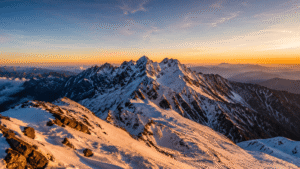
During the trek, you will have unobstructed views of snow-capped Himalayan giants offering unlimited chances of clicking pictures and enjoying sunrise views.
Biodiversity
The forests have rhododendron bushes, oak trees, colorful Himalayan birds and mountain animals.
Adventure at High Altitude
Roopkund trek is an adventurous trek due to the steep climbs, varied weather, and rough mountain paths.
Historical and Cultural Significance
This trek route was a pilgrimage route linked with Nanda Devi Raj Jat Yatra, one of the most prominent religious pilgrimages of Uttarakhand.
Where is the Roopkund Trek Located?
Roopkund Lake is located in the Chamoli district of Uttarakhand state of India. This lake is located in the lap of the Himalayas Garhwal Range.
The conventional route to reach Roopkund Lake starts from Lohajung, which is a beautiful village in the mountains. Trekkers travel from here through dense forests, remote villages, Alpine meadows, and mountain camps till they reach the destination lake.
The area is famous for its untouched nature, serene environment, and amazing mountain views.
Why You Should Consider the Roopkund Trek
In case you seek a Himalayan trek that provides breath-taking scenery, tough trail through mountains, rich history, and adventure, Roopkund Trek in India is among the most interesting treks to choose from. Be it the green pastures of Bedni Bugyal or Skeleton Lake located at the foothills of Himalayas, each part of the trek will leave you impressed.
Best Time to Visit the Roopkund Trek
It is important to select an appropriate season for ensuring that your Roopkund Trek experience is a safe and pleasant one. This trek involves traversing through dense forests, alpine meadows, and high altitude regions.
Summer (May to June)
The Roopkund Trek is believed to be one of the most pleasant trips to take during summer season because of melting snow that exposes lush green pastures, blossomed rhododendrons and magnificent views of the Himalayas. The average daily temperature varies from 10°C to 18°C. Nights at high campsites may be frosty.
Why travel to Roopkund in summer?
Nice weather for trekking
Blooming alpine flowers
Views of mountains
Comfortable camping conditions
Post-Monsoon (September to October)
Once the monsoon season passes, there will be clear skies; therefore, this is another good time to go on treks. The scenery is still green, and the views of Himalayan mountains are also at their best.
Advantages
Clear mountain views
Reliable weather
Picturesque yellow alpine pastures
Great photography
Please take note that access to Roopkund trekking may change depending on government or conservation regulations.
Roopkund Trek Route
The standard Roopkund trek starts at Lohajung, a serene village located in the Himalayas of Uttarakhand state.
This trek follows the course below:
Kathgodam → Lohajung → Didna Village → Ali Bugyal → Bedni Bugyal → Patar Nachauni → Bhagwabasa → Roopkund Lake → Back
Each phase of the trek has its unique environment, ranging from oak forest to mountain villages, from grassland to rocky alpine terrain.
Roopkund Trek Itinerary
Dehradun to Lohajung (2300 mts) 294 km (10 to 11 hours)
Lohajung (2300 mts) to Didna (2450 mts) 7 km (5-6 hours)
Didna (2450 mts) to Abin kharak/Khobal tal (3450 mts) via Bedni Bugyal (3354 mts) 10 km (7 to 8 hours)
Abin kharak/Khobal tal (3450 mts) to Kuramtolikharak/Pater Nachauni (3870 mts) 7 km (5 to 6 Hours)
Kuramtolikharak/Pater Nachauni (3870 mts) to Bhagwabasa (4328 mts) 4 km ( 5 hours)
Bhagwabasa (4328 mts) to Roopkund (4800 mts) – Patar Nachuni (3870 mts) 12 km (10 to 11 hours)
Geroli Patal (3196 mts) to Wan 6 to 7 km ( 4 hours) and drive to Lohajung (2300 mts) 16 km ( 45 minutes)
Lohajung (2300 m) – Dehradun 294 km (10 to 11 hours)
Roopkund Trek Difficulty Level
Roopkund Trek is usually considered a moderate to difficult trek in the Himalayas.
Various reasons for the difficulty of Roopkund Trek include the following:
Trek takes place at an elevation of over 5,000 meters.
Involves steep climb and descent.
Rocky mountainous region.
Low temperatures.
Less oxygen.
Extended trekking hours.
Even though beginners with good physical fitness can undertake the trek, with the help of experienced guides, experience in trekking is an added advantage.
Roopkund Trek Distance
Distance for trekking: 45 to 55 km (round trip)
Time for trekking: 6 to 8 days of trekking
Maximum height: Approx. 5,029 m (16,499 ft)
The time for daily trekking is usually between 5 to 10 hours.
Temperature the Roopkund Trek
Weather changes quickly in the high Himalayas.
Typical conditions include:
| Season | Day | Night |
|---|---|---|
| Summer | 10–18°C | -2 to 5°C |
| Autumn | 8–15°C | -5 to 2°C |
Trekkers should always be prepared for sudden rain, snowfall, and strong winds, especially at higher elevations.
Fitness Preparation for the Roopkund Trek
Physical fitness will greatly enhance your hiking adventure.
Try to start training about 6–8 weeks before your departure.
Training regimen:
Cardio
Running
Jogging
Cycling
Stair climbing
Goals to be met:
5km running in 30–35 minutes
Continuous cardio training for 45–60 minutes
Strength training
Concentration should be laid on:
Squats
Lunges
Core training
Step-ups
Planks
Endurance
Practice hiking with a backpack on difficult terrain wherever possible.
Safety Tips
To ensure a safe trekking experience:
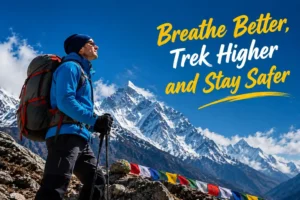
- Acclimatize properly before gaining altitude.
- Stay hydrated throughout the trek.
- Avoid rushing on steep ascents.
- Follow your trek leader’s instructions.
- Carry appropriate clothing for changing weather.
- Do not leave marked trails.
- Respect local customs and the fragile Himalayan environment.
- Travel with a reputed trekking organization that follows established safety protocols and provides experienced trek leaders.
Flora and Fauna of the Roopkund Trek
Roopkund Trek covers various habitats of the Himalayas, which make it an ideal place for nature enthusiasts.
Flora
Along the trail as you go upwards, you will come across:
Oak forest
Rhododendron forest
Birch tree
Alpine grassland
Vibrant Himalayan wildflowers
Medicinal plants
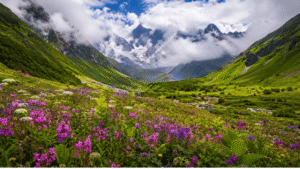
During late spring and early summer, the plains turn into beautiful floral carpets. It is one of the most picturesque views of Uttarakhand.
Fauna
Some of the fauna found in this area includes:
Himalayan Monal (state bird of Uttarakhand)
Musk deer
Himalayan tahr
Red fox
Himalayan griffon
Golden eagle
Snow partridge
The sighting of animals varies depending on seasons and weather, and hence one should not interfere in their habitat.
Frequently Asked Questions
Is Roopkund Trek safe for first-time trekkers?
Roopkund Trek is known to be a moderate to challenging high-altitude trek. First-timers who have great physical fitness and preparations can undertake this trek with the guidance of experts.
What is the highest point in the Roopkund Trek?
The Roopkund Lake is located at an altitude of about 5,029 meters (16,499 feet).
Why does Roopkund have the name of Skeleton Lake?
This lake has earned its reputation owing to the discovery of hundreds of old human skeletons around the lake. Based on scientific research, the skeletons date back to various eras, which makes it one of the mysterious archaeological places in India.
How long does it take for the Roopkund Trek?
It usually takes 6 to 8 days to finish this trek, not including transportation to and from the starting point.
What are the ideal months to do the Roopkund Trek?
The ideal months for this trek are May to June and September to October, based on the weather and availability of the trek route at present.
Is altitude sickness a risk factor?
As this trek exceeds 3,000 meters in elevation, trekkers must prepare themselves against AMS.
Final Thoughts
The Roopkund Trek is not just about visiting a high altitude lake but is more about exploring the one of the most interesting regions in the Himalayas. From the beautiful alpine valleys of Ali Bugyal and Bedni Bugyal to the mysterious Skeleton Lake, every point of the Roopkund trek is unique with its charm.
No matter what is your interest, be it the history of the ancient skeletons, the adventure associated with high altitude treks, or the Himalayan scenery itself, you will definitely find your interest at Roopkund. The right preparation, the environment, and the expertise of trek leaders are all that you need for the successful trekking journey.
Trek Responsibly with Wanderin’ Man Adventures
At Wanderin’ Man Adventures, we believe every Himalayan expedition should combine safety, responsible tourism, and unforgettable experiences. Our experienced trek leaders, carefully planned itineraries, and commitment to sustainable trekking help adventurers explore the mountains with confidence.
Whether you’re preparing for your first Himalayan trek or your next high-altitude challenge, our team is here to help you every step of the way.
Ready to explore India’s legendary Mystery Lake? Plan your Roopkund Trek with Wanderin’ Man Adventures and experience the Himalayas responsibly.