Corporate Adventure Development: An Adventure Awakening
Reimagining Corporate Development Through Adventure
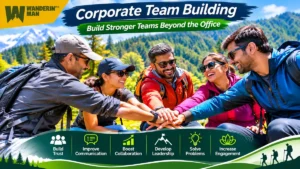
In today’s competitive business environment, corporate development requires more than conventional training sessions and presentations. Organisations need employees who can collaborate, lead, adapt to uncertainty and make effective decisions under pressure.Corporate Adventure Development is transforming how organisations approach employee engagement, leadership development and team building. In today’s competitive business environment, companies need employees who can collaborate, lead, adapt to uncertainty and make effective decisions. Adventure-based experiential learning provides an opportunity to develop these capabilities through outdoor challenges, teamwork and practical experiences.
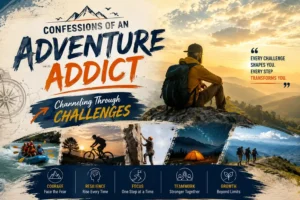
This is where corporate adventure development creates a meaningful difference. By combining outdoor challenges, experiential learning and structured team-building activities, adventure programmes provide employees with opportunities to discover their strengths beyond the boundaries of the workplace. An adventure awakening is not simply about stepping outdoors; it is about unlocking human potential, strengthening professional relationships and creating a workforce prepared for real-world business challenges.
Why Corporates Are Embracing Adventure-Based Development
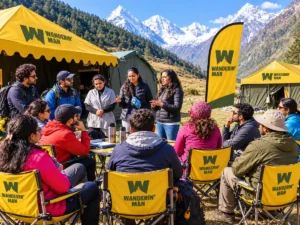
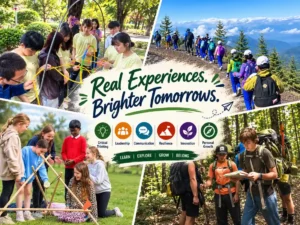
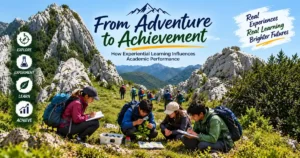
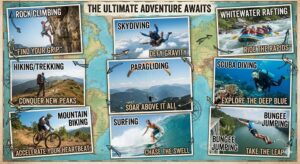
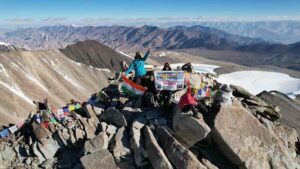
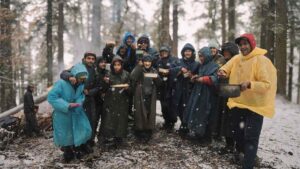
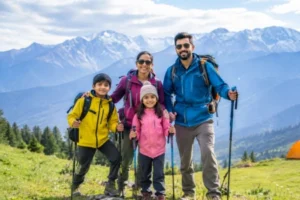
Traditional corporate training often focuses on theoretical knowledge. While useful, it may not always translate into practical workplace behaviour. Adventure-based corporate training introduces employees to unfamiliar situations where communication, trust, leadership and collaboration become essential. Through activities such as trekking, rope courses, outdoor challenges and team-based problem-solving exercises, employees learn to:
- Communicate effectively under pressure.
- Build trust and accountability among colleagues.
- Demonstrate leadership and initiative.
- Approach challenges with confidence.
- Develop adaptability and collective responsibility.
These experiences help organisations create stronger teams and a more collaborative workplace culture.
The Development Dynamics Unlocked Through Adventure
Adventure experiences encourage employees to move beyond familiar routines and explore different dimensions of personal and professional development.
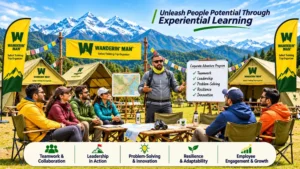
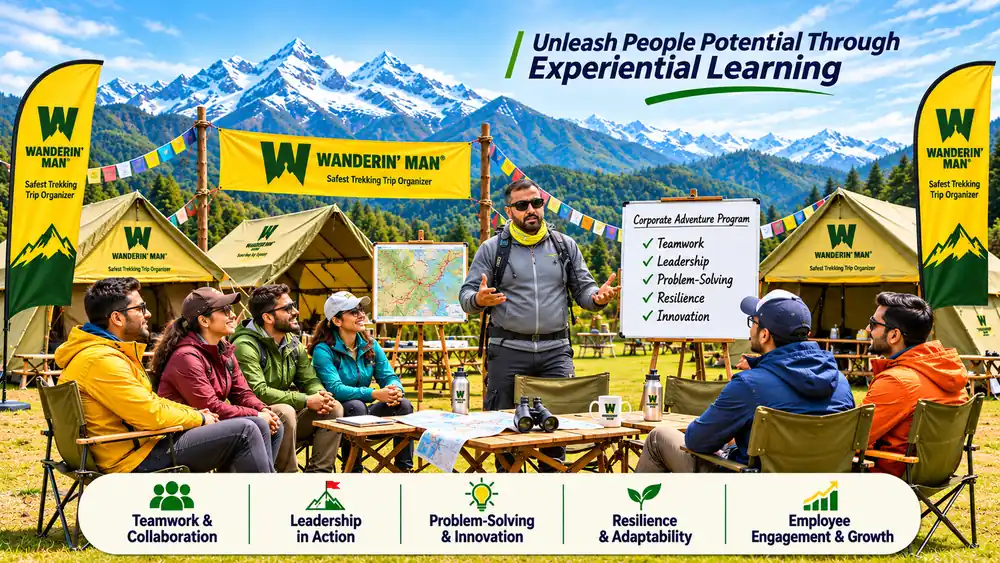
1. Stronger Teamwork and Collaboration
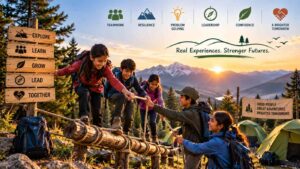
Teamwork develops when individuals learn to depend on one another. Group trekking, navigation challenges and obstacle-based activities encourage participants to coordinate efforts, share responsibilities and work towards common objectives. These lessons can translate into better communication and collaboration at work.
2. Leadership in Action
Leadership is best understood through practical experience. Outdoor challenges provide opportunities for employees to take initiative, guide teammates, manage responsibilities and make decisions. Such experiences help identify emerging leaders and strengthen leadership capabilities across organisational levels.
3. Problem-Solving and Decision-Making
Adventure activities frequently involve unexpected situations that require quick thinking and collective decisions. Employees learn to assess circumstances, evaluate available options and develop practical solutions. These capabilities are equally important in managing workplace complexities.
4. Resilience and Adaptability
Unfamiliar environments encourage individuals to face discomfort, manage uncertainty and remain focused on their objectives. This develops resilience, patience and adaptability—qualities that help employees respond constructively to professional setbacks and changing business priorities.
5. Creativity and Innovation
Stepping away from conventional office environments can stimulate fresh thinking. Collaborative outdoor challenges encourage employees to explore alternative approaches, exchange ideas and develop innovative solutions.
Key Components of an Effective Corporate Adventure Programme
A successful corporate adventure programme combines physical experiences with clear organisational development objectives. Important components include:
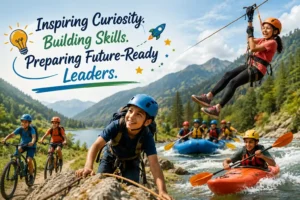
- Outdoor adventure activities: Trekking, hiking, rafting and rope courses that encourage confidence and personal growth.
- Team-building challenges: Group activities designed to strengthen trust, communication and collaboration.
- Leadership exercises: Practical situations that encourage decision-making, initiative and accountability.
- Problem-solving simulations: Challenges that develop critical thinking and collective decision-making.
- Reflection and debriefing: Guided discussions connecting adventure experiences with workplace responsibilities.
- Customised programme design: Activities aligned with organisational goals, employee profiles and available time.
The objective is not simply to complete an activity but to convert the experience into meaningful learning.
The Real Impact of Adventure Development on People and Business
Corporate adventure development can create benefits that extend well beyond the duration of an outdoor programme. Employees often return with a better understanding of their colleagues, improved confidence and a stronger sense of collective responsibility. For organisations, well-designed programmes can contribute to:
- Improved employee engagement and team morale.
- Stronger interpersonal relationships.
- Better cross-functional collaboration.
- Increased confidence in emerging leaders.
- Greater adaptability to workplace challenges.
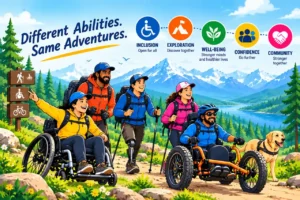
- A positive and inclusive organisational culture.
However, lasting results depend on programme quality, meaningful reflection and the organisation’s willingness to reinforce these lessons in everyday working environments.
Designing the Right Adventure Experience for Your Organisation
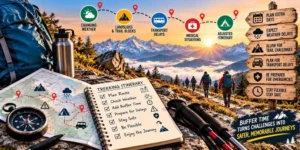
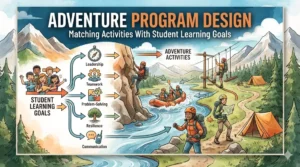
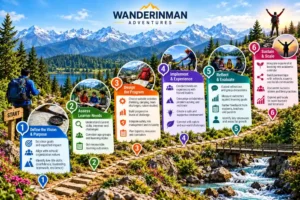
Every organisation has different development priorities. A programme designed for senior management may focus on strategic decision-making and leadership, while one designed for new employees may prioritise communication, trust and team integration. Before selecting a corporate adventure programme, organisations should consider:
- Define development objectives: Identify the skills and behaviours the programme should strengthen.
- Understand employee profiles: Consider fitness levels, age groups, experience and accessibility requirements.
- Choose appropriate activities: Match challenges with participants’ capabilities and organisational objectives.
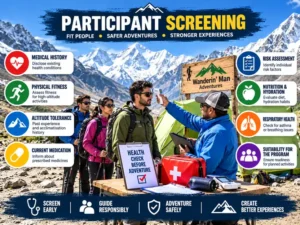
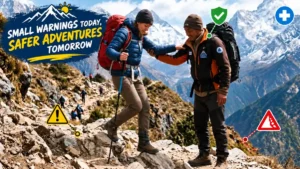
- Prioritise safety: Work with trained adventure professionals, appropriate equipment and established safety procedures.
- Include structured reflection: Connect activities with practical workplace applications.
- Measure outcomes: Gather participant feedback and assess improvements in teamwork, engagement and communication.
A thoughtfully designed programme ensures that adventure remains purposeful, inclusive and development-oriented.
Awaken Your Workforce with Wanderin’ Man Adventures
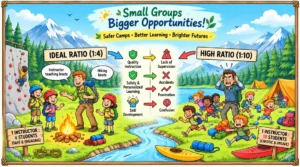
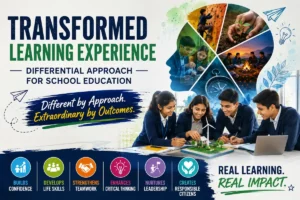
At Wanderin’ Man Adventures, we believe that meaningful development begins when people step beyond their comfort zones and discover what they can achieve together. Our customised corporate adventure and experiential learning programmes combine outdoor challenges, team-building experiences and leadership development opportunities in inspiring natural environments. From trekking and outdoor challenges to structured team-building exercises, our programmes are designed around organisational objectives, participant profiles and desired learning outcomes. With trained adventure leaders, small-group engagement and a strong emphasis on safety, we aim to create experiences that go beyond recreation and encourage meaningful personal and professional growth.
Step out of the office. Step into an adventure. Awaken the potential within your team.
Explore corporate adventure programmes with Wanderin’ Man Adventures and discover a new dimension of workplace development.