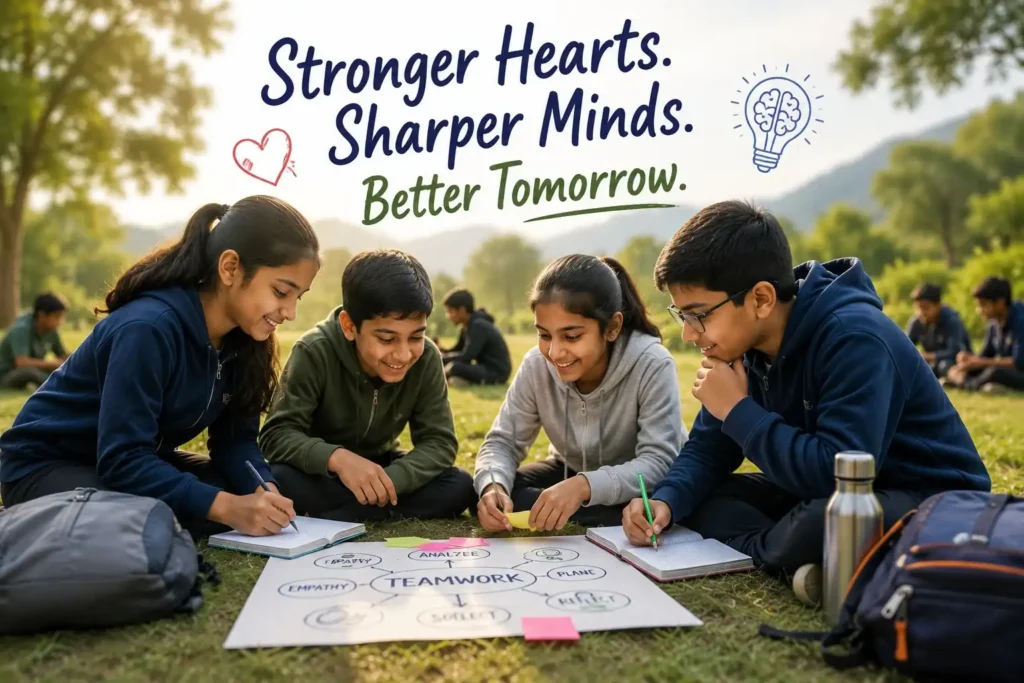
School Programs Building Emotional and Analytical Intelligence: Complete Guide
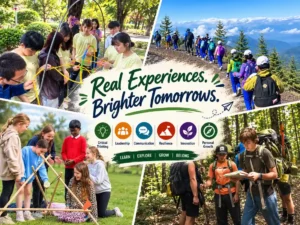
Academic knowledge is only one part of a student’s development. Students also need opportunities to communicate, collaborate, manage emotions, analyse situations, solve problems and make responsible decisions. School programs building emotional and analytical intelligence can create those opportunities by taking learning beyond passive classroom instruction and into practical experiences. Experiential learning, outdoor education, leadership activities, STEM challenges, team projects, environmental programs and community-based activities can give students opportunities to practise skills in realistic situations. This approach is consistent with India’s National Education Policy (NEP) 2020, which promotes experiential, inquiry-based, discovery-oriented, collaborative and competency-based learning. NEP 2020 specifically calls for experiential learning, including hands-on, arts-integrated and sports-integrated approaches. The objective, however, is not simply to make school programs more exciting. The real value comes from connecting activity, learning objective, reflection and application.
Why Emotional and Analytical Intelligence Matter in Education
Emotional intelligence can be understood through abilities such as self-awareness, self-management, social awareness, relationship skills and responsible decision-making. These areas closely correspond with the five competencies in the CASEL framework. Analytical intelligence is used here as a practical term for skills such as:
- Critical thinking
- Observation
- Logical reasoning
- Problem-solving
- Evaluation
- Decision-making
- Planning
- Applying information to new situations
These capabilities complement academic knowledge.
A student may know the theory of teamwork but still need opportunities to practise listening, negotiation and responsibility. Similarly, a student may know a mathematical formula but need practical situations in which they must identify a problem, evaluate information and decide how to apply what they know. NEP 2020 similarly emphasises critical thinking, problem-solving, inquiry, discovery and analysis alongside knowledge and application.
What Are School Programs That Build These Skills?
School programs are structured learning experiences that complement classroom teaching. They may include:
- Experiential learning programs
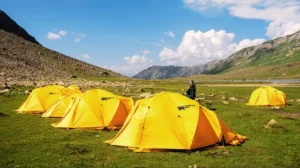
- Outdoor education
- School adventure camps
- Educational trekking
- STEM and robotics activities
- Environmental education
- Leadership programs
- Team-building challenges
- Community-service projects
- Sports-integrated learning
- Debate and public speaking
- Creative and project-based activities
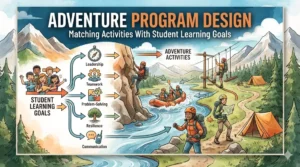
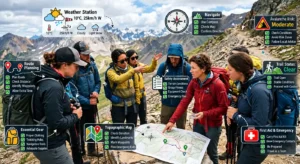
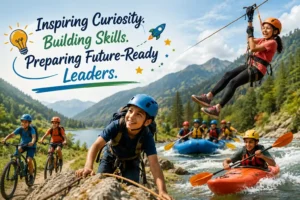
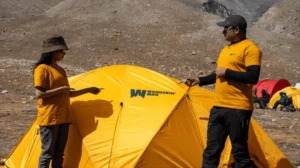
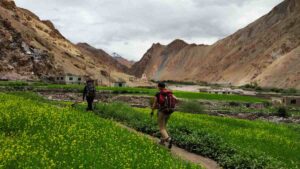
The educational value depends less on the activity’s novelty and more on how deliberately it is designed. For example, a trekking program can remain simply a recreational outing. But if students are asked to interpret a map, observe the environment, work in teams, manage an assigned responsibility and reflect on decisions afterward, the same experience can become a structured learning opportunity.
How School Programs Develop Emotional Intelligence
1. Self-Awareness Through Reflection
Students encounter situations outside their usual classroom routines. They may discover how they react to uncertainty, teamwork, setbacks, responsibility or unfamiliar environments. A guided reflection can help students ask:
- What did I find difficult?
- How did I respond?
- What were my strengths?
- What could I improve?
- How did my behaviour affect the group?
Reflection turns an experience into an opportunity for self-awareness.
2. Empathy and Social Awareness
Group activities expose students to different personalities, abilities and approaches. A student may discover that a classmate solves a problem differently or needs additional support. Learning to listen, understand another perspective and respond respectfully can contribute to social awareness. CASEL identifies social awareness and relationship skills as important components of social and emotional learning.
3. Communication and Relationship Skills
Team challenges require students to communicate rather than work in isolation. Students may need to:
- Listen actively
- Explain ideas
- Ask questions
- Give and receive feedback
- Resolve disagreements
- Divide responsibilities
- Support teammates
These behaviours can be practised during outdoor challenges and then reinforced through classroom reflection.
4. Resilience and Self-Management
Appropriately designed challenges can expose students to manageable setbacks. A task may not work on the first attempt. A group may have to reconsider its plan. A student may initially hesitate before participating. The educational opportunity lies in helping students understand the experience rather than simply rewarding success.
5. Responsible Decision-Making
Students can learn that decisions have consequences. When an activity involves planning, teamwork or appropriate risk awareness, students can discuss:
What are our options? What information do we have? What could happen next? What is the responsible choice?
This connects emotional awareness with practical decision-making. CASEL includes responsible decision-making as one of its five core SEL competencies.
How School Programs Develop Analytical Thinking
Problem-Solving
Adventure challenges, STEM tasks and project-based activities can present students with problems that require more than memorisation. Students may need to:
- Identify the problem
- Gather information
- Consider alternatives
- Select an approach
- Test the solution
- Review the result
This process makes analytical thinking visible.
Critical Thinking
Students can be encouraged to question assumptions, compare alternatives, examine evidence and explain why they reached a particular conclusion. This is closely aligned with NEP 2020’s emphasis on critical thinking, inquiry-based learning, analysis and problem-solving.
Observation
Nature studies, field visits, environmental activities and science-based tasks encourage students to pay attention to details. Students might observe:
- Plants and biodiversity
- Weather patterns
- Terrain
- Water sources
- Human impact on the environment
- Changes in materials or physical conditions
Observation becomes more valuable when students then have to explain what they noticed and why it matters.
Decision-Making
Decision-making activities can ask students to compare choices rather than simply identify a correct answer.
For example:
Situation → Available information → Possible options → Consequences → Decision → Review
This helps students understand the reasoning behind a decision.
Creativity and Innovation
Analytical thinking does not have to mean rigid thinking. Students can combine observation, imagination and reasoning to develop alternative solutions. NEP 2020 also connects education with creativity, innovation, critical thinking and problem-solving.
Experiential Learning Connects Emotional and Analytical Growth
The strongest connection between emotional and analytical development often comes through experiential learning. A practical learning cycle can be represented as:
Experience → Reflect → Analyse → Apply → New Experience
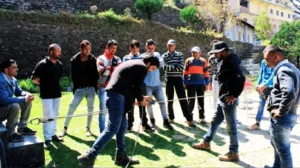
NEP 2020 describes experiential learning as learning through real-life experiences and identifies hands-on learning, reflection, problem-solving and application as important elements. Consider a team-navigation activity. Students first experience the challenge. They then reflect on how the group communicated, analyse the decisions they made and identify what they would change next time. The same activity therefore creates opportunities to practise:
Emotional skills: communication, self-management, empathy and teamwork.
Analytical skills: observation, planning, route selection, evaluation and decision-making.
This is why a well-designed outdoor program should not stop when the activity ends. The debrief is part of the learning.
Emotional and Analytical Skills Through Different School Activities
| School activity | Emotional development | Analytical development |
|---|---|---|
| Team challenge | Communication, cooperation | Problem-solving |
| Educational trekking | Resilience, responsibility | Route planning, observation |
| STEM challenge | Persistence, collaboration | Logic, experimentation |
| Nature study | Empathy, environmental responsibility | Observation, analysis |
| Debate | Confidence, respectful communication | Evidence evaluation |
| Community service | Empathy, social awareness | Situation analysis |
| Leadership activity | Self-awareness, responsibility | Planning and decision-making |
| Team sports | Self-management, cooperation | Strategy and evaluation |
The activity should always be matched to the students’ developmental level and the school’s intended learning outcomes.
E-E-A-T: What Makes an Experiential School Program Credible?
For a school choosing an experiential learning provider, an attractive activity list is not enough.
Schools should look for evidence of experience, expertise, authority and trustworthiness.
Experience
A provider should be able to demonstrate relevant experience delivering programs for school-age participants. Wanderin Man’s school-program page currently describes 15+ years of team experience and 3,000+ student participants, alongside school-focused outdoor and experiential programs. These are first-party claims and should be understood as information supplied by the organization.
Expertise
Programs should be led by appropriately experienced personnel. Wanderin Man states that its school programs are supervised by experienced facilitators and certified mountaineering professionals and instructors. For each booking, schools should still verify the qualifications and roles of the actual personnel assigned to their program.
Safety
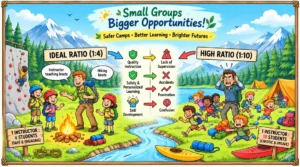
Safety should be part of educational design rather than an afterthought. Wanderin Man’s published school-program information describes measures including emergency evacuation planning, first-aid support, risk-management SOPs, dedicated female instructors, certified equipment, insurance and a stated 1:6 leader-to-participant ratio. Schools should confirm which measures apply to the specific program, location, age group and dates being considered.
Trust and Transparency
A credible provider should be able to explain:
- What students will do
- Why they will do it
- Who will supervise them
- How activities are adapted to age and ability
- What happens in an emergency
- What students are expected to learn
- How teachers are involved
- How feedback is collected
This is more useful to schools than simply describing an adventure as “exciting” or “unforgettable.”
How Schools Can Measure Learning Outcomes
Emotional and analytical growth should not be reduced to a single score. Schools can instead use multiple forms of evidence.
Before the Program
Define two or three observable objectives. For example:
Teamwork: Students will demonstrate active participation and appropriate task-sharing.
Problem-solving: Students will identify alternatives before selecting a solution.
Self-awareness: Students will be able to describe one personal strength and one area for improvement.
During the Program
Teachers and facilitators can observe:
- Participation
- Communication
- Leadership
- Decision-making
- Response to setbacks
- Cooperation
- Problem-solving
After the Program
Students can complete:
- Reflection journals
- Group presentations
- Self-assessments
- Peer feedback
- Short questionnaires
- Project-based assignments
The objective is to identify what students experienced, what they learned and how they can apply it later.
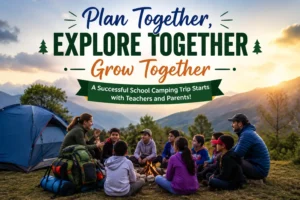
How Teachers and Parents Can Reinforce Learning
Experiential learning becomes stronger when the school experience connects with everyday learning.
Teachers can:
- Explain learning objectives before the program
- Connect activities with curriculum topics
- Encourage observation and questioning
- Conduct structured debriefs
- Use student presentations after the program
- Document learning outcomes
Parents can:
- Encourage students to explain what they learned
- Ask open-ended questions
- Encourage responsible independence
- Discuss challenges without immediately solving them
- Recognise effort, reflection and improvement
CASEL’s framework similarly places social and emotional development within interconnected school, family and community environments rather than treating it as a standalone activity.
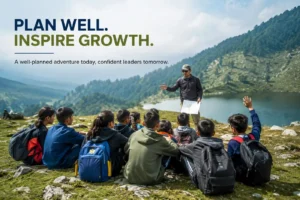
How Schools Can Choose an Effective Program
Not every outdoor or extracurricular activity automatically becomes meaningful experiential education. Before selecting a provider, schools should ask:
1. What are the learning objectives?
The program should have a clear educational purpose.
2. Is the activity age-appropriate?
Challenges should reflect students’ age, physical ability, experience and confidence.
3. Who will supervise the students?
Ask about instructor experience, qualifications and supervision arrangements.
4. What safety systems are in place?
Review risk assessment, emergency procedures, first-aid arrangements, equipment, medical support and insurance.
5. Is there a reflection component?
Ask how students will process and apply what they experienced.
6. Can the program be customised?
A strong school program should be adaptable to the school’s objectives, schedule, student group and learning requirements.
7. How will outcomes be reviewed?
Schools should be able to gather feedback from students and teachers and identify areas for improvement.
Why Wanderin Man’s Experiential Approach Matters
Wanderin Man describes its school programs as combining theory and practical experience, with an emphasis on attention, curiosity, learning retention, discipline and versatility. Its school-program offering also identifies safety, professional supervision and structured outdoor experiences as core components. This provides a useful foundation for schools seeking programs that go beyond recreational trips. However, the educational value of any specific program depends on how the activity is designed, delivered, supervised and followed up. That is why schools should discuss their learning objectives with the provider before finalising a program.
Conclusion: From Activities to Meaningful Learning
School programs building emotional and analytical intelligence can give students opportunities to practise skills that are difficult to develop through passive learning alone. A well-designed experience can ask students to communicate, collaborate, observe, analyse, make decisions, manage setbacks and reflect on their actions. The most effective approach is therefore not simply:
Activity → Fun → Return to School
It is:
Learning Objective → Experience → Challenge → Reflection → Analysis → Application
When schools use this model, outdoor education, adventure activities, STEM challenges, leadership programs and community projects can become purposeful extensions of learning. The goal is not to create students who are simply more adventurous.
It is to help students become more self-aware, collaborative, thoughtful, analytical and capable of applying what they learn to real situations.
Plan an Experiential Learning Program for Your School
If your school is looking beyond a conventional picnic or recreational trip, Wanderin’ Man Adventures can help you explore structured outdoor and experiential learning options built around teamwork, leadership, problem-solving, environmental learning and practical student development.
Programs can be discussed around:
- Student age and grade
- Learning objectives
- Program duration
- Day or residential format
- Adventure and outdoor activities
- Team-building requirements
- Leadership development
- Environmental learning
- School safety and supervision requirements
Speak with Wanderin’ Man about designing an experiential program around your school’s objectives.
[Plan Your School Experiential Learning Program]
For more information, visit Wanderin Man’s School Programs page.