Moving outside the comfort zone: from fear to confidence
Fear is a natural response to something unfamiliar. A new trail, a difficult climbing wall, a river crossing or even speaking in front of a group can make a person hesitate. But what happens when we take that first step anyway? Moving outside the comfort zone can turn uncertainty into experience, fear into courage and hesitation into confidence. This is one reason adventure sports and experiential learning have become powerful tools for personal development. Adventure is not about eliminating fear. It is about learning to understand fear, manage it responsibly and discover that we are often capable of more than we initially believe.
Why Moving Outside the Comfort Zone Matters
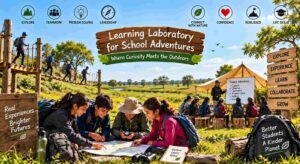
The comfort zone feels safe because it contains familiar situations, routines and predictable outcomes. Staying there is not necessarily bad. In fact, everyone needs a certain level of comfort and security. The problem begins when fear prevents us from trying something new. Students who rarely face challenges may find it difficult to handle uncertainty, failure or unfamiliar situations. Experiential learning creates opportunities to experience controlled challenges where students can make decisions, cooperate with others and learn from outcomes.
A simple principle emerges:
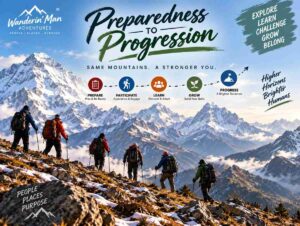
Challenge creates experience. Experience creates learning. Learning creates confidence.
How Adventure Sports Help Overcome Fear


7
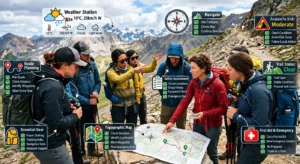
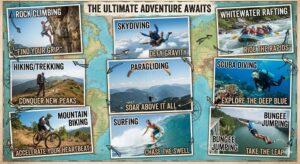
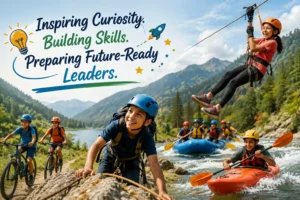
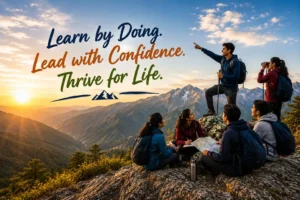
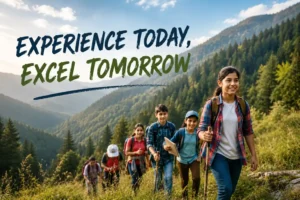
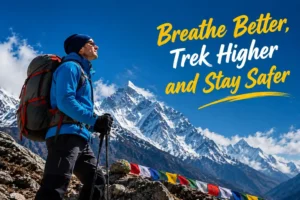
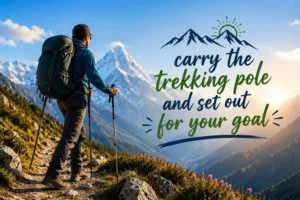
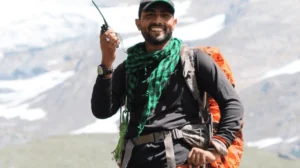
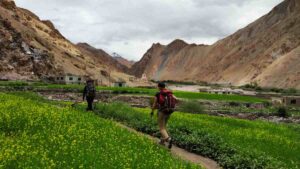
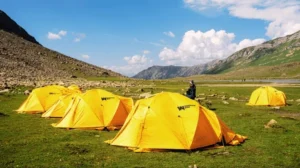
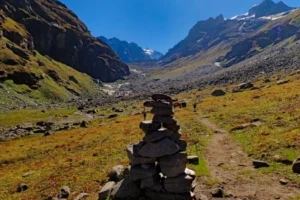
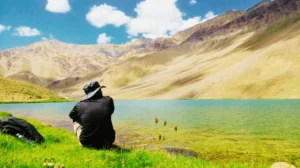
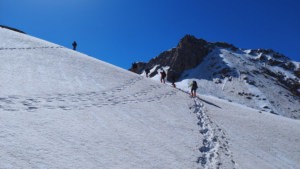
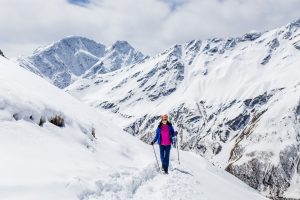
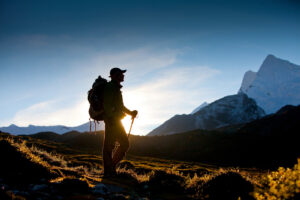
Adventure sports provide situations where emotions become part of the learning process. Consider a student standing at the beginning of a trekking trail. The distance may look difficult. The terrain may be unfamiliar. The student may wonder, Can I really do this? The first step does not immediately remove the fear. But after walking a kilometre, then another, something changes. The student begins to realise: I can do this. Trekking, rock climbing, rafting, camping, cycling and other outdoor activities can provide similar experiences when they are professionally supervised and appropriately matched to participants. The objective is not extreme risk. It is meaningful challenge with responsible risk management.
From Fear to Confidence Through Experiential Learning
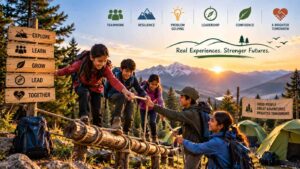
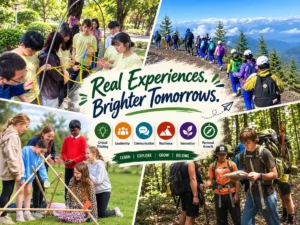
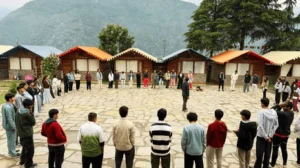
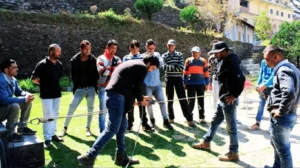
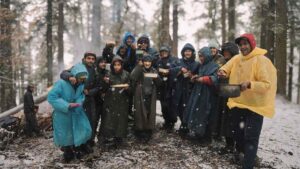
Traditional education often gives students answers. Experiential learning gives them situations in which they have to discover answers. Suppose a group of students faces an outdoor team challenge. They have limited time and resources. They must communicate, divide responsibilities and find a solution. Nobody can simply memorise the answer from a textbook. They have to think. They may make mistakes. They may disagree. Their first solution may fail. Then they try again. That experience teaches something deeper than a theoretical lesson. It develops problem-solving, adaptability, teamwork and resilience. Most importantly, students begin to trust their own ability to respond to challenges.
Adventure-Based Learning Builds a Growth Mindset
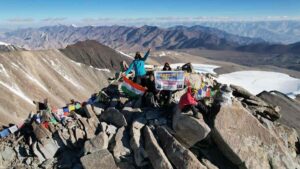
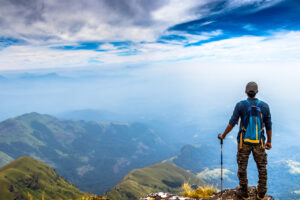
A growth mindset encourages people to view abilities as something that can develop through effort, practice and learning. Adventure-based learning naturally supports this idea. A student who initially says, “I can’t climb that,” may eventually reach the top with guidance and persistence. The important lesson isn’t simply reaching the destination. It is discovering that “I can’t do it yet” is different from “I can’t do it.” This shift in thinking can influence academic performance, relationships, leadership and future professional life.
Small Challenges Create Big Changes
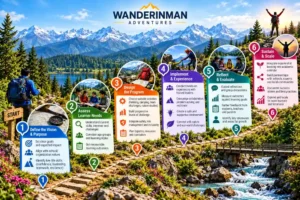
Moving outside the comfort zone does not mean throwing students into overwhelming situations. Effective outdoor education works progressively.
A student might begin with:
- A simple team activity
- A short nature walk
- Basic navigation
- A low-level climbing challenge
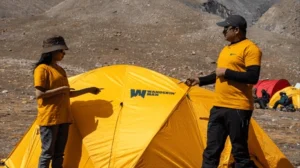
- A camping exercise
- A longer trek
- A leadership responsibility
Each successful experience expands the individual’s perception of what is possible.
This gradual process is important because confidence grows through manageable challenges and repeated accomplishment, not through unnecessary pressure.
What Students Learn When They Face Uncertainty
Adventure experiences often introduce an element of uncertainty. The weather may change. A route may take longer than expected. A team member may need support. A planned solution may not work. These situations encourage students to adapt. Instead of asking only:
“What is the correct answer?”
they begin asking:
“What can we do next?”
That is a valuable real-world skill.
Life rarely provides perfectly structured questions with four possible answers. Real-world learning prepares students to think when the situation itself is changing.
Building Confidence Through Teamwork
Confidence is not always built through individual achievement. Sometimes it develops because someone else believes in us. Outdoor adventure activities naturally encourage teamwork. Students walk together, solve problems together and support one another through challenging moments. A student who struggles with an activity may receive encouragement from teammates. Later, that same student may encourage somebody else. This creates a powerful cycle of trust, cooperation and shared confidence. Students learn that asking for help is not weakness. Supporting others is not a burden. Both are essential parts of strong teams.
Adventure, Resilience and Emotional Growth
One of the most valuable outcomes of adventure-based learning is resilience. Resilience does not mean never feeling afraid, disappointed or frustrated. It means learning how to respond when those emotions appear. A difficult trek, unsuccessful attempt or challenging team task can teach students to pause, reassess and try again. These experiences can contribute to emotional resilience, self-confidence and personal growth. Such lessons remain useful long after the adventure ends.
The Role of Teachers and Adventure Leaders
Moving outside the comfort zone should always happen within a safe and supportive environment. Teachers and professional adventure leaders have an important role in this process.
They can:
- Assess individual abilities
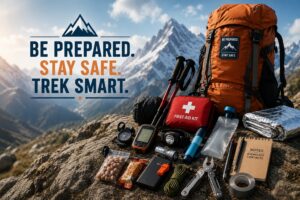
- Explain safety procedures
- Set realistic challenges
- Encourage participation without forcing it
- Monitor physical and emotional responses
- Help students reflect on their experiences
Good leadership creates a balance between challenge and safety.
The purpose is to stretch a student’s capabilities—not overwhelm them.
Reflection Turns Adventure Into Learning
An adventure experience becomes much more powerful when students reflect on it afterwards. Teachers can ask:
- What were you afraid of?
- What helped you continue?
- What did you learn about yourself?
- How did your team support you?
- What would you do differently next time?
These questions connect the outdoor experience with everyday life. A climbing activity can become a lesson in perseverance. A navigation challenge can become a lesson in decision-making. A team expedition can become a lesson in leadership. This is the real power of learning through experience.
Beyond Adventure: Confidence for Life
The confidence developed through outdoor experiences does not necessarily remain outdoors. A student who learns to handle a difficult trek may become more willing to participate in classroom discussions. A student who learns to make decisions during a team challenge may become more comfortable accepting responsibility. A student who experiences failure and tries again may become less afraid of making mistakes. This is why adventure education and holistic education can complement academic learning so effectively. The mountain, trail or campsite becomes a training ground for life.
Moving Outside the Comfort Zone, One Step at a Time
Growth rarely begins with a giant leap. More often, it begins with one uncomfortable but manageable step. Adventure sports and experiential learning provide students with opportunities to take those steps in carefully structured environments. They learn that fear does not always mean stop. Sometimes it means prepare, think, seek guidance and try. And with every challenge successfully navigated, the comfort zone becomes a little larger.
The goal of adventure is not to create fearless people. It is to create people who know how to move forward despite fear.
That is where confidence begins.