Near Misses in Adventure Tourism: A Learning for Operators
Adventure tourism offers extraordinary opportunities for exploration, confidence-building and personal growth. From Himalayan trekking and river rafting to mountaineering, cycling and wilderness camping, every adventure brings a combination of excitement, uncertainty and responsibility. However, not every safety warning results in an accident. Sometimes, a trekker slips but regains balance, a sudden weather change forces a group to turn back, or a rafting team avoids a dangerous obstacle at the last moment. These events are known as near misses in adventure tourism. Although nobody may be injured, a near miss can reveal weaknesses in planning, equipment, communication or decision-making. For adventure operators, recognising these warning signs is an essential step towards preventing future accidents. The real question is not simply whether an activity ended safely, but whether the experience revealed something that needs to change.
What Are Near Misses in Adventure Tourism?

A near miss is an unplanned event that could have caused injury, illness, environmental damage or equipment failure but did not result in the anticipated harm.
In adventure tourism, examples include:
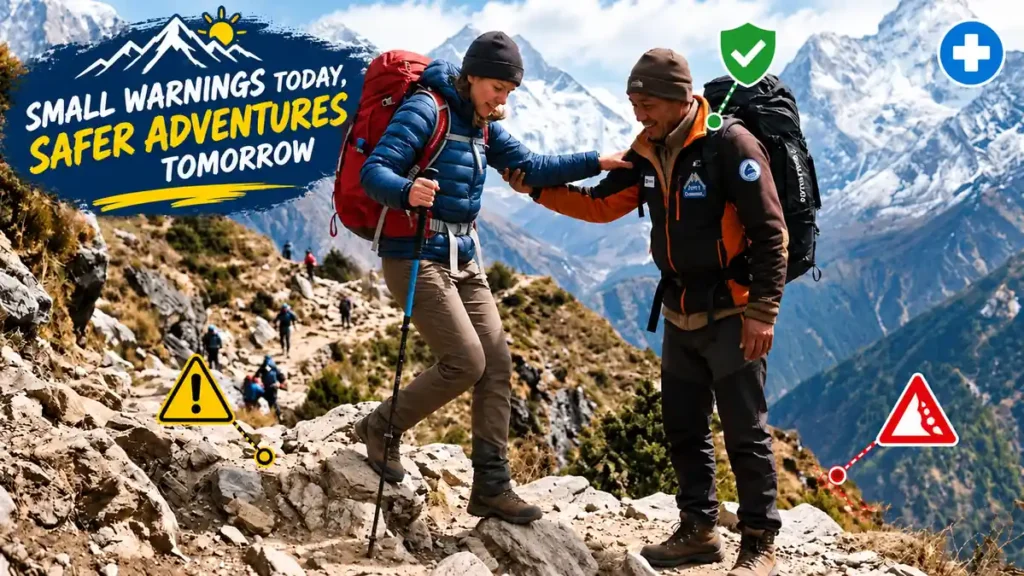
- A trekker slipping near a steep drop without sustaining an injury.
- A rafting group narrowly avoiding a hazardous rock or unexpected rapid.
- A climbing rope showing damage before a major fall occurs.
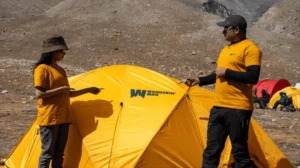
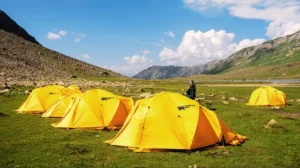
- A camping team identifying a potentially unsafe campsite before bad weather arrives.
- A group returning from a trek after a guide notices deteriorating weather conditions.
Near misses differ from actual incidents because harm has been avoided. However, both provide valuable information for improving adventure activity risk management. Important distinction: A successful outcome does not automatically mean that the activity was safe. Sometimes, the outcome depends on luck rather than effective risk controls.
Why Near-Miss Reporting Matters for Adventure Operators
Near-miss reporting allows operators to identify hazards before they contribute to a serious accident. When staff report events openly, organisations gain insights that may not be visible through routine inspections or formal safety audits. For example, repeated slips on the same trail section may indicate poor drainage, inadequate route maintenance or unsuitable footwear guidance. Similarly, recurring communication failures between trekking leaders and support teams may expose weaknesses in operational coordination.
The benefits of a structured near-miss reporting system include:
- Early hazard identification: Recognising risks before someone gets hurt.
- Improved safety procedures: Updating operating methods using real-world observations.
- Better staff training: Addressing gaps in guide judgement and technical skills.
- Stronger customer confidence: Demonstrating that participant welfare is taken seriously.
- Continuous improvement: Turning field experience into measurable safety improvements.
Near-miss data becomes particularly valuable when operators examine patterns across multiple trips rather than treating every event as an isolated occurrence.
Common Causes of Near Misses in Adventure Tourism

Near misses rarely have just one cause. They can arise from a combination of environmental conditions, human decisions, equipment problems and weaknesses in operational planning.
1. Inadequate Risk Assessment
A route considered suitable in the morning may become dangerous after heavy rain, snowfall or a sudden temperature drop. Risk assessments must therefore consider changing conditions rather than relying entirely on previous experience.
2. Human Error and Decision-Making
Fatigue, overconfidence, time pressure and poor judgement can influence guides and participants alike. A leader may continue a trek despite warning signs because the group wants to reach its destination.
3. Equipment and Maintenance Failures
Damaged ropes, worn-out harnesses, faulty buckles and poorly maintained helmets can create dangerous situations. Routine equipment checks help identify these issues before an activity begins.
4. Communication Gaps
Misunderstood instructions, weak coordination between guides and support teams, and unclear emergency signals can turn manageable hazards into serious threats.
5. Inadequate Participant Preparation
Participants may lack the fitness, technical skills or equipment required for an activity. Clear pre-trip briefings and honest suitability assessments help reduce avoidable risks. Understanding these contributing factors allows operators to move beyond blaming individuals and examine how their systems can be improved.
write a A worked Himalayan near-miss case study with causes, response and lessons learned.
Case Study: A Near Miss on a Himalayan Trek—Causes, Response and Lessons Learned

Note: The following is an illustrative scenario for training and educational purposes, not a report of an actual incident.
What Happened?
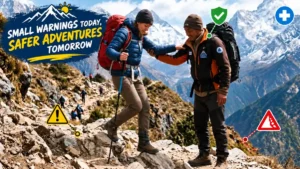
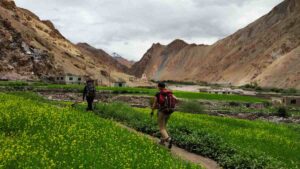
During a guided trek in the Himalayas, a group of eight participants was descending a rocky trail after light rain. The route had become slippery, and loose stones covered several sections. While negotiating a narrow stretch, one participant lost footing and slid towards the outer edge of the trail. The trekker managed to regain balance without falling over the edge or sustaining an injury. The guide immediately instructed the group to stop, moved participants away from the exposed section where safe to do so, and assessed the route conditions. Although nobody was hurt, the incident exposed a potentially serious hazard. A slightly different foot placement or a delayed response could have resulted in a fall and severe injury.
What Caused the Near Miss?
The initial investigation identified several contributing factors:
- Changing weather conditions: Rain had reduced traction on the trail.
- Inadequate reassessment: The original route assessment had not sufficiently accounted for the deterioration in surface conditions.
- Participant positioning: The group was moving too close together on a narrow, exposed section.
- Insufficient warning: The guide’s briefing had not specifically highlighted the newly slippery stretch.
- Route decision-making: The need to maintain progress may have influenced the decision to continue without a sufficiently thorough reassessment.
The participant’s slip was the immediate event, but the investigation focused on the wider combination of environmental conditions, group management and operational decisions. This approach helps prevent the investigation from unfairly blaming an individual.
How Was the Situation Managed?
The guide paused the activity and assessed whether the group could proceed safely. Participants were kept away from the exposed edge, and the group was reorganised to improve spacing and supervision. After reassessing the route, the guide chose a safer alternative where available rather than insisting on the original plan. The near miss was recorded, including the weather conditions, trail location, sequence of events and immediate response. Following the trek, the operator reviewed the risk assessment and identified corrective actions for future groups.
What Lessons Should Adventure Operators Learn?
Reassess risks continuously
Risk assessments should be reviewed whenever weather, terrain or participant conditions change significantly.
Establish clear stop-work criteria
Guides should have the authority to pause, modify or abandon an activity when conditions exceed acceptable risk limits.
Improve group management
Spacing, supervision, participant ability and the characteristics of exposed terrain should influence how a group moves.
Record and investigate near misses
Documenting the event helps operators identify recurring hazards and determine whether their existing controls are effective.
Verify corrective actions
Update route briefings and operating procedures, assign responsibility for changes, and check that improvements are implemented before similar trips.
From a Near Miss to Preventive Action
| Identified issue | Corrective action |
|---|---|
| Slippery trail after rain | Reassess route conditions and establish clear alternatives |
| Group too close together | Review spacing and supervision procedures |
| Incomplete hazard briefing | Update pre-trek safety briefings |
| Unclear decision to stop | Define and communicate stop-work criteria |
| Risk of repeated incidents | Record, review and monitor corrective actions |
The Key Takeaway
This hypothetical incident demonstrates why the absence of injury does not mean the absence of risk. The most important outcome is not simply that the trekker recovered their footing, but that the operator learned how changing conditions, group management and decision-making can combine to create danger. For adventure tourism operators, every near miss should prompt a proportionate review of what happened, why existing controls were insufficient and what must change before the next group takes the same route.
How Adventure Operators Should Investigate Near Misses
A near miss should trigger a proportionate, practical investigation. The objective is to understand what happened, why it happened and what will prevent a recurrence.
Step 1: Make the Situation Safe
Stop the activity if necessary, assess immediate hazards and ensure that participants and staff are safe. If conditions remain dangerous, change the route, suspend the activity or evacuate according to the emergency plan.
Step 2: Record the Facts
Document the date, location, activity, weather, equipment involved, sequence of events and immediate response. Record observations promptly while details are fresh.
Step 3: Identify Contributing Factors
Ask questions such as:
- Was the risk assessment adequate?
- Were the operating procedures followed?
- Was the equipment suitable and serviceable?
- Were instructions understood by everyone?
- Did fatigue, time pressure or changing weather influence decisions?
Step 4: Identify Root Causes
Avoid stopping at statements such as “the participant slipped” or “the guide made a mistake.” Investigate why the slip occurred and whether route maintenance, briefing quality, supervision or other controls contributed.
Step 5: Implement Corrective Actions
Assign responsibility for each improvement and set a completion date. Actions might include repairing a trail, replacing equipment, revising a checklist or conducting additional guide training.
Step 6: Verify Effectiveness
Review subsequent trips to determine whether the changes have reduced the identified risk. An action is not complete simply because a new procedure has been written.
Practical Near-Miss Investigation Checklist for Adventure Tourism Operators
Adventure tourism operators should investigate near misses promptly, even when nobody is injured. A structured investigation helps identify hazards, understand contributing factors and prevent similar events during future treks, rafting trips, mountaineering expeditions and outdoor camps.
Suggested placement: Under “How Adventure Operators Should Investigate Near Misses” in your blog.

Step 1: Secure the Situation
- Stop the activity if necessary and protect participants and staff.
- Assess immediate and continuing hazards.
- Provide first aid or arrange emergency assistance if required.
- Isolate defective equipment or unsafe areas.
- Resume the activity only when an authorised person determines that it is safe to do so.
Step 2: Record the Event
- Record the date, time, location and activity.
- Describe what happened, including the sequence of events.
- Document weather, terrain and environmental conditions.
- Identify the equipment, people and procedures involved.
- Record witness observations and take photographs where safe and appropriate.
Step 3: Identify Contributing Factors
- Was the risk assessment adequate for the conditions?
- Were operating procedures followed and understood?
- Was the equipment suitable, inspected and serviceable?
- Were participant fitness, skills and supervision appropriate?
- Did fatigue, communication gaps, time pressure or changing weather contribute?
Step 4: Determine Root Causes
- Distinguish the immediate event from underlying causes.
- Identify which safety controls were missing, inadequate or ineffective.
- Consider organisational and environmental factors, not just individual actions.
- Document findings supported by available evidence.
- Record any uncertainties requiring further investigation.
Step 5: Assign Corrective Actions
- Define specific measures to eliminate or reduce the identified risks.
- Assign a responsible person and completion deadline for each action.
- Update risk assessments, briefings, equipment checks or operating procedures as needed.
- Communicate relevant lessons to guides and operations teams.
- Introduce interim controls if permanent improvements cannot be completed immediately.
Step 6: Verify and Close the Investigation
- Confirm that corrective actions have been completed.
- Check whether the changes effectively control the identified risks.
- Review subsequent trips for recurring hazards.
- Document the investigation outcome and approval for closure.
- Share lessons learned while protecting personal and confidential information.
Near-Miss Investigation Record
Operators can use this simple template after an event.
| Record field | Information to enter |
|---|---|
| Date and location | When and where it happened |
| Activity | Trekking, rafting, climbing, camping, etc. |
| Event description | What happened and what could have happened |
| Contributing factors | Environmental, human, equipment or procedural factors |
| Immediate response | Actions taken to secure the situation |
| Corrective action | What must change |
| Responsible person | Who will implement the change |
| Deadline and verification | When it is due and how effectiveness will be checked |
Key takeaway: A near-miss investigation is complete only when the findings have led to appropriate action and the effectiveness of those actions has been checked. Reporting an event is the beginning of the learning process, not its conclusion.
Building a Strong Near-Miss Reporting Culture

Even the best reporting form is ineffective if employees fear punishment for raising safety concerns. Adventure operators need a culture in which guides, drivers, instructors and support staff feel comfortable reporting mistakes, hazards and unexpected events.
A practical reporting system should include:
- Simple reporting procedures: Make it easy to report events using a short form or digital log.
- Non-punitive learning: Encourage honest reporting while retaining accountability for reckless or deliberate unsafe conduct.
- Prompt feedback: Tell staff what was learned and what actions were taken.
- Management involvement: Ensure that safety concerns receive attention and resources.
- Shared learning: Communicate relevant lessons across teams, camps and activity locations.
Operators should also distinguish between honest human error, risky behaviour and deliberate disregard for safety rules. This supports fair accountability without discouraging employees from speaking up.
Turning Near Misses into Better Safety Protocols

Collecting reports is only the beginning. The real value comes from translating lessons into changes in everyday operations. Adventure tourism businesses can use near-miss findings to strengthen the following areas.
Improve Pre-Activity Risk Assessments
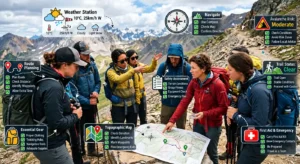
Review route conditions, forecasts, participant abilities, equipment requirements and emergency access before each trip. Reassess when conditions change.
Strengthen Guide Training
Use realistic scenarios to practise hazard recognition, group management, emergency communication and decisions to stop or modify an activity.
Standardise Equipment Inspections
Maintain equipment registers, inspection schedules and replacement criteria. Remove defective equipment from service until it has been appropriately assessed.
Review Emergency Preparedness
Test communication systems, evacuation arrangements, first-aid readiness and coordination with local emergency services where appropriate.
Update Standard Operating Procedures
Revise checklists and operating guidelines based on evidence from near misses. Ensure that updated procedures reach every relevant team member. These measures help integrate adventure risk management into daily practice rather than treating safety as a document that is reviewed only after an accident.
Measuring the Effectiveness of Near-Miss Management
Adventure operators need practical indicators to evaluate whether their safety systems are improving. The goal should not be to achieve zero reported near misses, because that can reflect underreporting rather than a genuinely safer operation.
Useful safety performance indicators include:
| Indicator | What it helps measure |
|---|---|
| Near misses reported | Staff engagement and hazard visibility |
| Time taken to investigate | Responsiveness to safety concerns |
| Corrective actions completed | Follow-through on identified risks |
| Repeat hazards | Whether previous problems remain unresolved |
| Training and inspection compliance | Implementation of preventive controls |
Operators should interpret these measures alongside actual incidents, injuries, audit findings and participant feedback. Reporting numbers alone cannot establish whether a business is safe. A rise in near-miss reports may initially indicate a healthier reporting culture. The more meaningful question is whether serious hazards are being addressed and recurring problems are declining.
The Role of Responsible Adventure Tourism Companies
Responsible adventure tourism requires more than qualified guides and good equipment. It demands a systematic commitment to learning, communication and continuous improvement. For businesses operating trekking, mountaineering, rafting, cycling and camping programmes, near-miss analysis can help strengthen route planning, participant screening, equipment management and emergency preparedness. At Wanderin’ Man Adventures, the long-term ambition is to strengthen adventure programme design through responsible operating practices, structured risk assessment and continuous learning. As the company develops its future initiatives, collaboration with experienced adventure professionals and safety specialists can help it better understand industry practices and identify opportunities to improve participant protection. This commitment should be supported by appropriate expert guidance, documented procedures and regular evaluation rather than relying on intentions alone.
Conclusion: Every Near Miss Is an Opportunity to Improve
Near misses in adventure tourism should never be dismissed simply because nobody was injured. They provide valuable opportunities to identify weaknesses, improve decision-making and strengthen operational controls before a more serious event occurs. Adventure operators that encourage reporting, investigate contributing factors and implement corrective actions can develop a more resilient safety culture. The objective is not to eliminate every uncertainty from outdoor adventure, but to manage foreseeable risks responsibly and prepare for changing conditions. The most effective adventure operators do not merely learn from accidents. They learn from the warning signs that come before them.
Building Safer Adventure Experiences Starts with Learning
Every near miss offers an opportunity to improve planning, strengthen safety procedures and protect participants. At Wanderin’ Man Adventures, our future initiatives aim to incorporate responsible adventure programme design and continuous learning, informed by collaboration with experienced professionals and safety specialists.
Planning a school adventure programme or explo-ring responsible outdoor learning? Connect with Wanderin’ Man Adventures to discuss your programme requirements and safety considerations.