Adventure Risk Assessment: How to Program, Identify and Manage Risk
Adventure risk assessment is essential for creating safer, more rewarding outdoor experiences. From mountain trekking and kayaking to desert expeditions and snow adventures, every activity involves potential hazards that require careful planning. Professional adventure operators identify these hazards, evaluate their impact and implement appropriate risk control measures before and during activities. For schools, parents, corporate teams and adventure travellers, understanding outdoor safety management helps them choose programmes with confidence. With trained leaders, suitable equipment, weather monitoring and emergency planning, adventure experiences can encourage personal growth while managing foreseeable risks.
What Is Adventure Risk Assessment?
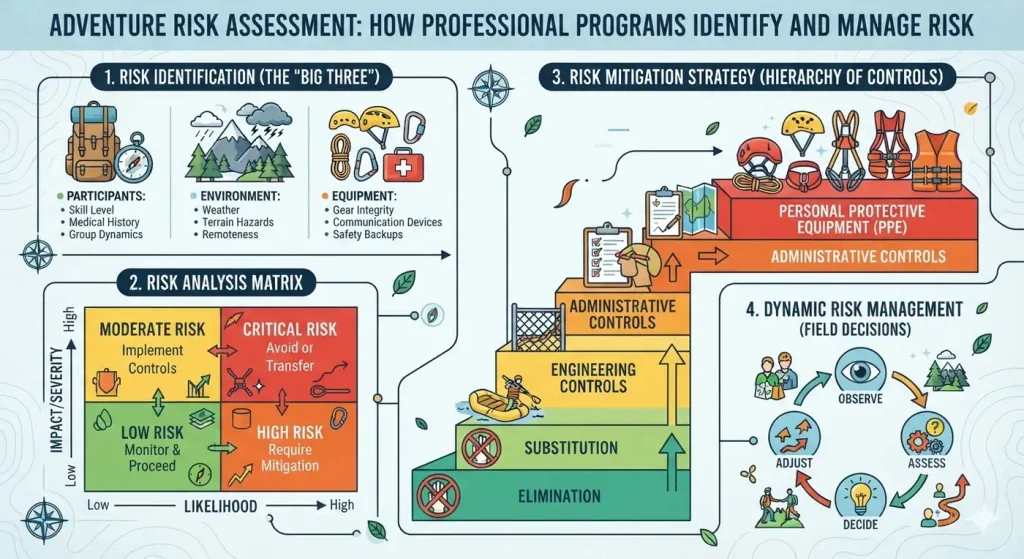
Adventure risk assessment is a systematic process of identifying hazards, evaluating the likelihood and severity of harm, and introducing measures to reduce risk. It helps professional operators make informed decisions about routes, activities, equipment and participant supervision. The process involves three essential stages:
- Hazard identification: Recognising potential dangers, including unstable terrain, changing weather and equipment failure.
- Risk evaluation: Assessing the likelihood of an incident and the seriousness of its consequences.
- Risk control: Implementing preventive measures, monitoring conditions and preparing emergency responses.
Risk assessment cannot eliminate every danger. However, effective adventure safety management helps reduce foreseeable risks and supports responsible decision-making.
How Professional Adventure Programs Identify and Manage Risk
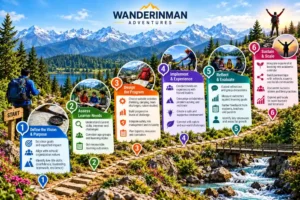
1. Assessing the Location and Environmental Conditions
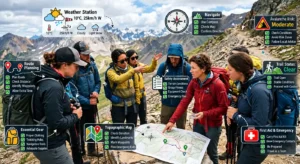
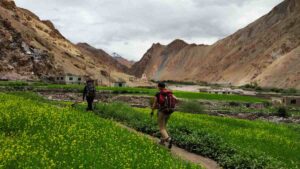
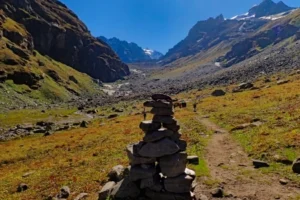
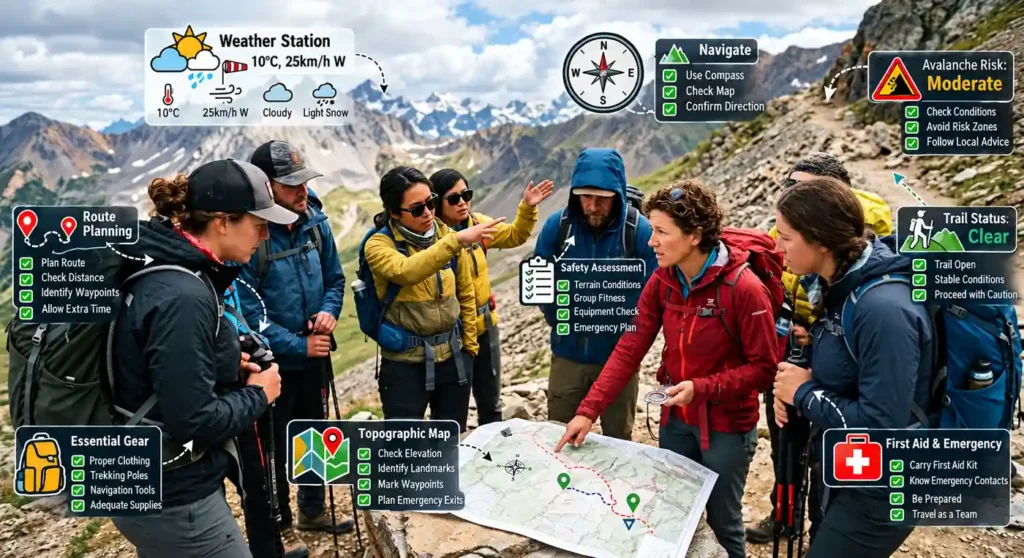
Every adventure destination presents different challenges. Mountain routes may involve steep slopes, loose rocks, sudden rainfall, cold temperatures and altitude-related concerns. Desert expeditions can face extreme heat and limited water availability, while coastal and river activities introduce tides, currents and changing water conditions. Professional organisers assess route conditions, weather forecasts, terrain, access points and evacuation options before selecting activities. They continue monitoring conditions because a route that is suitable in the morning may become unsafe later.
2. Evaluating Participants’ Abilities and Needs
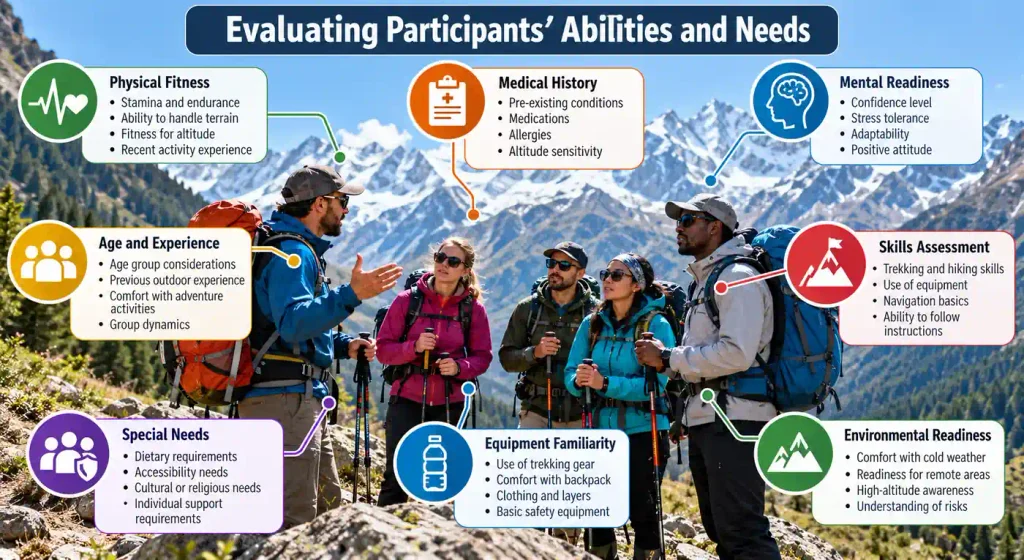
A responsible adventure programme considers participants’ age, fitness, previous experience, confidence and activity-specific skills. These factors influence the difficulty of an activity and the supervision required. For school adventure camps, organisers should consider age groups, relevant medical information shared with appropriate consent, individual support needs and suitable instructor coverage. Corporate groups and first-time trekkers may require different levels of instruction and physical challenge. Matching activities to participants helps prevent avoidable difficulties and creates opportunities for confidence-building, teamwork and personal development.
3. Inspecting Equipment and Safety Gear
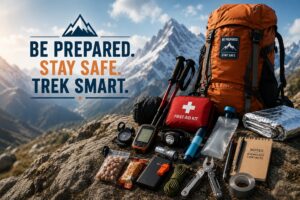
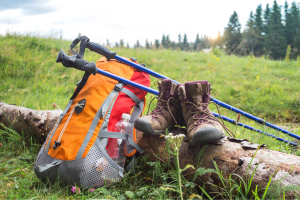
Equipment failure can turn a manageable situation into a serious incident. Professional adventure operators should inspect activity-specific equipment before use and maintain it according to manufacturer instructions and applicable standards. Depending on the activity, essential equipment may include helmets, harnesses, ropes, personal flotation devices, suitable footwear, first-aid supplies and communication devices. Checks should cover equipment condition, fit, suitability and correct use. Participants should also receive clear instructions on using their gear. Equipment inspections are particularly important for trekking, climbing, kayaking and other activities involving specialised safety equipment.
4. Establishing Safety Protocols and Trained Supervision
A documented safety plan defines responsibilities before an activity begins. It should cover participant briefings, supervision arrangements, communication methods, activity procedures and conditions that require an activity to stop. Experienced leaders help participants follow instructions, recognise changing conditions and respond appropriately to emerging hazards. Supervision ratios should reflect the activity, terrain, group profile and applicable requirements rather than applying one ratio to every programme. Professional operators should also explain the rules, expected behaviour and communication signals that participants must follow during activities.
5. Preparing Emergency and Contingency Plans
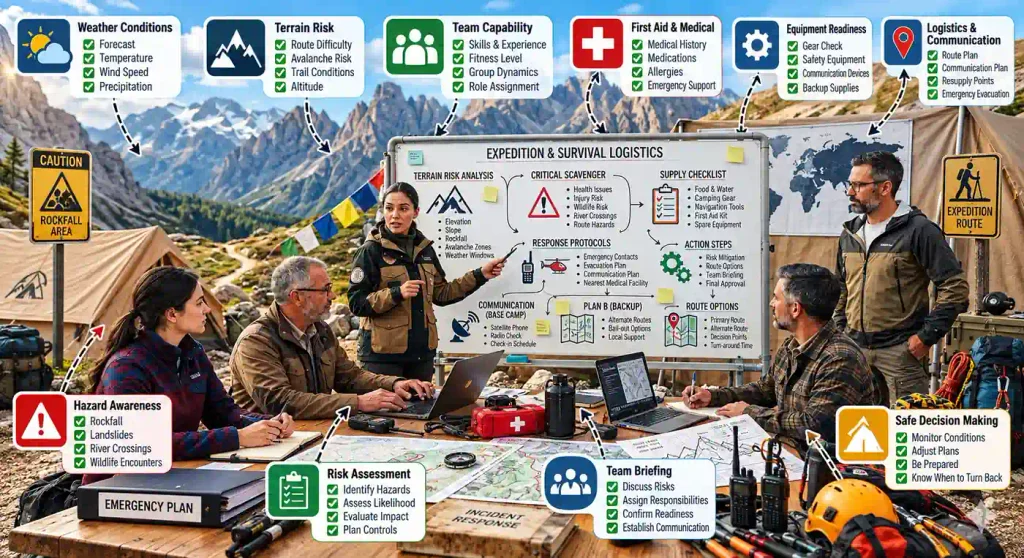
Even well-planned adventures can encounter unexpected challenges. Professional programmes therefore establish emergency response procedures before departure. An emergency plan should address:
- First-aid arrangements and access to medical assistance.
- Reliable communication and emergency contact procedures.
- Evacuation routes and alternative activity locations.
- Weather-related postponement or cancellation criteria.
- Responsibilities of leaders, support staff and accompanying teachers.
Teams should know how to report incidents, account for participants and coordinate assistance. After an incident or near miss, organisers should review what happened and improve their procedures.
Adventure Risk Assessment: Why Professional Expertise Matters
Adventure risk assessment requires more than a checklist or a general understanding of outdoor activities. It demands practical experience, technical knowledge, sound judgement and a systematic approach to participant safety. For schools, parents, corporate groups and individual travellers, understanding how an adventure operator identifies and manages risks is an essential part of choosing a responsible programme provider. At Wanderin’ Man Adventures, adventure risk management should be understood as a continuous process that begins before an activity and continues throughout the programme. Weather conditions, terrain, participant capabilities, equipment reliability and emergency access can change rapidly, particularly in mountainous environments. Professional planning must therefore combine preparation with the ability to reassess conditions and adapt decisions in the field.
Experience: Applying Practical Knowledge to Outdoor Challenges
Experience is an important component of effective adventure risk management. Trekking, camping, mountaineering, rafting and other outdoor activities present different hazards, and each requires controls appropriate to its operating environment. Experienced programme leaders understand the importance of assessing trail conditions, monitoring weather changes, checking equipment, evaluating participant fatigue and recognising when an activity should be modified or stopped. They also understand that a route suitable for one group may be inappropriate for another because of differences in fitness, experience, age or environmental conditions. For adventure operators, demonstrating experience means explaining how these considerations influence actual planning and field decisions. Where available, documented examples of risk assessments, staff training, equipment inspection procedures and emergency drills can provide stronger evidence than general statements about safety.
Expertise: Using Structured Risk Assessment Methods
Professional risk assessment should follow a repeatable and documented process. The process begins with hazard identification, including environmental hazards, equipment failures, participant-related risks and operational limitations. Each identified hazard is then assessed according to its likelihood and potential consequences. Appropriate controls are selected, implemented and reviewed to determine whether the remaining risk is acceptable under the programme’s established criteria. A useful assessment should identify the person responsible for implementing each control, the conditions that require reassessment and the action to take if the risk becomes unacceptable. The hierarchy of controls provides an additional decision-making framework. Where reasonably practicable, hazards should first be eliminated or the activity redesigned to avoid them. Safer alternatives, engineering controls and administrative procedures should be considered before relying on personal protective equipment alone. Technical activities may require specialist assessments and competent personnel. For example, avalanche-prone terrain, white-water rafting and mountaineering cannot be managed adequately through generic outdoor safety checklists alone.
Authoritativeness: Demonstrating Recognised Competence
Authority in adventure safety should be supported by verifiable qualifications, relevant professional experience, appropriate operating permissions, and recognised safety procedures. An adventure programme provider can strengthen its credibility by publishing accurate information about its instructors, technical qualifications, first-aid training, equipment inspection practices, emergency response arrangements and relevant industry affiliations. References to recognised standards and official guidance can also help readers understand the basis for safety recommendations. These references should be relevant to the activity and jurisdiction, and the operator should explain how the guidance is applied in practice. Where an independent safety professional reviews a programme or article, the reviewer’s name, relevant qualifications, professional experience and scope of review should be disclosed accurately and with their consent.
Trustworthiness: Making Safety Practices Transparent
Trust is built when an adventure operator communicates clearly about both the benefits and limitations of an activity. Responsible operators should explain participant eligibility, foreseeable hazards, equipment requirements, weather-related restrictions, emergency procedures and the circumstances in which an activity may be postponed, modified or cancelled. Safety policies should also address incident reporting, participant briefings, medical information relevant to participation, communication arrangements and emergency evacuation planning. Appropriate privacy safeguards should be maintained when collecting participant information. No adventure activity can be guaranteed to be completely risk-free. A credible operator acknowledges this reality, explains the measures used to reduce foreseeable risks and avoids unsupported claims about safety performance.
How Participants Can Evaluate an Adventure Operator
Before booking an adventure programme, schools, parents and corporate organisers should ask the provider:
- Are written risk assessments prepared for the specific activity and location?
- Are programme leaders appropriately qualified and experienced for the activity?
- Are equipment inspections and maintenance procedures documented?
- Are weather monitoring, route-change and cancellation criteria established?
- Is there a documented emergency response and evacuation plan?
- Are staff trained to recognise hazards and respond to incidents?
- Are participant briefings, supervision arrangements and incident-reporting procedures in place?
Clear answers to these questions help organisers make informed decisions and assess whether a programme’s safety arrangements are appropriate for its participants and operating conditions. For Wanderin’ Man Adventures, demonstrating it means making safety practices understandable, substantiating professional claims and showing how risk management informs programme design and field operations. This approach helps readers assess the organisation on evidence, transparency and responsible decision-making rather than promotional assurances alone.
A Practical Adventure Risk Assessment Checklist
Before booking an adventure programme, schools, parents and travellers should ask:
- Has the route and activity been assessed for current conditions?
- Are leaders suitably trained and experienced?
- Is the equipment appropriate, inspected and maintained?
- Are participant screening, briefings and supervision planned?
- Is there a documented emergency and evacuation procedure?
- Are weather monitoring and cancellation criteria clearly defined?
- Are relevant permissions, insurance arrangements and safety practices appropriate?
Clear answers help participants compare operators on safety and professionalism, not just price or the number of activities offered.
Why Adventure Risk Management Matters for Schools and Corporate Groups
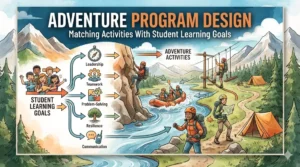
Effective adventure risk management supports both physical safety and meaningful learning. Students can develop resilience, communication, leadership and decision-making through appropriately designed challenges. Corporate adventure programmes can encourage collaboration and problem-solving when activities match participants’ capabilities. For parents and institutional organisers, transparent safety procedures provide greater clarity about supervision, emergency arrangements and operational responsibilities. The aim is not to remove every challenge, but to make each experience purposeful, appropriate and responsibly managed. Explore our guide to planning a successful school adventure camp for more practical programme-planning guidance.
How to Choose a Professional Adventure Operator
Look beyond promotional claims when selecting an adventure company. Ask about its risk assessment process, leader qualifications, equipment maintenance, participant-to-leader arrangements and emergency procedures. Review the itinerary, activity difficulty, inclusions, relevant permissions and insurance terms. A responsible operator should explain foreseeable risks clearly and communicate what participants need to bring, disclose and understand before departure. For further information, consult the International Organization for Standardization for its adventure tourism safety management standard and the Adventure Tour Operators Association of India for industry-related resources. You can also read about adventure sports in India and the changing industry landscape.
Experience Adventure With Greater Confidence
The best adventure programmes combine excitement with preparation, responsible leadership and informed decision-making. A systematic adventure risk assessment helps organisers identify hazards, establish safety controls and respond more effectively when conditions change. At Wanderin’ Man Adventures, outdoor experiences offer opportunities to explore, learn and grow through thoughtfully planned programmes. Planning a school camp, student experiential learning programme or group adventure? Contact Wanderin’ Man Adventures to discuss your objectives, destination and programme requirements.