learning laboratory for school adventures: a suitable set up
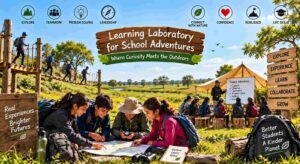
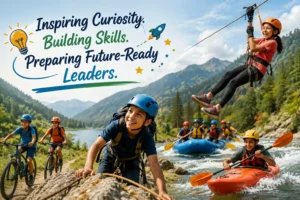
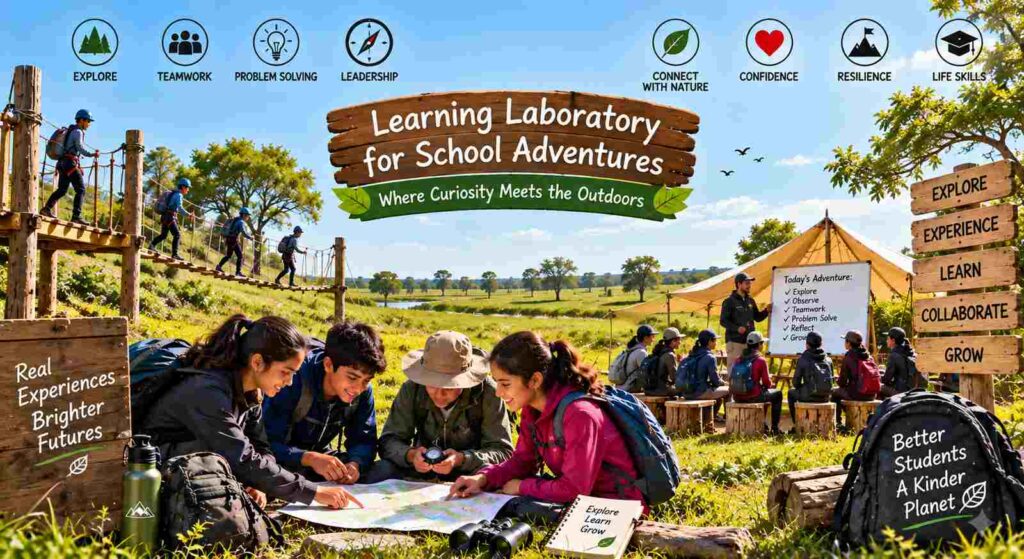
A learning laboratory for school adventures is more than a playground filled with adventure equipment. It is a thoughtfully designed environment where students learn by doing, solving, communicating, exploring and reflecting. Instead of limiting learning to textbooks and classrooms, a school adventure laboratory can create controlled situations where students practise teamwork, leadership, decision-making, communication, problem-solving and resilience. Schools can use such a setup for experiential learning, outdoor education, adventure-based learning and life-skills development while keeping activities age-appropriate and professionally supervised.


8
What Is a Learning Laboratory for School Adventures?
A learning laboratory for school adventures is a structured outdoor learning environment where physical activities are connected to specific educational outcomes. For example, a rope challenge can teach trust and communication. A navigation exercise can introduce observation and decision-making. A team obstacle course can encourage planning and collaboration. The important difference is that the activity is not treated simply as entertainment.
Activity → Challenge → Reflection → Learning
This approach helps students understand how an experience can translate into a practical life skill. Adventure camps and outdoor programmes are already being used by schools to develop teamwork, confidence, leadership and other transferable skills through hands-on experiences.
Why Schools Need an Adventure Learning Laboratory
Modern students need opportunities to apply knowledge in situations that cannot always be recreated inside a classroom. A suitable adventure learning environment can provide opportunities to:
- Work collaboratively with peers
- Make decisions under controlled pressure
- Communicate clearly
- Manage challenges and uncertainty
- Develop physical coordination
- Practise leadership
- Build confidence
- Understand responsibility
- Develop resilience
- Connect with nature
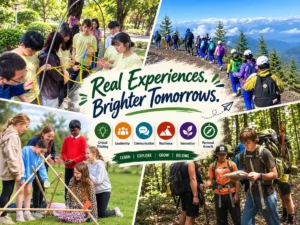
The objective is not to make every child an adventurer. It is to create meaningful learning experiences through adventure. Research-informed outdoor education models and established school programmes commonly combine activities with reflection, teamwork and personal development rather than treating adventure as an isolated recreational experience.
Essential Components of a School Adventure Laboratory
A successful setup should combine infrastructure, trained people, learning objectives and safety systems.
Adventure Activity Zone
The activity zone can include age-appropriate elements such as:
- Low-rope challenges
- Balance beams
- Commando nets
- Team obstacle courses
- Climbing elements
- Rappelling or controlled vertical activities where appropriate
- Orienteering and navigation
- Nature trails
- Team problem-solving stations
Not every school needs a large adventure park. A smaller space can become an effective learning laboratory when activities are designed around clear learning outcomes.
Teamwork and Problem-Solving Zone
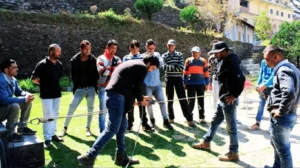
This area should encourage students to solve challenges collectively. For example, students could be asked to move objects across a defined area, cross a low-level obstacle without touching the ground or complete a timed team puzzle. The emphasis should be on planning, listening, delegation, communication and adaptation, rather than simply finishing first.
Nature and Exploration Zone
Nature itself can become a classroom. A nature-learning section may include:
- Observation walks
- Biodiversity activities
- Basic navigation
- Environmental awareness
- Weather observation
- Leave-No-Trace principles
- Outdoor interpretation
This creates opportunities for nature-based learning and environmental responsibility.


8
Safety Should Be Part of the Learning Design
A school adventure laboratory must be designed around safety rather than adding safety after the activities are created.
Important considerations include:
- Age-appropriate equipment
- Qualified instructors
- Activity-specific safety procedures
- Equipment inspection
- Appropriate instructor-to-student ratios
- First-aid readiness
- Emergency response planning
- Weather monitoring
- Defined activity boundaries
- Student briefing and supervision
Established outdoor education providers similarly emphasise trained instructors, documented procedures, equipment standards and emergency planning as fundamental parts of school adventure programmes. Safety also becomes a learning opportunity. Students can learn why helmets, harnesses, communication protocols, buddy systems and safety checks matter.
Turning Adventure Activities into Learning Outcomes
The strongest school adventure programs connect every activity with a developmental objective.
| Adventure activity | Possible learning outcome |
|---|---|
| Rope challenge | Trust and communication |
| Navigation | Observation and decision-making |
| Team obstacle course | Collaboration and planning |
| Trekking | Resilience and responsibility |
| Shelter building | Creativity and problem-solving |
| Nature activity | Environmental awareness |
| Leadership challenge | Initiative and accountability |
This transforms an ordinary activity into an experiential learning module. For example, after completing a team challenge, the instructor can ask:
What worked? What failed? Who took leadership? Did everyone participate? What would you change next time?
That reflection is where much of the learning becomes visible.
The Role of Reflection in Adventure Learning
Adventure without reflection can remain simply an enjoyable experience. A proper learning laboratory therefore needs a reflection space. Students can discuss:
- What did I learn about myself?
- How did my team communicate?
- What happened when our first plan failed?
- How did we resolve disagreement?
- What would I do differently?
- Where can I use this learning at school or home?
Reflection helps students connect an outdoor experience with everyday behaviour. This makes adventure-based learning more purposeful and supports the development of self-awareness, communication, leadership and problem-solving skills.


7
Designing the Laboratory for Different Age Groups
A suitable setup should not provide the same challenge to every student.
Younger children may benefit from:
- Simple balance activities
- Cooperative games
- Nature exploration
- Basic obstacle challenges
Older students can progressively undertake:
- Navigation
- Leadership tasks
- Advanced team challenges
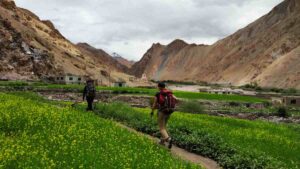
- Trekking
- Outdoor survival skills
- More complex problem-solving exercises
The principle should be progressive challenge, not unnecessary risk. Activities should also accommodate different physical abilities, confidence levels and learning styles wherever possible.
From Adventure Space to Learning Ecosystem
The most effective learning laboratory is not defined by the number of ropes, walls or obstacles it contains. Its real value comes from the connection between:
People + Place + Activity + Safety + Reflection + Learning Outcomes
Teachers can observe students in different situations. Instructors can facilitate challenges. Students can experiment, make decisions and learn from outcomes. In this way, the adventure environment becomes a learning ecosystem rather than merely an activity area.
A Practical Model for Schools
Schools considering such a setup can begin with a simple framework:
1. Identify learning goals
Decide whether the priority is teamwork, leadership, communication, resilience, creativity or environmental awareness.
2. Map suitable activities
Select activities that directly support those goals.
3. Establish safety protocols
Define equipment, supervision, emergency procedures and operating standards.
4. Train facilitators
Instructors should understand both adventure activities and student learning.
5. Introduce reflection
Build debriefing into every programme.
6. Measure outcomes
Use teacher observations, student reflections and simple feedback tools to understand what students gained. This approach allows schools to develop an adventure programme that is purpose-driven, measurable and adaptable.
Wanderin’ Man Adventures: Learning Through Experience
At Wanderin’ Man Adventures, school adventure programmes can be approached as structured learning journeys rather than simply outdoor outings. The combination of adventure activities, teamwork, exploration, leadership challenges and guided reflection can help students experience practical lessons beyond the conventional classroom. The aim is simple: create experiences where students participate, face challenges, work together, reflect and carry the learning back into everyday life.
Conclusion: Build a Laboratory Where Experience Becomes Learning
A learning laboratory for school adventures does not have to be expensive or complicated. What matters is purposeful design. When adventure activities are connected with experiential learning, outdoor education, safety, reflection and clearly defined developmental outcomes, the outdoors can become an extension of the classroom. Students do not simply hear about teamwork—they practise it. They do not simply read about leadership—they experience it. And they do not simply learn about resilience—they discover it through challenges. That is what makes a well-designed school adventure environment a genuine laboratory for learning through experience.